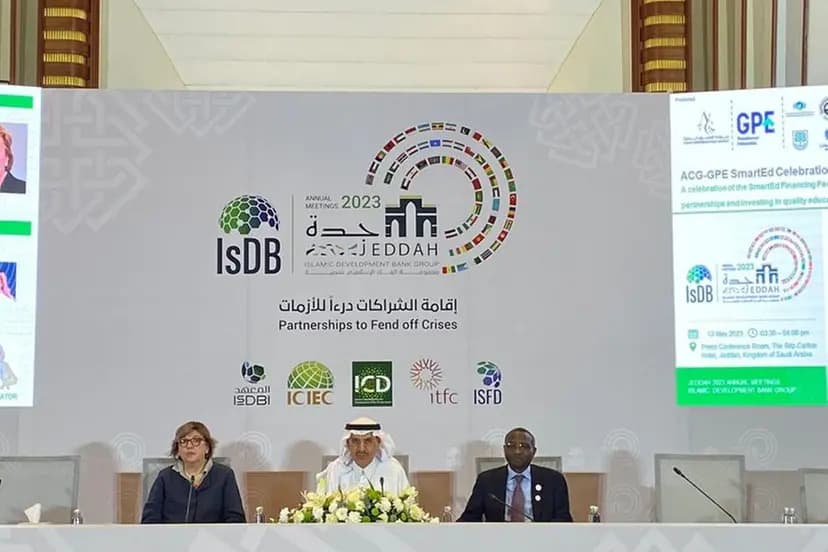

Jeddah, Saudi Arabia – Cameroon, Kyrgyzstan and Uzbekistan became the first countries that will receive $280 million in innovative financing for education to support effective and sustainable programs that will see more boys and girls in these countries into school and learning.
The financing is the first allocation made by the Global Partnership for Education (GPE) and the Islamic Development Bank (IsDB).
Developed in December 2021 by GPE and the ACG, a grouping of Arab financial development institutions, the SmartEd initiative has generated $500 million to support education in lower-income countries.
ACG is providing $400 million alongside $100 million from the GPE Multiplier, an innovative financing tool that attracts investments from other donors.
Funds under the initiative are accessible to 37 countries that are members of the Organization of the Islamic Cooperation and collectively are home to nearly 28 million out-of-school children.
By crowding in additional funding for education, innovative mechanisms like SmartEd and the GPE Multiplier help strengthen responses to the learning crisis in lower-income countries, ensuring that governments can access funding on more favorable terms for education programs.
Today’s swift and strong demand for financing through SmartEd shows that many governments understand the gravity of the crisis and want to increase spending on education, even as they face growing pressure to devote additional resources to challenges like food insecurity or climate change adaptation, IsDB said in a statement.
“In our efforts to build better and more resilient education systems, member countries like Cameroon, the Kyrgyz Republic and Uzbekistan must be supported with financial tools to complement domestic resources. Through this Initiative, the IsDB, GPE and our Arab development partners are stepping up our commitment to expand available funding for education,” said Muhammad Sulaiman Al Jasser, Chairman of the Islamic Development Bank Group.
“The world needs innovative ways to attract more funding and match it to the demands of lower-income countries to transform education systems and allow all girls and boys to contribute to the growth and stability of their communities,” said Laura Frigenti, GPE’s Chief Executive Officer.