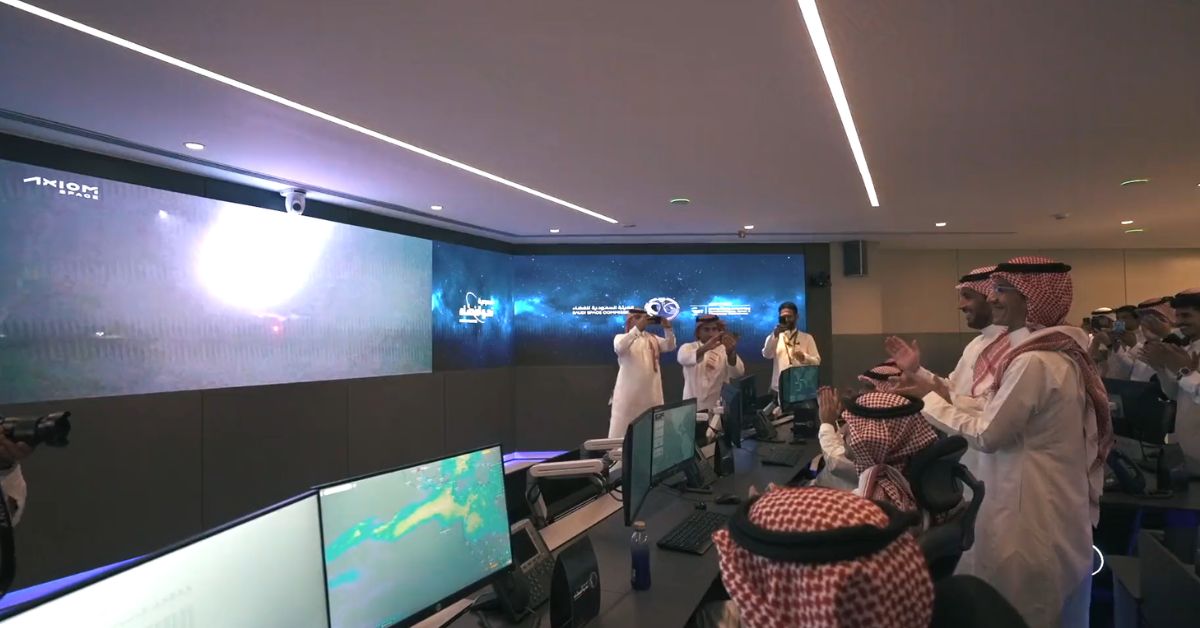

Riyadh, Saudi Arabia – The Saudi Space Commission announced today the successful completion of the mission of Saudi astronauts Rayyanah Barnawi and Ali Al-Qarni to the International Space Station (ISS) with the landing of their spacecraft, carrying the “Ax-2” mission crew in the Atlantic Ocean.
The descent of the spacecraft was slowed due to its entry into Earth’s atmosphere, with large parachutes used to cushion the impact, in addition to the use of large airbags.
Upon the capsule’s landing in the water, SpaceX boats moved to extract the astronauts.
The mission’s sponsor, Axiom Space, and SpaceX jointly broadcast a live webcast of the splashdown.
The Saudi Space Commission announced today the successful mission of #Saudi #astronauts @Astro_Rayyanah and @AstroAli11 with the landing of their #spacecraft. #ISS @Axiom_Space #SaudiArabia @Space_Station
— TRENDS (@mena_trends) May 31, 2023
Video credit: @saudispace pic.twitter.com/X85Tl3Gt7x
“That was a phenomenal ride. We really enjoyed all of it,” Axiom’s director of human spaceflight, Peggy Whitson, 63, radioed to mission controllers moments after splashdown.
The “Ax-2” mission launched from Florida on May 21st, and the successful docking of the spacecraft with the International Space Station was announced, about 16 hours after the launch, from the Kennedy Space Center of the American Space Agency “NASA”, at Cape Canaveral Launch Base in Florida.
The Saudi astronauts successfully conducted 14 scientific experiments in space before their return to Earth and landing in the Atlantic Ocean off the coast of Florida.
The mission achieved the Kingdom’s ambition to contribute to scientific research, to benefit from the promising opportunities offered by the global space sector and its industries, and to build national capacities in the field of manned flights. It marks a milestone for Saudi Arabia and a proud moment for national and scientific achievements in the space sector.
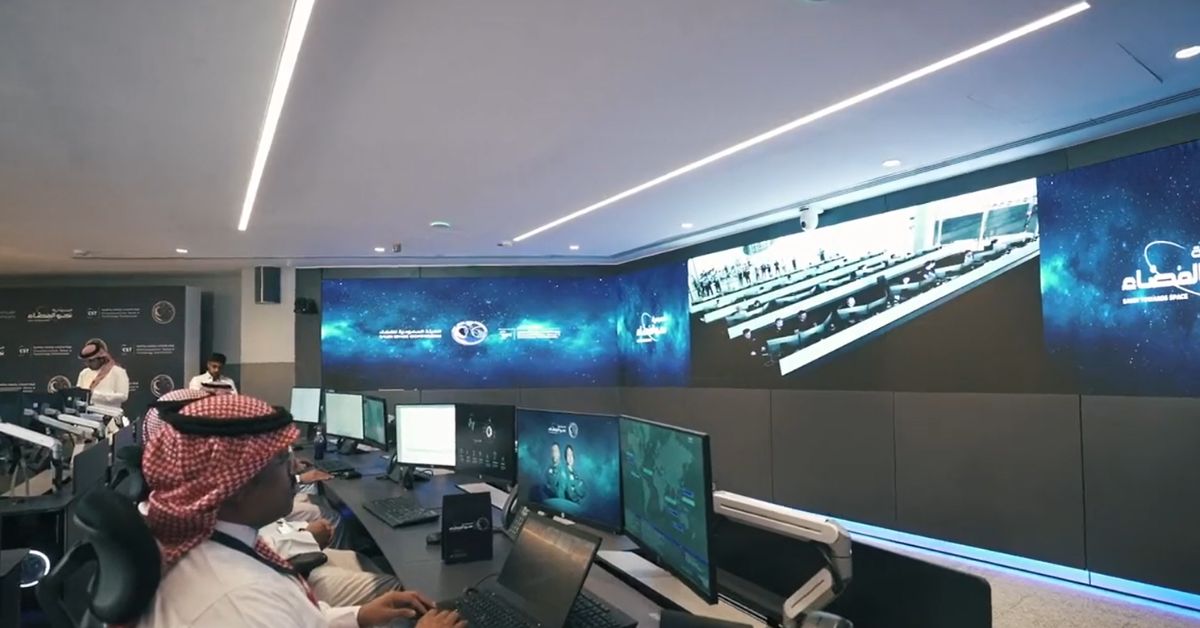
The Commission said that the mission made the Kingdom a part of small number of countries that have teams conducting space science missions and research trips in Earth’s orbit, under the Kingdom’s astronaut program.
“This historical scientific mission would not have been possible – by the grace of God – without the support and empowerment provided by His Highness the Crown Prince, Chairman of the Supreme Council of Space, for the Kingdom’s astronaut program, and his meticulous follow-up of all details of this scientific mission which made a historical achievement with the arrival of the first Saudi, Arab, and Muslim female astronaut, in addition to the first Saudi male astronaut, at the International Space Station,” The Deputy Chairman of the Supreme Council of Space and Chairman of the Board of the Saudi Space Commission, Engineer Abdullah bin Amer Al-Swaha said.
Al-Swaha added that the research and scientific experiments conducted aboard the station align with the national ambitions and priorities for research, development, and innovation launched by the Crown Prince.
“This emphasizes the Kingdom’s commitment and efforts in empowering people, protecting our planet, and shaping new horizons through science, research, and innovations from space,” he said.
.