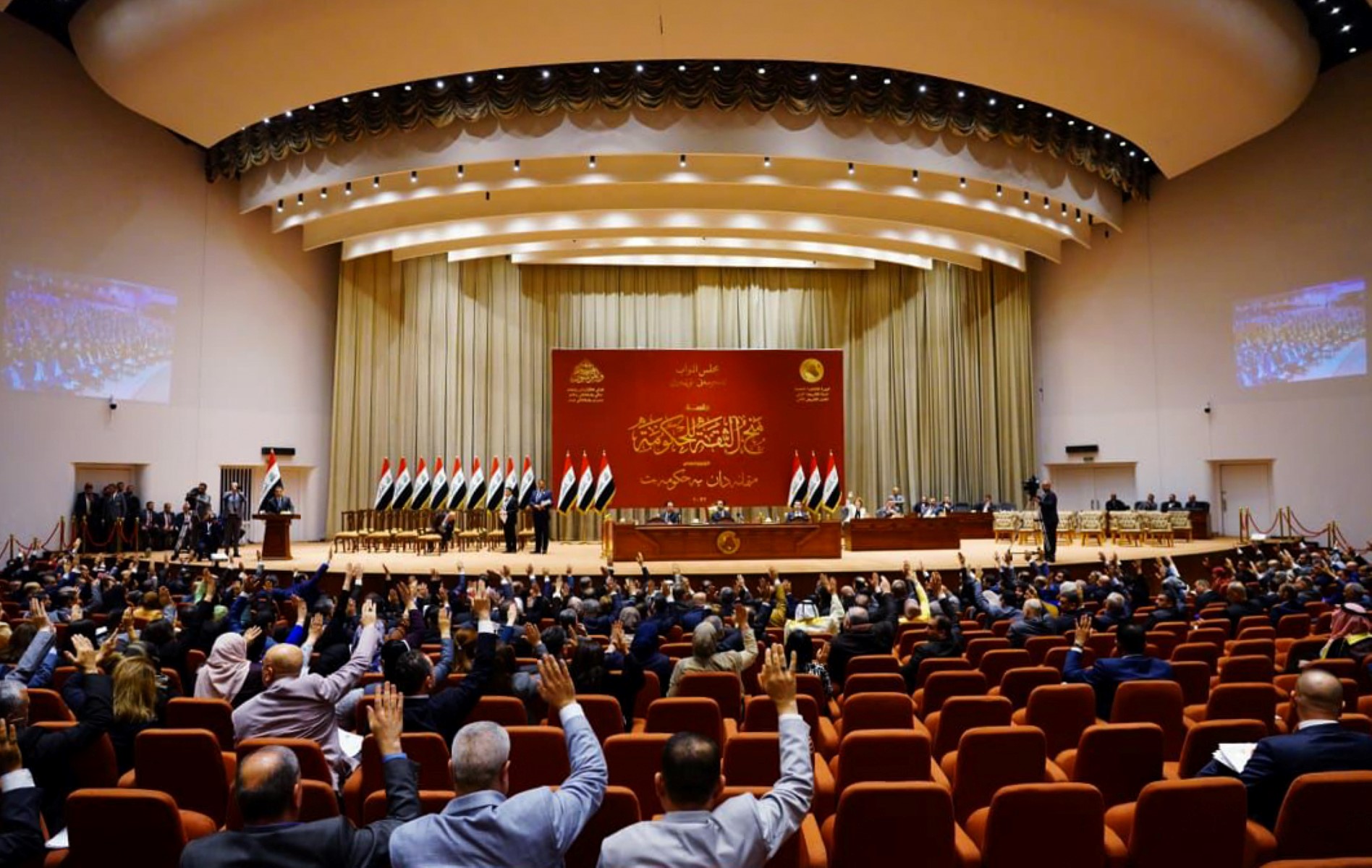

Baghdad, Iraq– Iraq’s parliament on Monday approved a budget that boosts public spending in the war-scarred nation and grants the federal government the upper hand over oil exports from the autonomous Kurdistan region.
The 198.9 trillion dinar ($153 billion) budget — valid for three years though subject to future amendments — also sets out record spending on public wages, investments and development projects.
Lawmakers approved the bill after days of voting and months of wrangling over its articles in a country long accustomed to budget delays.
The new bill allocates 12.7 percent of the budget to the oil-rich autonomous Kurdistan region of northern Iraq.
It follows long-standing tensions with Kurdish leaders who had previously denounced amendments relating to oil in the budget, resulting in repeated delays to the vote.
In April, a deal was reached between the authorities in Baghdad and the Kurdish regional government in Arbil, granting the federal government control over Kurdish crude exports to Turkey.
The Kurdish regional government had for years earned billions of dollars in revenues exporting oil to Turkey without the Iraqi federal government’s approval.
But operations ceased in late March after international arbitrators recognised Baghdad’s exclusive right to manage exports of Iraqi crude via Turkey.
Under the budget, 400,000 barrels per day of oil will be shipped from the Kurdistan region to Baghdad, with revenues going to a central bank account overseen by Baghdad.
The new budget sets total revenues at $103.4 billion, based on a three-year projection of oil prices at $70 per barrel, with oil accounting for 90 percent of income.
Iraq has been previously warned to wean itself off its overdependence on oil.
The International Monetary Fund said last month that “a significantly tighter fiscal policy is needed to strengthen resilience and reduce the government’s dependence on oil revenues while safeguarding critical social spending needs”.
The new budget also sets aside $37.9 billion for investments, with Prime Minister Mohammed Shia al-Sudani noting that his “priority” is to develop infrastructure in a country where basic services have long been sorely lacking.
The oil-rich country has long been wracked by rampant corruption even as it struggles to emerge from decades of war that ravaged its infrastructure.