
Taipei, Taiwan — Taiwan’s chip giant TSMC said Thursday it did not expect any direct effect on production from China’s latest export controls on two rare metals essential for making semiconductors.
China’s Ministry of Commerce and Customs announced Monday that exports of gallium and germanium will require a license from Aug. 1 over security concerns, as Beijing and Washington tussle over the global market for chips.
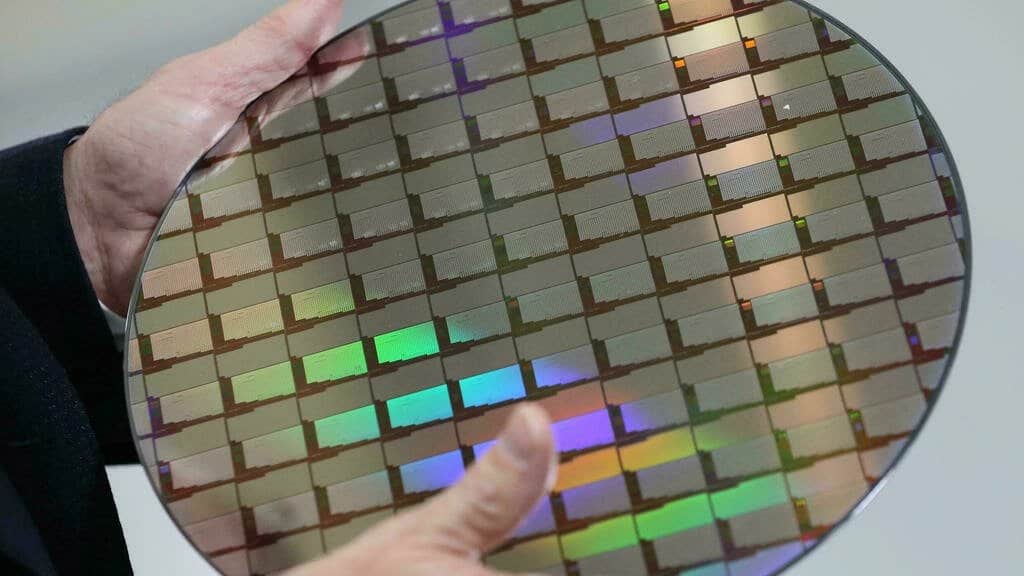
Taiwan Semiconductor Manufacturing Company, whose clients include Apple and Intel, controls more than half the world’s output of the silicon wafers that are used to power everything from drip coffee machines to cars and missiles.
“After evaluation, we do not expect the export restrictions on raw materials gallium and germanium will have any direct impact on TSMC’s production,” the company said in a statement.
TSMC did not elaborate on the long-term indirect impacts but said it would monitor the situation closely.
China is sparring with the United States over a range of issues, including technology, trade and Taiwan.
Home not just to TSMC, self-ruled Taiwan is the world’s primary manufacturing base of semiconductors, a dominance that has become more pronounced given the global demand for microchips and China’s increasingly strained relations with the island.
Beijing claims Taiwan as its own territory and has held two massive military drills around the island in the past year.
Taiwan’s economic minister Wang Mei-hua also downplayed the impact of the new export controls because Chinese-mined germanium and gallium are mainly raw materials that are then refined in countries such as the United States and Japan.
“Taiwan imports the refined materials so the short-term impact is limited,” she told reporters on Tuesday.
“We will closely monitor the impact of long-term (export) restrictions on the international market in terms of pricing and supply.”
Gallium, found in integrated circuits, LEDs and photovoltaic panels for solar panels, among other things, is considered a critical raw material by the European Union.
China accounted for 80 percent of global gallium production, according to a 2020 report by the European Commission.
Germanium is essential for making optical fibres and infrared camera lenses, with 80 percent of it also coming from China, according to the same report.
The export curbs follow Washington’s blacklisting of Chinese companies in recent years in a move aimed at cutting them off from access to American technologies, including the most advanced chips.