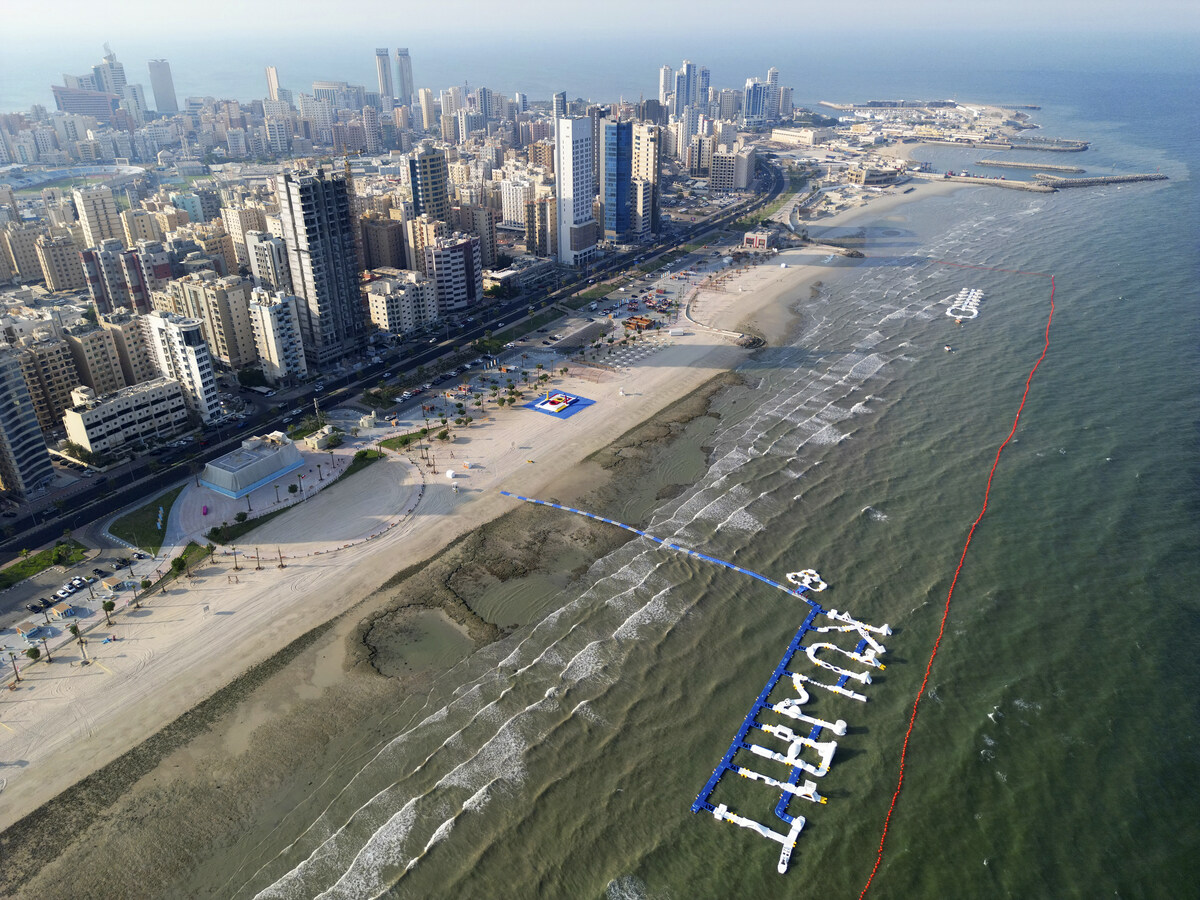

Dubai, UAE – As New Delhi once again topped the list of the world’s most polluted cities, across the Middle East, cities were also facing their own environmental challenges, with Kuwait City emerging as the region’s most polluted city, according to the latest data from Swiss group IQAir.
Kuwait City recorded an alarming Air Quality Index (AQI) of 165, surpassing all other major cities in the Middle East.
Just one notch below, Baghdad was also grappling with a hazardous AQI of 164.
Further west, Doha wasn’t far behind with an AQI of 153.
New Delhi once again claims the dubious title of the world’s most polluted city. On Friday, the city’s air quality index (AQI) soared to a hazardous 640, leaving many of its 20 million residents grappling with eye irritation and itchy throats.
The air in New Delhi took on a dense gray hue as the AQI hovered around 480 at certain monitoring stations. This alarming pollution spike is primarily attributed to the annual practice of farmers in the northern states of Punjab, Haryana, and Uttar Pradesh, who burn crop waste after the October harvest to prepare their fields for winter crops.
The worsening air quality has cast a shadow over India’s hosting of the cricket World Cup, with even the financial capital, Mumbai, experiencing a significant increase in pollution levels. Delhi is scheduled to host a World Cup match on Monday between Bangladesh and Sri Lanka.
The concentration of toxic PM2.5 particles, which are less than 2.5 microns in diameter and can cause deadly illnesses, was a staggering 53.4 times higher than the World Health Organization’s annual air quality guideline value in New Delhi on Friday, as reported by IQAir.