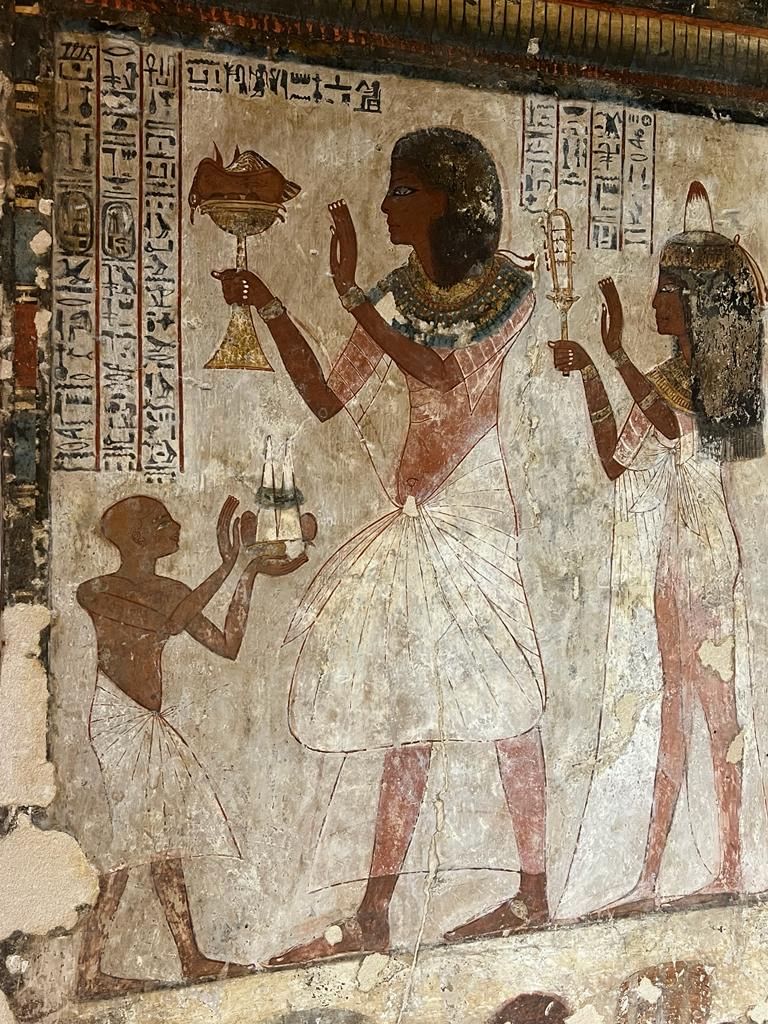

Cairo, Egypt — After more than two decades of restoration, the tomb of Neferhotep, a high-ranking 18th dynasty senior official during the reign of King Ay, was officially opened on Sunday.
According to Ahram Online, the tomb, located in the Al-Khokha area on Luxor’s West Bank, was opened during a ceremony by Mostafa Waziry, Secretary-General of the Supreme Council of Antiquities, and Gonzalo Urriolabeitia, Argentina’s ambassador to Cairo.
“Today’s opening of the tomb introduces a significant new tourist destination to the attractions of Luxor’s West Bank, particularly amidst the surge of tourists to the country during the winter season,” Waziry said, adding that the tomb displays beautifully painted scenes and inscriptions.
The restoration of the tomb began in 2000. A mission from Buenos Aires University in Argentina was responsible for recording and studying the tomb’s epigraphic and archaeological aspects, while a German archaeological team carried out the conservation and cleaning of the wall paintings.
Mohamed Abdel-Badiae, Director of Antiquities in Upper Egypt, said that the architectural structure of the subterranean structure was arranged east to west, evoking the regeneration of the deceased and the sun’s daily journey.