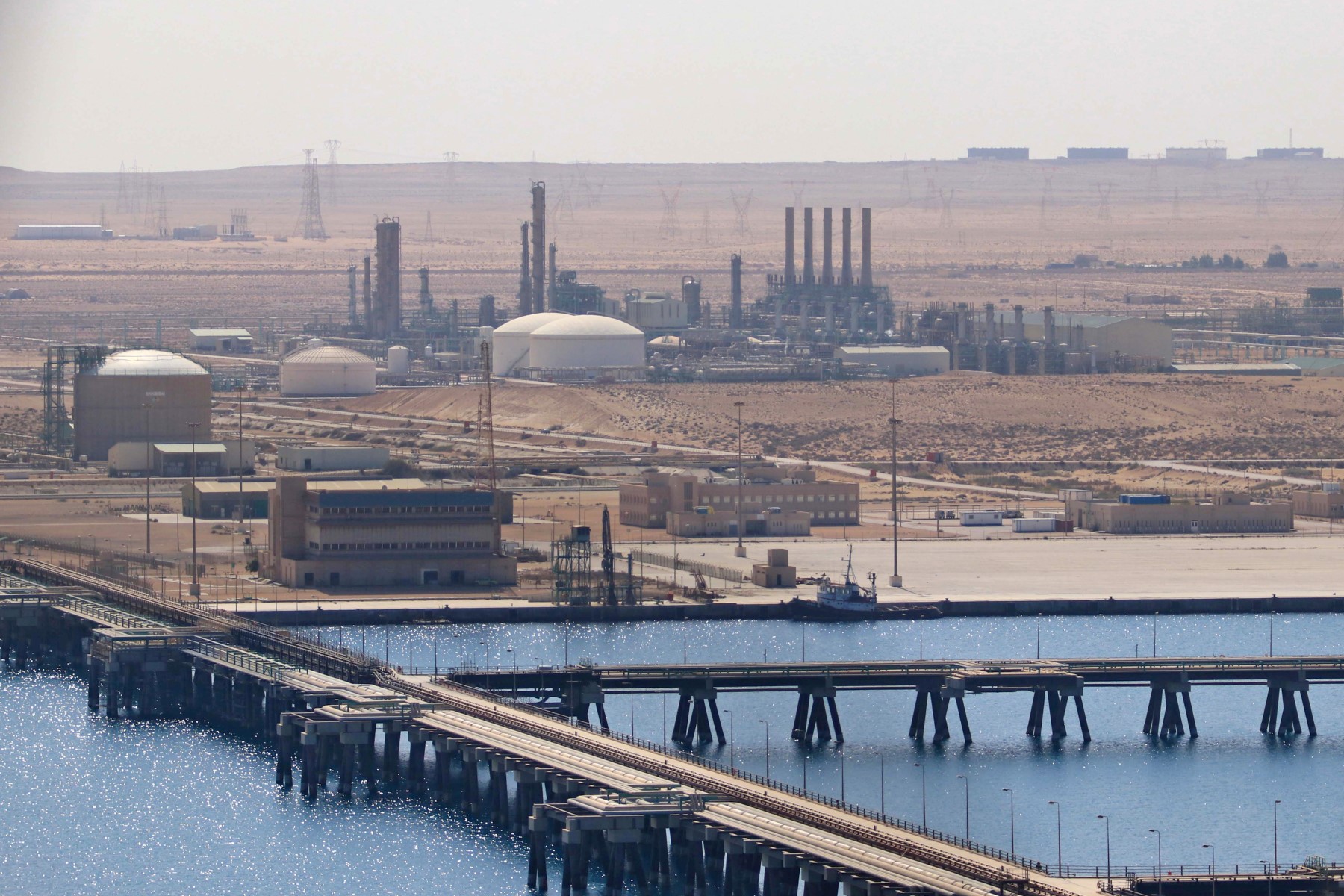

Tripoli, Libya — Libya’s eastern administration said Thursday it has lifted a month-long oil production and exports blockade over a central bank dispute, days after new leadership for the bank was named under a UN-backed deal.
The Benghazi-based administration, which controls most of Libya’s oilfields, said in a Facebook post it was “lifting the force majeure on all oil fields and resuming production and exports”.
In a statement, the National Oil Corporation confirmed ending the blockade which had cut crude production almost by half, to around 600,000 barrels per day.
Libya is struggling to recover from years of conflict after the 2011 NATO-backed uprising that overthrew Moamer Kadhafi.
It remains split between a United Nations-recognized government of Prime Minister Abdulhamid Dbeibah and the rival authority in the east backed by military strongman Khalifa Haftar.
In August, the Benghazi-based administration ordered a “force majeure”, suspending all production and exports.
The disruption came after a group of men in Tripoli, some armed, laid siege to the central bank building demanding the removal of its then-governor, Seddik al-Kabir.
He later told the Financial Times he had to flee the country.
Then the central bank announced the suspension of all operations following the abduction of its information technology chief, who was eventually released.
In office since 2012, Kabir had faced criticism from people close to Dbeibah over the central bank’s management of oil resources and the state budget.
After talks facilitated by the United Nations, the rival administrations signed an agreement under which on Monday they appointed a new central bank governor
‘Positive steps’ –
The deal saw 108 members of the parliament in Libya’s east vote unanimously to appoint Naji Issa as the new bank chief, with Miree al-Barasee as vice-governor, the parliament said in a statement.
The other signatory to the deal is the Tripoli-based High Council of State, which acts as a senate.
In a post on social media, Dbeibah said the vote was among “positive steps that corrected the situation at the Central Bank of Libya and worked to create an independent professional institution for all Libyans”.
Most of Libya’s revenue comes from its oil resources, with the country’s production mainly in the east and south. But oil revenues and the state budget are managed by the central bank.
Stephanie Koury, the acting head of the UN Support Mission in Libya (UNSMIL), had called for oil production to be restored in full.
Output had only recently returned to 1.2 million barrels per day, whereas under Kadhafi it was between 1.5 million bpd and 1.6 million bpd.