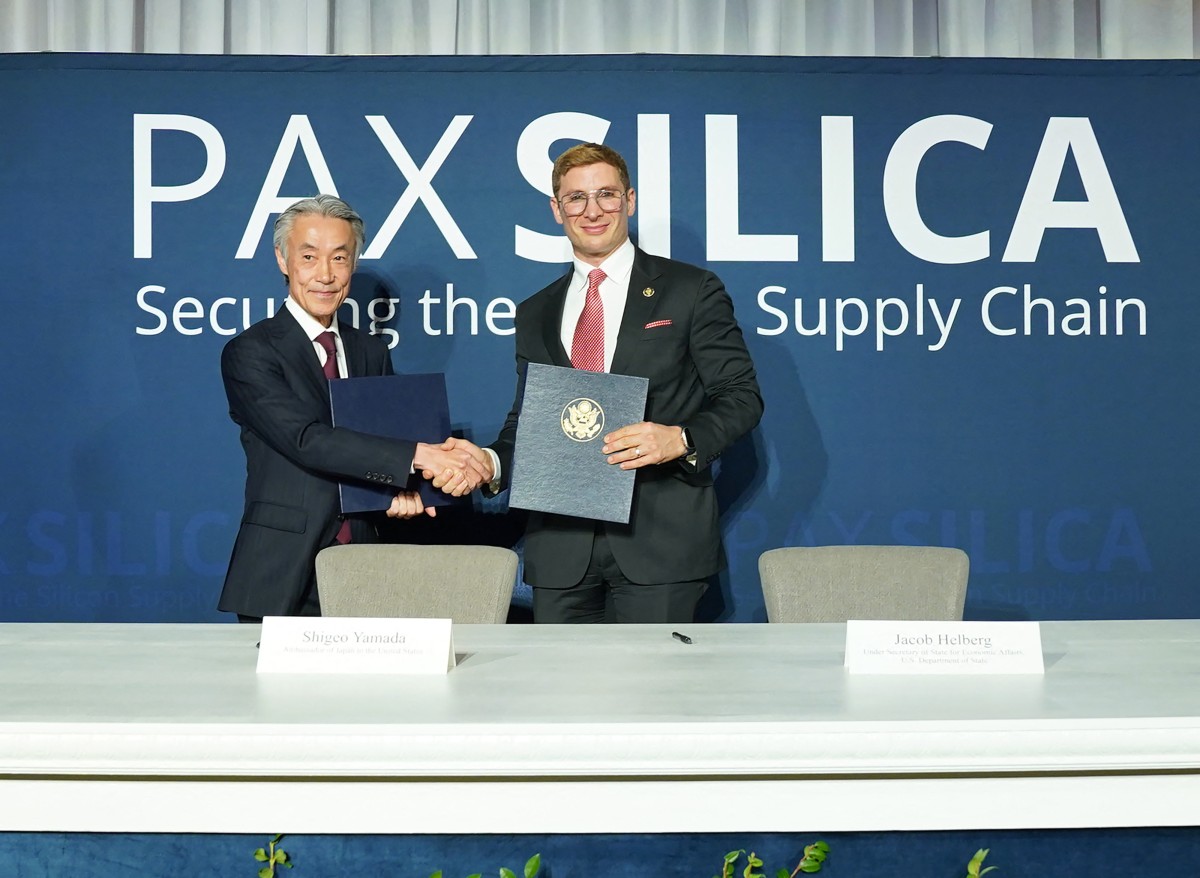

Washington, United States – The United States on Thursday announced a pact with allies to secure supply chains for minerals needed for artificial intelligence, hoping to secure a key resource as China quickly takes a lead.
“Pax Silica is a new kind of international grouping and partnership — one that aims to unite the countries that host the world’s most advanced technology companies to unleash the economic potential of the new AI age,” a State Department statement said.
The United States, which said other countries would join, was vague on the practicalities but said countries would work together to ensure timely supply chains.
“We believe that this gathering and grouping matters because the global system is shifting from ‘just in time’ to strategically aligned,” said Jacob Helberg, the State Department’s undersecretary for economic affairs.
“Pax Silica ultimately ensures that these countries have reliable access to the inputs and infrastructure that determine AI competitiveness,” he told reporters ahead of the signing.
China has quickly taken a dominant position in the race for resources in the fast-growing area of artificial intelligence, mining around 70 percent of key rare earths.
The signing in Washington comes despite President Donald Trump this week announcing he will allow the export of Nvidia’s advanced artificial intelligence chips to China, reversing a decision by his predecessor Joe Biden who voiced national security concerns in sharing the key technology.
Other countries participating in the meetings in Washington on supply chains, without formally joining the Pax Silica, were the United Arab Emirates, Canada and The Netherlands, as well as the European Union as an institution.