The Gulf region’s reputation as a production powerhouse has shed its traditional shiny coat of oil and gas dominance, transitioning into a far more innovative realm and ecosystem. It combines an interrelated web of business habitats, including free-zone legal frameworks, visa and talent schemes, and tech infrastructure to create rapid, policy-driven media and knowledge hubs that attract talent and investment.
Hamza Khan, the co-founder of Letswork, believes that the Gulf has crossed the line from building knowledge hubs to becoming one. “Dubai Media City, twofour54 in Abu Dhabi, and the growing ecosystem in Riyadh are now recognized globally as magnets for founders, operators, and venture capital. What differentiates the region is not just investment firepower, but a state-driven ambition to make regulation faster, infrastructure more reliable, and everyday living far more seamless than in many established Western hubs,” he told TRENDS.
A large number of hubs offer full foreign ownership and tax exemptions under free-zone-style rules, consistent with what twofour54, RAKEZ Media Zone, Media City Qatar, Dubai Media City and many others have done.
Gulf media report that new studio projects and participation at global content markets (Cannes’ MIPCOM, Qatar Web Summit), and public investment in studio and office campuses are major draws for media, innovation and technology seekers.
These hubs run carefully designed accelerator events, emulating elaborate real-life business networking operations that scale up minds and team strategies, mixing in workshops and matchmaking with investors to build recognition and attract early-stage funding and talent.
All this success comes with a caveat, one that can no longer be overlooked. “In today’s startup ecosystem, AI has become a designer label slapped onto products not because it adds value, but because it signals relevance. Startups solving problems through conventional means are rebranding existing features as ‘AI-powered.’ In an attention economy where investor dollars flow toward anything carrying the AI label, founders feel compelled to participate in this theater,” said Dr. Anurag Byala, the chief executive officer (CEO) of Techies Infotec.
Dubai Media City (DMC)
DMC remains the long-standing regional cluster for global media brands and local SMEs, co-locating freelancers with multinationals, coders with designers, local with moonshot ideas.
Bloomberg reports that Dubai’s Golden Visas and business-friendly reforms in 2024 and 2025 are factors helping draw and retain talent and companies in sectors like media, technology, energy and others.
Media City Qatar (MCQ)
Media City Qatar (MCQ) eased licensing thanks to a memorandum of understanding (MOU) with Qatar Finance Center (QFC) and attracted media companies, reporting over 100 company applications at Web Summit Qatar 2025. Invest Qatar announced a $1 billion “Fund of Funds” incentives program in May 2025 and reported the country attracting $2.74 billion in FDIs through 241 projects in 2024.
twofour54 Abu Dhabi, RAKEZ Media Zone RAK, SHAMS Sharjah
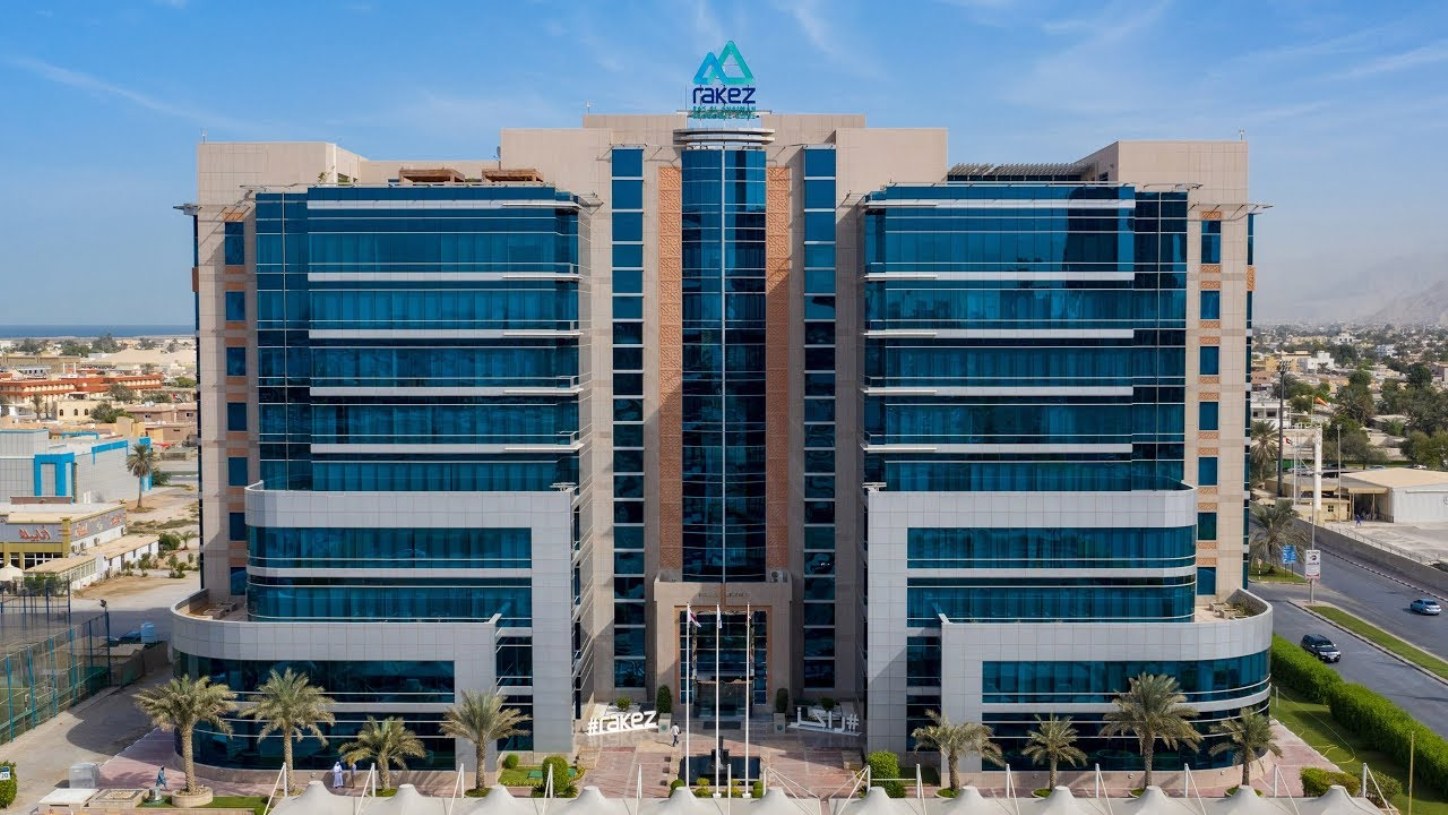
twofour54 in Abu Dhabi promotes 100 percent company ownership within the free zone, media-grade infrastructure, and content production incentives. It is building a major virtual-production campus. RAK’s RAKEZ welcomed over 13,000 new companies in 2024, a 66 percent year-on-year growth, running a dedicated media zone with programming for SMEs and startups, using competitive fees and SME packages to attract creative and content businesses. Sharjah Media City (SHAMS) emphasizes lower-cost packages and bundled visas for SMEs.
Hub knobbing with the best of them
Chris Lawrence, the founder and managing partner of Labyrinth Capital Partners, a private equity firm focused on secondaries, told TRENDS: “We’re starting to see the Gulf’s innovation districts evolve beyond incubation and into investable ecosystems. The real signal of maturity comes when institutional investors begin to see secondary opportunities, which is when confidence, liquidity, and global participation converge. The Gulf is approaching that inflection point with the amount of growth and primary capital invested over the last 15 years.”
Dubai Studio City, DMC, and Dubai Production City, aka the TECOM cluster, reported multi-hundred-million AED investments across media/tech parks and currently host 2,000+ companies, and is home to over 40,000 creative professionals in Q4 2024, announcing more than AED 2 billion of investments in that year.
In 2024, Dubai Studio City announced the expansion of its virtual production and studio services to serve global virtual shoots and support regional streaming content.
twofour54, host to hundreds of companies, announced major public investments to build film/production infrastructure over a 100-acre, multi-soundstage project known as Yas Creative Hub and Yas cluster, as part of Abu Dhabi’s multi-billion-dirham cultural and creative investment push that would attract major international films like Dune: Part Two, a 2024 American epic space opera film.
RAKEZ hosts tens of thousands of businesses. SHAMS Studios are planned to begin construction in Q4 2025. It reports many resident SMEs and runs creative events like the eSports championships, part of a broader push to create regional eSports ecosystems that feed global streaming and tournament circuits, according to WAM.
Meanwhile, a joint QFC–MCQ metaverse and fintech initiatives were showcased at Web Summit Qatar 2025, drawing international attention.
Speaking with TRENDS, Rabih El Chaar, the managing partner and founder of Smarkk, a GCC-based boutique management consultancy, said: “Qatar is positioning itself as a significant regional player in technology and innovation, and the Web Summit is an indicator of this momentum. It’s a regional and global gathering point that brings together major players in the ecosystem.”
Looking ahead, Khan has a suggestion on how knowledge hubs could be propelled forward. “The next evolution of Gulf knowledge hubs will be defined by how quickly they can shorten the path from idea to revenue. The fundamentals are already strong, but the region can go further by streamlining company set-ups, improving access to banking, and creating frictionless systems for founders who want to hit the ground running.”
(This article was originally published in the special Knowledge Economy issue of Trends in Dec. 2025)