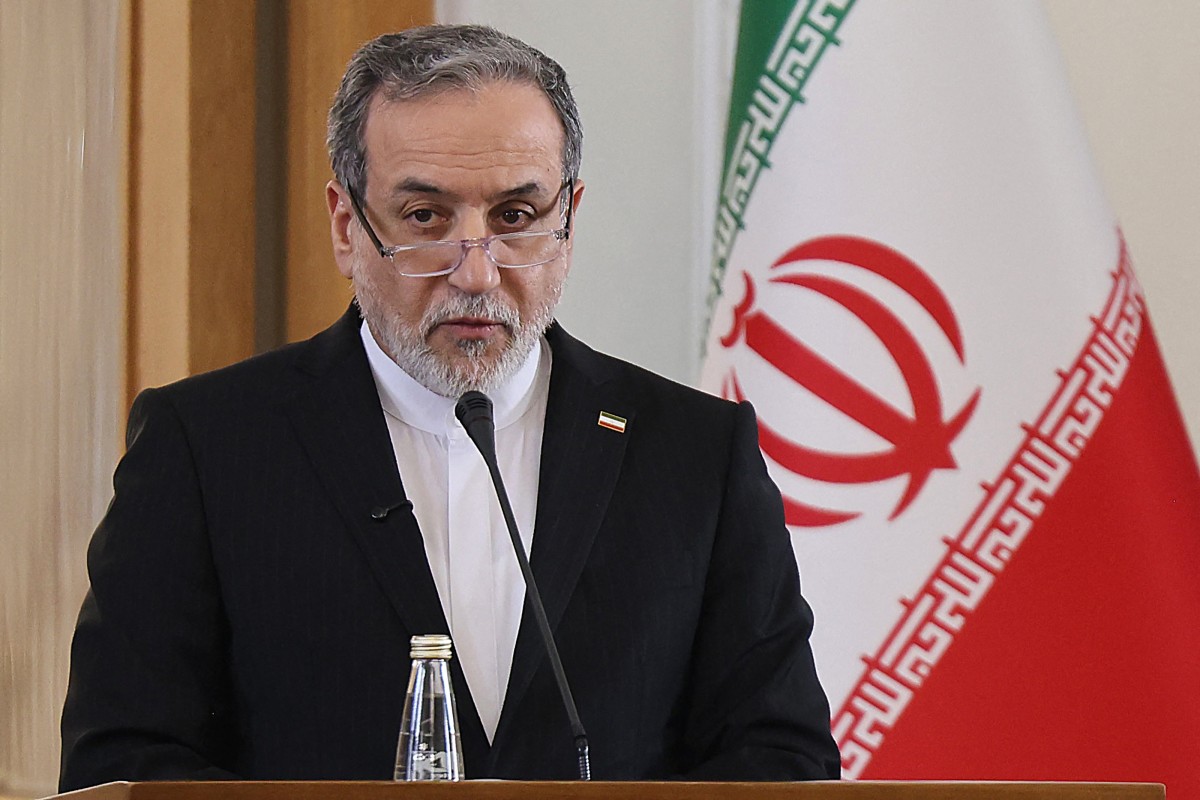

Senior officials from the United States and Iran have held indirect talks in Oman, as tensions between the two countries intensify and fears of a possible military confrontation grow.
The discussions took place in Muscat, with the US delegation led by special envoy Steve Witkoff and the Iranian side headed by Foreign Minister Abbas Araghchi. Speaking on Iranian state television after the meeting, Araghchi said negotiators would return to their respective capitals for consultations, describing the talks as a “good beginning.”
The meeting came as the US continues to expand its military presence in the Middle East. Washington says the build-up follows Iran’s violent suppression of nationwide anti-government protests last month, which human rights groups say resulted in thousands of deaths.
Iran had earlier said the talks would focus solely on its nuclear programme. However, the US has insisted that discussions should also cover Iran’s ballistic missile programme and its support for armed groups across the region. Washington is demanding that Tehran freeze its nuclear activities and dismantle its stockpile of enriched uranium.
Oman said its foreign minister held separate meetings with Araghchi, Witkoff and US President Donald Trump’s son-in-law and emissary Jared Kushner. According to a statement, the “consultations focused on preparing the appropriate conditions for resuming diplomatic and technical negotiations.”
The previous round of US-Iran talks, scheduled for June last year, collapsed after Israel launched a surprise attack on Iran. Since then, President Trump has repeatedly threatened military action if Tehran fails to reach a deal.
In recent weeks, the US has deployed thousands of troops, fighter jets and warships to the region, including an aircraft carrier, in what Trump described as an “armada.” Iran has warned it would retaliate against any attack, threatening to strike US military assets in the Middle East and Israel.
Analysts say the talks may represent a final opportunity for Iran’s leadership to avert US military action at a time when the regime is under intense internal pressure. Protests erupted across the country amid a worsening economic crisis, with demonstrators calling for an end to the Islamic Republic.
The Human Rights Activists News Agency, a Washington-based organisation, said it had verified at least 6,883 deaths, cautioning that the toll could be significantly higher. It also reported that more than 50,000 people had been arrested.
Iran’s nuclear programme has long been a source of tension with the West. Tehran insists its activities are peaceful, while the US and Israel accuse it of seeking to develop nuclear weapons. Iran says it has the right to enrich uranium domestically and has rejected demands to transfer its estimated 400kg of highly enriched uranium abroad.
Iranian officials have signalled openness to limited concessions, including the possible creation of a regional uranium enrichment consortium, an idea discussed in earlier negotiations that collapsed following Israel’s attack last year.
However, Tehran has firmly rejected demands to curb its missile programme or end its support for regional allies — including Hamas, Hezbollah, Iraqi militias and the Houthis — arguing that such conditions violate its sovereignty.
On Tuesday, Iranian President Masoud Pezeshkian said he had instructed Araghchi to “pursue fair and equitable negotiations” with the US, “provided that a suitable environment exists.”
For Washington, the talks could offer a way for Trump to step back from his military threats, though regional states remain concerned that any US strike could trigger wider conflict and long-term instability in Iran.
Asked whether Iran’s Supreme Leader Ayatollah Ali Khamenei should be concerned, Trump told NBC News on Wednesday: “I would say he should be very worried. Yeah, he should be.”