

Looking out from the 49th floor of Hudson Bay Capital’s New York City office impressed upon me the extent to which global affairs permeate every crevice of every industry. Inversely, the nuances of our conversation on the 49th floor with Sander Gerber, CEO of Hudson Bay capital, conveyed how a potent network and prudent allocation of resources can resolve issues beyond the auspices of traditional conduits/means. The activities that foster an individual’s ability to achieve what both Sander Gerber and Shafik Gabr achieved are also the same principles that underpin the East-West Art of Dialogue Fellowship program with the Shafik Gabr Foundation.
The Shafik Gabr Foundation was founded in 2012 by Mr. M. Shafik Gabr, leader in international business, innovation, and investment; and one of the world’s premier collectors of Orientalist art. The foundation seeks “to promote greater mutual understanding between young emerging leaders of the United States and Egypt in various disciplines.” The mission of the Shafik Gabr Foundation’s initiative, East-West: The Art of Dialogue “is to promote greater mutual understanding by building bridges between the people of the Arab world and the West, particularly with the US, by instigating dialogue and the exchange of ideas between these two cultures.”
The program features a 10 day trip to Egypt for a cohort of Americans who have never been to Egypt to meet leaders of Egypt’s institutions. This experience is shared by 10 Egyptian fellows who travel to the United States about 2 weeks after the Egypt leg of the programme. They experience the US through cultural engagements and meetings with business leaders, politicians and academics.
From the initial recruitment process to the programming in both Egypt and the United States, I warmed to the intimate and formal nature of the discourse with other fellows and the speakers of varying backgrounds, disciplines, and specialties. The unparalleled opportunity to refine my professional presentation, learn more about the continent from which my family descends, grow my network, and, of course, visit Egypt motivated me to promptly submit my application.
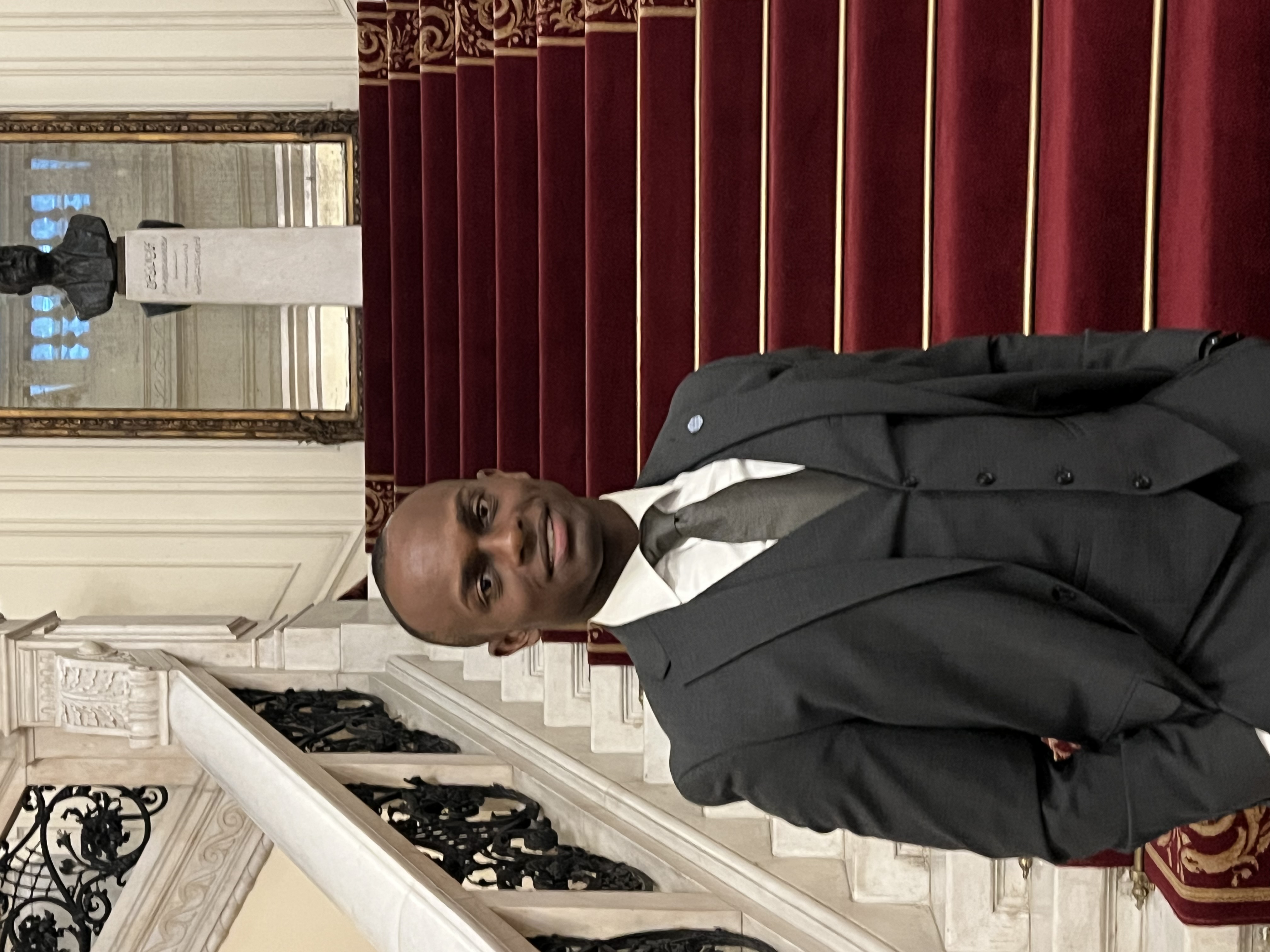
Upon landing and speaking with professionals in Egypt, I quickly realized why the country with the largest number of Arabic speakers also exerts outsized influence on the Arab world’s direction. The mosaic of Egypt’s differentiated Arab identity can be understood through five domestic factors shaping Egyptian foreign policy: location, society, domestic political institutions, identity — as Arabs, majority Muslims and Africans — and economic conditions.
Understanding Egypt’s foreign policy architecture was only the beginning. The same five factors that explain how Egypt projects influence, also mold the investment landscape within its borders. Egypt is not just a geopolitical actor, it is a capital market in motion with asymmetric pockets of opportunity that reward the investor willing to look beyond headline risk. The young median age underpins the innovation that surges from the country – a fact made very apparent during many meetings with growth investors in the country. My work as a senior fellow at Transform Venture Capital gave me a lens through which to observe Egypt: not just as a lifelong student of foreign policy, but as someone trained to find structural conditions to scale frontier technology.
Connections built and sustained following the fellowship were the most meaningful and lasting component of the experience. The program created an eco-chamber of connection through shared meals, post-event discussion, spontaneity, and cultural events. The catalyst that facilitated relationships of this caliber was, as we came to find out, the in-person nature of almost all the events the foundation launches. Mr. Gabr underscored how much more effective meeting in person can be compared to relying solely on the convenience of virtual formats.
I came to realize that the high-performing individuals we met throughout the program respond to the most pressing issues on their radar. In order to remain relevant, you must be present – in person, face-to-face. Another key concept the experience imparted to the cohort was the understanding that campaigns are developing beyond screens and tabloids — away from public view. These are more sophisticated and typically have longer time horizons.
As leaders in business and politics discussed their approach to formulating and executing these initiatives, I became increasingly aware and capable of thinking bigger, more longer term, and in a cross-disciplinary manner. The engagements through the fellowship displayed that despite the growth of social media, many intellectual substrates still follow a course set by individuals outside of the digital social sphere. This is not a drawback but rather an essential dimension of the paradigm that must exist and must be populated by capable, willing individuals who have the personal competency to execute in practical sessions face to face – not just digitally.
Despite the technological changes occurring in almost every domain, the world continues to innovate with humans in mind. The broader underlying theme of the fellowship accentuates the skillset one must leverage to solve problems our society faces. Dialogue, relationship building and pursuit of truth underpin the competencies that yield structural solutions to the challenges our society faces.
Neglecting these statutes risks atrophying institutional knowledge and dulling the cognitive edge this generation of youth need to confront the six structural forces reshaping the global order: debt, demographics, decarbonization, digitalization, and deglobalization. When systems, whether educational or institutional, neglect fundamental components of problem-solving, future generations do not obtain a practical understanding of the context that surrounds previously functional relationships.
Current digital media landscape seeks to simplify, shorten, and segment content so as to commoditize attention. The world is not simple. Relationships that facilitate resolutions of structural problems are not built fleetingly and definitely not exclusively virtually.
The fellowship shows the result of prioritizing the mindset that enables overcoming challenges. The future of leadership is global. The East-West: Art of Dialogue fellowship does an excellent job of bringing youth into authentic, formal settings with the incumbent generation of leaders and sets a leading example of how organizations can meaningfully source esteemed professionals to convey proximate challenges to aspiring youth leaders.