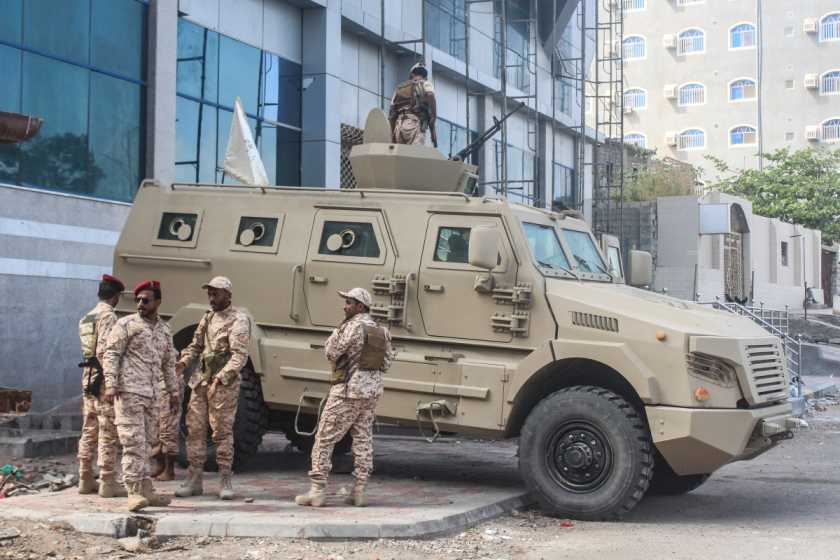

Yemen’s government-aligned forces said they had carried out 1,122 attacks against Houthi sites as the internationally recognised government launched a major offensive to retake Houthi-held territory.
Brigadier General Majid Abdullah Al-Nuzaili, a spokesman for the government-aligned forces, said the attacks targeted artillery positions, rocket launchers and command and control centres.
In a post on X, Al-Nuzaili said the attacks involved warplanes, drones, missiles, rockets, artillery and snipers and took place in the provinces of Saada, al-Jawf and Taiz, as well as along the country’s coast.
He claimed that 1,747 Houthi fighters were killed in the attacks.
Al Jazeera could not independently verify the battlefield report.
The claims came after Yemen’s internationally recognised government launched a major offensive aimed at retaking all territory held by the Houthis.
Yemen’s foreign minister, Afrah Al-Zouba, called for greater international support to defeat the Houthis, saying stability in Yemen was “in the world’s interest”.
“We call upon our brothers, friends, and the international community to support the Yemeni people, their state, and their national institutions in confronting the terrorist Houthi militia,” Al-Zouba said in a post on X.
She said the Houthis had exhausted opportunities for de-escalation and peace and that the threat posed by the group had extended beyond Yemen’s borders.
She described ending the Houthi control as a shared national, regional and international responsibility requiring firm action and effective support.
Saudi-led coalition backs Yemen government offensive
Major-General Turki al-Maliki, spokesman for the Saudi-led coalition fighting in Yemen, said the coalition continued to provide “full operational support” to Yemeni government forces to “restore the state and end the Houthi coup”.
Al-Maliki condemned Houthi attacks on Yemen, Saudi Arabia and Saudi vessels in the Red Sea and the Bab al-Mandeb strait.
He said Saudi Arabia would continue to defend its security and sovereignty, as well as regional and international security.
Iran says war cannot resolve conflict with US
Iranian Foreign Minister Abbas Araghchi said there was no military solution to the conflict with the United States, while warning that Tehran remained ready to return to war if attacked.
His comments followed US President Donald Trump’s remarks that he was nearing a decision on whether to resume strikes against Iran.
Iran’s Islamic Revolutionary Guard Corps commander, Ali Fadavi, meanwhile said the Strait of Hormuz remained under Iran’s control.
Fadavi said the IRGC Navy had warned ships using the US-supervised southern route that their vessels could be targeted at any point.
He said only three to four million barrels of oil per day were moving through the route, which hugs Oman’s coast, and described that volume as negligible compared with pre-war traffic.
Fadavi also rejected US threats of military action, saying Washington had failed in Afghanistan and Iraq and would fail again.
Middle East oil exports rise above pre-war levels
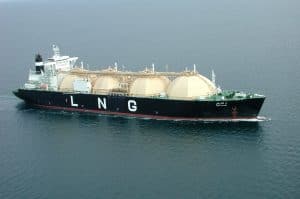
Crude oil exports from the Middle East exceeded pre-war levels on four of the seven days in the final week of September, according to provisional data from ship-tracking firm Kpler cited by Reuters.
Exports rose to between 19.5 million and 22.5 million barrels per day on September 24 and between September 27 and 29.
The region’s exports had averaged 18 million bpd in the year before the US-Israel war on Iran began.
The seven-day moving average stood at 18.5 million bpd on October 1, including shipments through the Strait of Hormuz and Red Sea, as well as exports from terminals and ship-to-ship transfers in the Gulf of Oman.
The increase came amid a rise in tanker attacks in the region, including seven incidents in the Strait of Hormuz, according to shipping intelligence firm Marisks.
The UKMTO agency has also reported at least one attack a day in the Strait of Hormuz or Gulf of Aden since October 2.