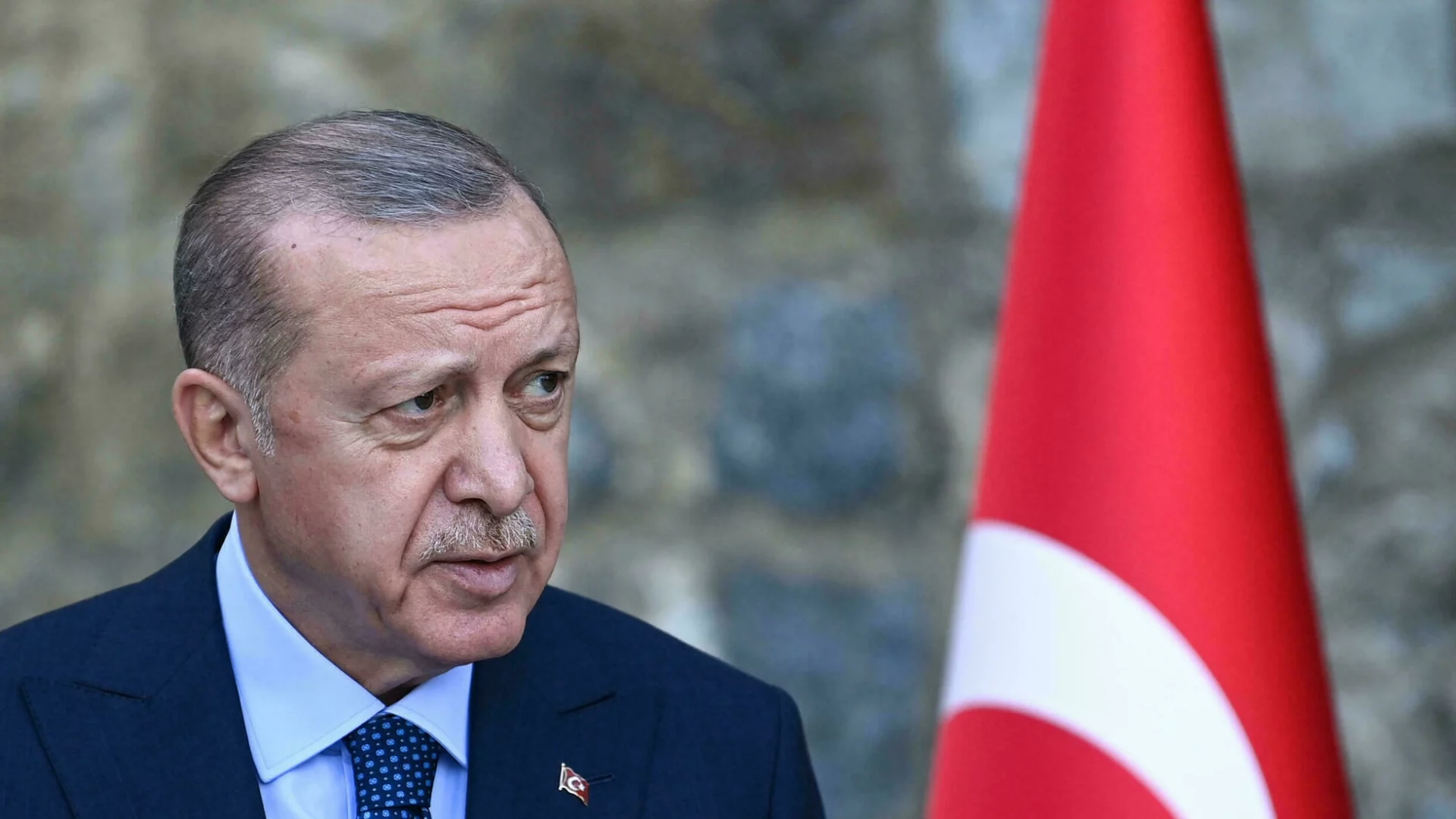

Turkish President Recep Tayyip Erdogan replaced the country’s finance minister on Wednesday after weeks of economic turmoil in which inflation has soared while the lira plummeted to record lows.
According to a presidential decree issued near midnight, Erdogan accepted the resignation of Lutfi Elvan and appointed his deputy Nureddin Nebati as the new finance minister.
Elvan had only been in the role since November 2020, when he was appointed after the resignation of Erdogan’s son-in-law Berat Albayrak.
But Elvan’s year-long tenure has been marked by numerous crises.
Earlier Wednesday, the Turkish Central Bank intervened in markets to prop up the nosediving lira, which has lost nearly 30 percent in value against the dollar in just a month.
Under pressure from Erdogan, Turkey’s officially independent central bank lowered its key interest rate in November for the third time in less than two months.
It did so despite inflation approaching 20 percent — four times the government’s target.
Erdogan believes that high interest rates cause high inflation — the exact opposite of conventional economic thinking — and has stridently maintained he would keep rates low.
Since 2019, he has sacked three central bank governors who opposed his desire for lower interest rates.
The lira has lost more than 40 percent of its value against the dollar since the start of the year.