
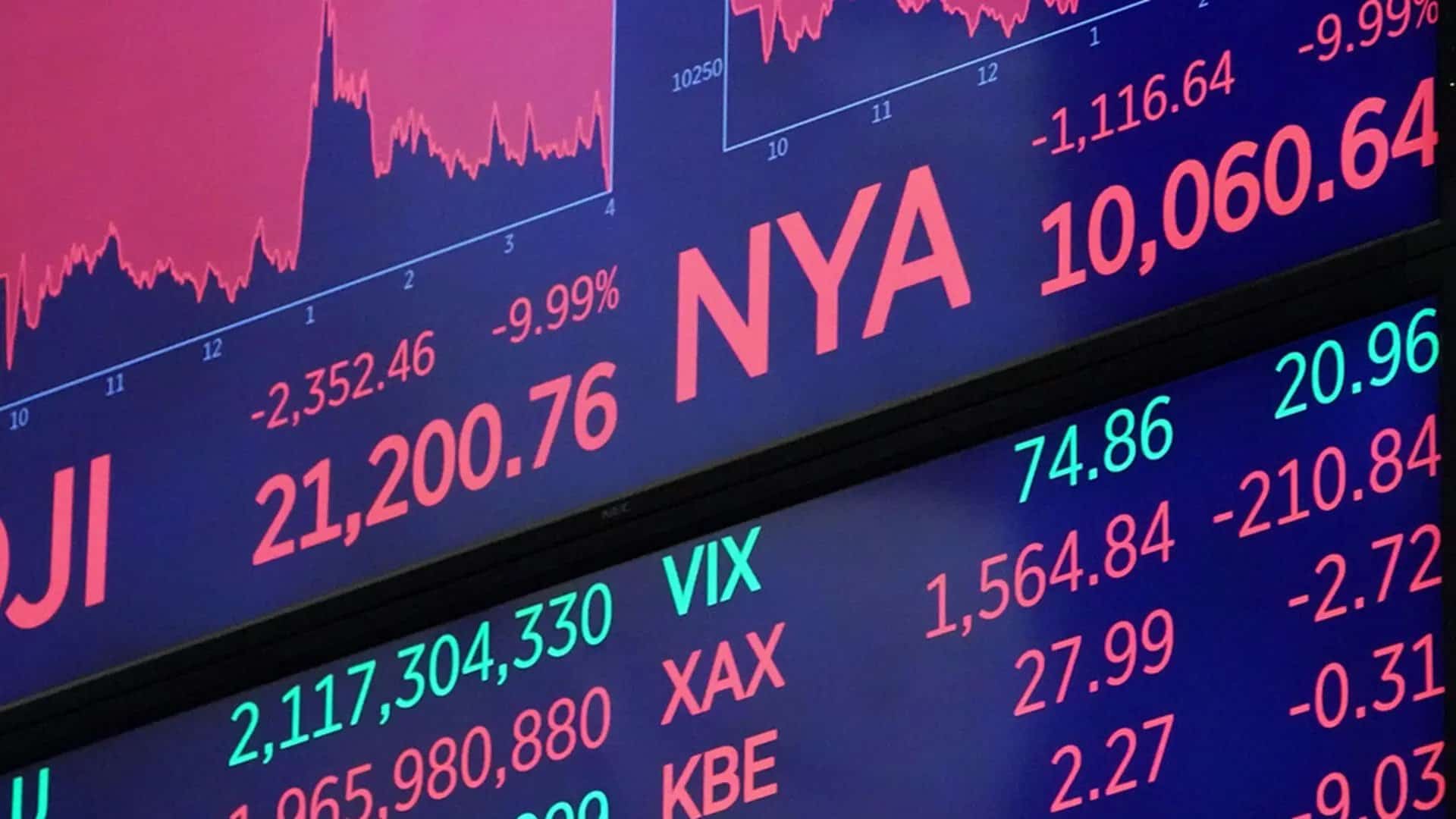


Asian shares fell Tuesday as investors eyed the Omicron coronavirus variant and woes in the Chinese property market, as well as looming central bank moves to curb rising inflation.
As policymakers on both sides of the Atlantic contend with soaring prices, the US Federal Reserve is scheduled to announce its latest interest-rate decision on Wednesday, followed by the European Central Bank (ECB) the next day.
After last week’s strong performance, stocks have stumbled this week as Britain became the latest country to boost its response to the Omicron strain and China reported its first case — which many fear could throw the global recovery into jeopardy.
Tracking those fears, Tokyo fell, as did Seoul and Sydney. London and Paris opened up.
Hong Kong and Shanghai both closed with losses, dragged down by continued woes in the Chinese housing market sparked by the spectacular fall from grace of property giant Evergrande.
Developer Shimao became the latest firm to be pulled into the dragnet Tuesday as its share price plunged to its lowest level in a decade.
And Monday’s decision by Chinese start-up SenseTime to postpone a $767 million initial public offering in Hong Kong also spooked markets, highlighting the risks investors face from competing sanctions as relations between Washington and Beijing sour.
Coronavirus fears have continued to plague investors, with the Asian Development Bank (ADB) warning that the Omicron variant could have a “substantial” economic impact as it trimmed its 2021 and 2022 growth forecasts for developing Asia.
While the region was expected to sustain a “strong rebound” and keep inflation at manageable levels, the emergence of Omicron had brought “additional uncertainty”, the ADB said.
Oil prices have also retreated on virus fears, after they gained around eight percent last week.
‘Straightjacket’
Beyond property woes and virus fears, all eyes this week are on the Fed, which must carefully calibrate its response between raising rates and pulling the rug from under a tenuous recovery or sticking to the status quo and letting inflation rise even further.
Analysts expect the central bank to opt for the former, as the United States battles with consumer prices soaring at some of the highest rates in decades.
“The tapering process has become a straightjacket, preventing the Fed from responding to the higher than expected level and persistence of inflation,” said Philip Marey, senior US strategist at Rabobank, in a survey response to Bloomberg.
A strong signal for rate hikes in 2022 will put pressure on the ECB as well as the Bank of England — both of which meet Thursday.
Investors are “reluctant to buy stocks ahead of the US Federal Reserve’s policy decision”, Tokyo’s Mizuho Securities said, while Angelo Kourkafas, investment strategist at Edward Jones, pointed to a “little bit of uneasiness, nervousness” about the move.
“Volatility will remain elevated throughout all of this week’s rate decisions from the Fed, ECB and BOE,” Edward Moya, senior market analyst at Oanda Corp, wrote in a note.
“2022 is still expected to be a strong global growth story, but accelerated central bank hawkishness could be the one thing that helps deliver the first major pullback with US equities.”