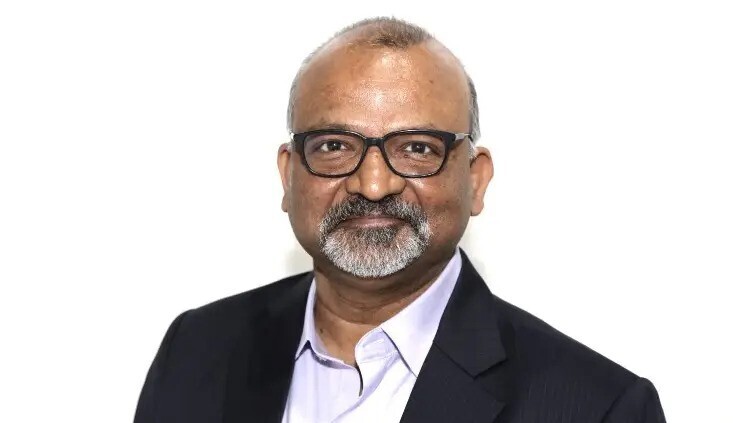

AMB.AI is betting on a future where every device—from TVs to phones to IoT appliances—is “born multilingual.” Fresh off its partnership with Broadcom, the company says real-time translation will soon run directly on the chip, shifting the centre of gravity of voice AI from the cloud to the edge. “This isn’t just a feature upgrade,” said Avneesh Prakash, the founder, in an interview with TRENDS, describing it instead as “an entirely new paradigm that can disrupt the global content distribution industry.”
The company, already known for localizing live sports for MLS and NASCAR in real time, believes on-device AI will complete the dismantling of the world’s language divide. With its proprietary MARS and BOLI models, CAMB.AI aims to erase linguistic inequity across sectors—from media and healthcare to education and telecom.
CAMB.AI was founded with the bold vision of removing language barriers and fostering equal access to content. What personal or professional experiences first shaped this mission for you?
Growing up in a country where English wasn’t the native language, my co-founder Akshat Prakash and I experienced firsthand what exclusion feels like. Akshat is also my son, and there’s a 30-year gap between us, but our childhoods were similarly shaped by the reality that high-quality content (education, entertainment, sports) was locked behind the English language.
I was lucky enough to learn English early and gain access, and it opened worlds for me. But that privilege was arbitrary. Language drew invisible boundaries, not just around what you could consume, but who you could become. That realization is what drove us to create CAMB.AI. We believe language should never define opportunity or access.
You often emphasize that CAMB.AI doesn’t just translate words but preserves emotion, tone, and prosody. Why is this emotional fidelity so critical, and how does your technology achieve it?
The intent of content is communication and communication is more than mere words—it’s about creating a connection. If we lose emotional fidelity, we lose nuance, intent, humor, and empathy. That’s why our approach goes beyond simple translations to model the subtleties of human speech: tone, prosody, spontaneity.
Our AI Models are trained to capture intent, making a sports call in Spanish sound just as thrilling as the original English, or a joke in Hindi land with the same warmth as its source.
CAMB.AI made history by localizing live sports commentary—like NASCAR and MLS matches—into multiple languages in real time. Real-time multilingual commentary changes how fans experience sports. What was your vision when you set out to make this possible, and how do you see it transforming global sports viewership?
Our vision wasn’t to just localize sports—it was to redefine the entire experience for fans and rights holders. Live sports present the hardest challenge: unpredictable audio, fast pace, emotional intensity. We decided from day one to solve for the toughest scenario first.
Partnering with MLS in April 2024, we delivered the first AI-translated live sports commentary—streaming matches in new languages in real time, making fandom borderless. It’s not just historic; it’s a seismic shift in how content is distributed and how sports can engage new global audiences.
Less than 17 percent of the world speaks English, yet most content is still produced for English speakers. Do you think AI-driven translation can help shift global cultural power away from English-dominated ecosystems?
Absolutely. When content becomes truly accessible in any language, cultural power naturally decentralizes. A filmmaker in Egypt, an educator in Brazil, or an innovator in Indonesia can impact global audiences in their own voice and tongue. No single language remains the gatekeeper anymore; AI-driven translation empowers creators everywhere to participate and compete on an equal footing. Ultimately, in a funny paradoxical manner, the cultural relevance of each individual language will flourish, but in a cross-lingual context, languages will become irrelevant.
Finally, how do you envision the world of communication five years from now—when the “language barrier” truly disappears? What will that mean for creators, audiences, and humanity at large?
I think erasing language barriers will transform everything—from basic societal needs like healthcare and education, to more luxurious consumption of sports and entertainment. For creators, it will mean infinite distribution, and for consumers, it will mean limitless choices.
Creators will gain access to infinite global audiences, and audiences will join the global cultural conversation regardless of their native tongue. Innovation will stop being about where you were born or what language you speak, but about what you bring to the table.
Humanity will finally stop squandering human potential based on linguistic undertones. That’s the vision we’re building toward: one internet, any content, any conversation, open for all. That’s the CAMB.AI Localization Infrastructure for the Internet, where language will never limit anyone anymore.