
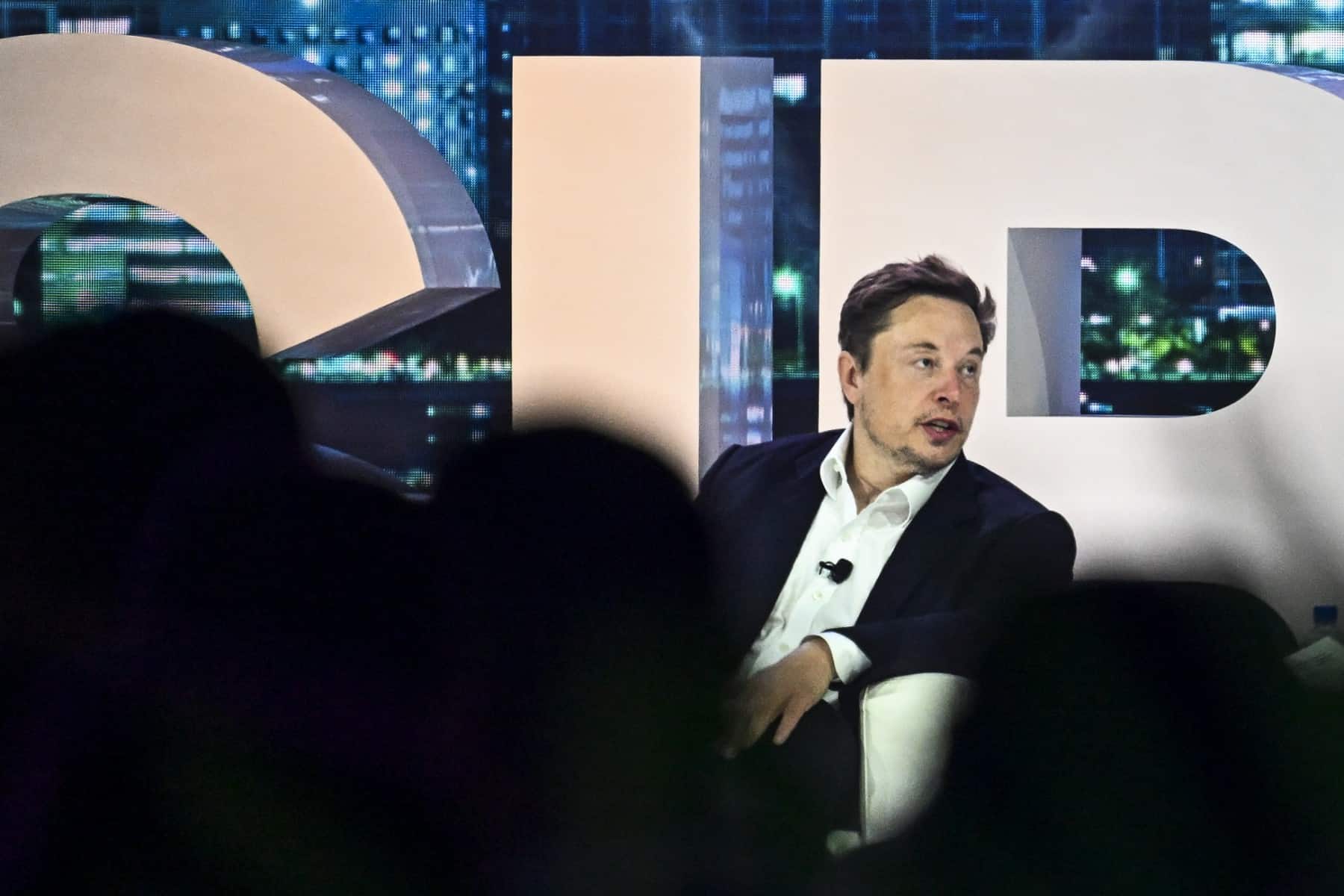


Miami, United States– Twitter head Elon Musk on Tuesday attempted to reassure wary advertisers by hyping up the site’s newly introduced content moderation policy against hateful material.
Speaking at a meeting in Florida, the controversial billionaire outlined new rules, first announced Monday, to limit the reach of tweets that do not conform to the platform’s guidelines.
“If somebody has something hateful to say, it doesn’t mean he should have a microphone,” the self-described free-speech absolutist told gathered journalists.
“He still should be able to say it, but it needs to be not them pushing it on people,” he added.
Under the new policy, unveiled in a blog post titled “Freedom of Speech, Not Reach,” Twitter will soon begin tagging posts whose visibility has been limited.
The labels will “bring a new level of transparency to enforcement actions,” the blog post said.
“Tweets with these labels will be made less discoverable on the platform. Additionally, we will not place ads adjacent to content that we label.”
Since purchasing the so-called bird app in a rollercoaster $44 billion deal last year, Musk has sharply reined in content moderation on the platform, allowing the return of many users who had been banned for posting tweets that incite hate or spread misinformation.
At the same time, he also reduced the company’s workforce from more than 7,500 to fewer than 2,000 employees.
Last week, US public radio NPR said it was quitting Twitter after the site labeled the highly respected news outlet’s account as “state-affiliated media,” branding it the same way as media in authoritarian countries such as Russia or China.
The tag was later amended to read “government-funded media,” which was also applied to Britain’s BBC.
Following the row, Canada’s CBC/Radio-Canada and Swedish public radio Sveriges Radio (SR) also quit the social network.
The drama came against the backdrop of the rollout of yet another contentious new policy, as Twitter has said that starting April 20, it will only grant its famous blue checkmark to accounts that pay for its Twitter Blue service.
According to analyst Jasmine Enberg at market research firm Insider Intelligence, Twitter’s revenue is set to drop 28 percent this year, because “advertisers don’t trust Musk.”
But for Musk, the ability to tinker with Twitter’s protocol might be worth the financial risk of spooking advertisers.
“It’s totally cool to say that you want to have your advertisement appear in certain places in Twitter and not in other places,” Musk said Tuesday.
“But it’s not cool to try to say what you can do or not do. And if that means Twitter loses hundreds of thousands of dollars, we’ll lose it,” he said.