
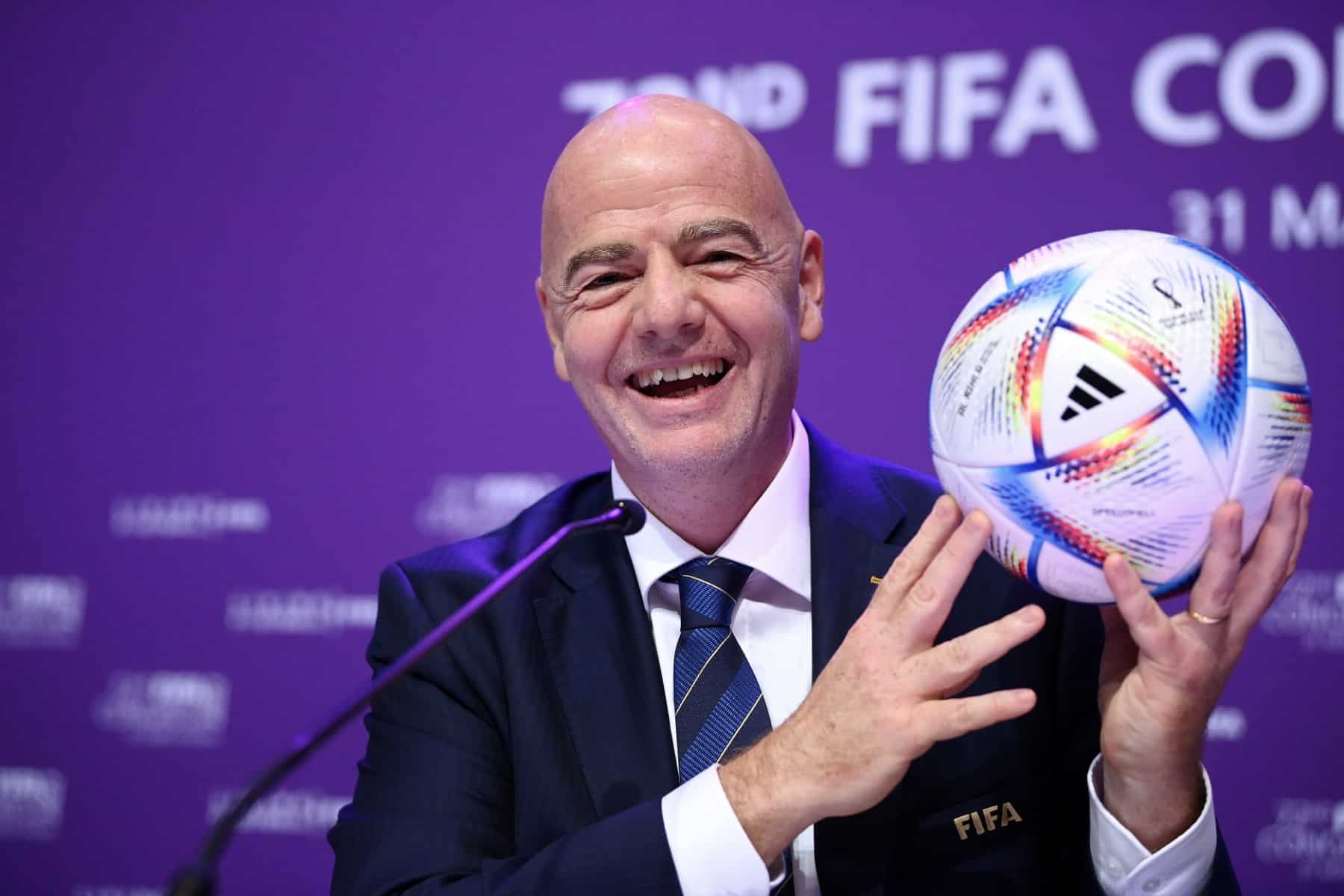


FIFA is on target to reap record revenues of seven billion dollars on the back of this year’s Qatar World Cup, president Gianni Infantino said Thursday as experts predicted a long-term financial boom for football.
Infantino told the annual congress of the sport’s world governing body that FIFA’s finances were “great” and that it would beat its target of making $6.4 billion in the four years up to 2022 by $600 million.
The governing body has seen revenues from television, sponsors and marketing take off despite past scandals and the coronavirus pandemic when spectators have turned more to television screens and other new platforms.
FIFA said in its accounts that it expects “television broadcasting rights to have set a new record” by the time of the World Cup final on December 18.
FIFA, whose finances run on a four-year cycle between World Cups, reported revenue of $766 million for 2021 — level with 2019 and up from a pandemic-hit $266 million in 2020 — and by the end of last year already had $6.11 billion of its target income contracted.
Most income falls into FIFA accounts in the year of the World Cup tournament. And despite the controversy over giving this year’s World Cup to Qatar — which has faced criticism over its labor rights — revenues have boomed since the last World Cup in Russia.
The finances were so good that FIFA spent more than one billion dollars on pandemic recovery measures in football and still increased its cash and asset reserves by 21 percent to $5.5 billion.
“The financial position of the organization remains healthy and robust,” the global body’s accounts said modestly.
‘Withstanding effects of Covid’
Simon Chadwick, a sports economy professor at the EM Lyon Business School in France, said it had always been likely that the pandemic would make “the rich in sport get richer and the poor would get poorer”.
“Organizations such as FIFA have the resources and organizational resilience to withstand the worst effects of Covid,” he added.
“Secondly, the sponsors and broadcasters looked for safe havens during the Covid storm — that is, properties proven to have stability, commercial value and an established presence.”
Football’s World Cup “cuts across multiple target audiences” and is more global than rival sports such as cricket or American Football, he added.
FIFA is moving into e-sports and other new platforms and Chadwick said “there is still considerable buoyancy about FIFA’s prospects in generating revenues”.
“Add to this the current NFT, crypto currency and metaverse frenzy, and FIFA — like many in football — will be anticipating revenue windfalls that will sustain it into the medium and long-term.”
The organization’s finances have remained spectacular despite the scandal of seeing seven top FIFA leaders arrested on corruption charges before its 2015 congress.
More than $200 million handed over by US authorities from assets seized from regional football barons has added to the FIFA windfall.
“It’s a high expectation for any global organization to completely eradicate issues of corruption or scandal,” said Chadwick. “One can only hope that FIFA will continue moving in the right direction.”
“FIFA has worked hard to broaden its constituency; for instance, by bringing onboard sponsors from countries where standards of governance and levels of scrutiny are somewhat different to, say, Europe.”
Chinese giants in the shape of dairy company Mengniu and consumer goods maker Hisense have become major FIFA sponsors.
“For FIFA to completely regain trust among some stakeholders, there is consequently still some work to do,” said Chadwick.
The world body had to “take care not to become arrogant, lazy or sloppy in its pursuit of new revenues,” he added.