
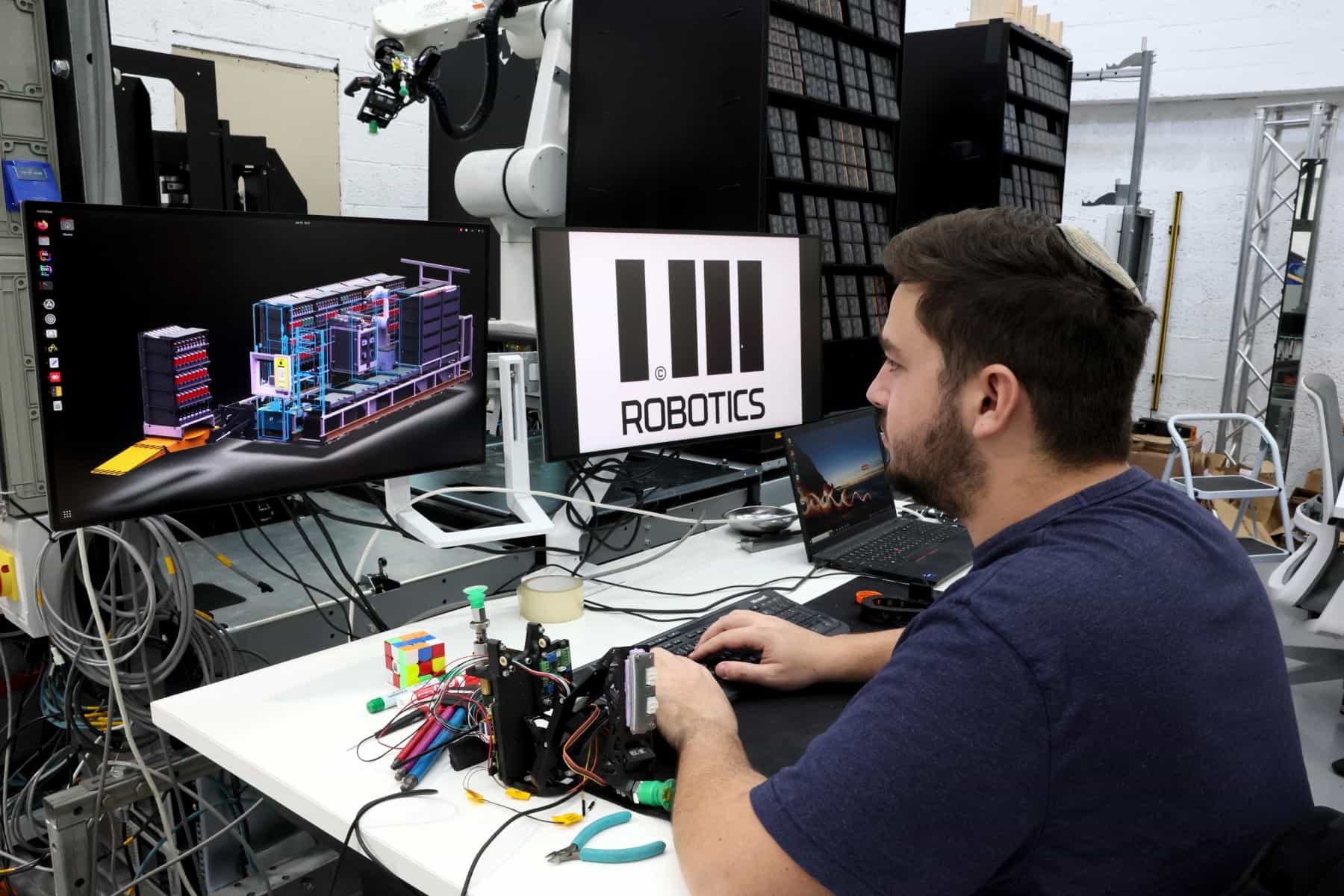


Tel Aviv, Israel– Behind a dark and opaque storefront in Tel Aviv, an Israeli company is speeding up online shopping by replacing staff with robots that maneuver around small storerooms.
Whirring along a rail between two long shelves packed with coffee capsules, a robot stopped, pivoted to the right, shone a light before grabbing an item and dropping it into a paper bag.
“Shoppers want to receive their items faster and faster,” said Eyal Yair, co-founder and CEO of 1MRobotics, which built the automated storeroom late last year.
“If once you’d be looking at a two-day delivery, which then became a one-day delivery and then two hours, now we’re looking at 10 minutes,” he said.
The robot toils in the custom-made 30-square-metre (320-square-feet) space storing the capsules, fitted with a streetside hatch for couriers and shoppers to collect online orders.
The unassuming robot receives the orders, packs and prepares them, with humans only needed to restock the warehouse and dispatch deliveries.
While robots are used to pack groceries in large supermarkets around the world, Yair said the size of 1MRobotics’s warehouses makes them “pioneers”.
“We are hardly seeing any players talking about small warehouses, of a few dozen square meters,” he told AFP.
‘No sense’ in supermarkets
A swift centrally-located operation run by human staff rather than robots is only financially viable for smaller businesses that deal with few orders, Yair argued.
But “once you begin to scale up and deal with dozens of orders a day, you need lots of people,” he said. “Then it becomes less economical.”
The Covid-19 pandemic energized the already rapidly evolving e-commerce market, with sellers struggling to meet the increasing demand for swift processing and deliveries.
The solution “requires small warehouses, very close to the clients, and at the end of the day, these small warehouses have to be automated”, said Yair.
In the south Tel Aviv headquarters of 1MRobotics, young men and women — nearly all of them graduates of the Israeli army’s robotics and technological units — were customizing off-the-shelf robots.
Combined with artificial intelligence, these robots are designed to carefully grasp and pack fruit and vegetables, as well as frozen items thanks to a method that prevents the robots’ oil from freezing.
The company also builds the containers that will serve as the mini-warehouses, with Yair saying their robots and storage units would soon be working with an alcohol shop in Brazil, minimarkets in Germany and a cellphone company in South Africa.
In his view, it is just a matter of time before “hyper-local logistics infrastructure” like his robotic warehouses make supermarkets redundant.
“Once you have a service where you know you can order 10 items a few times a day and get them within 10 minutes, there’ll be no reason to shop once a week for the entire week,” he said.
“It just doesn’t make sense.”