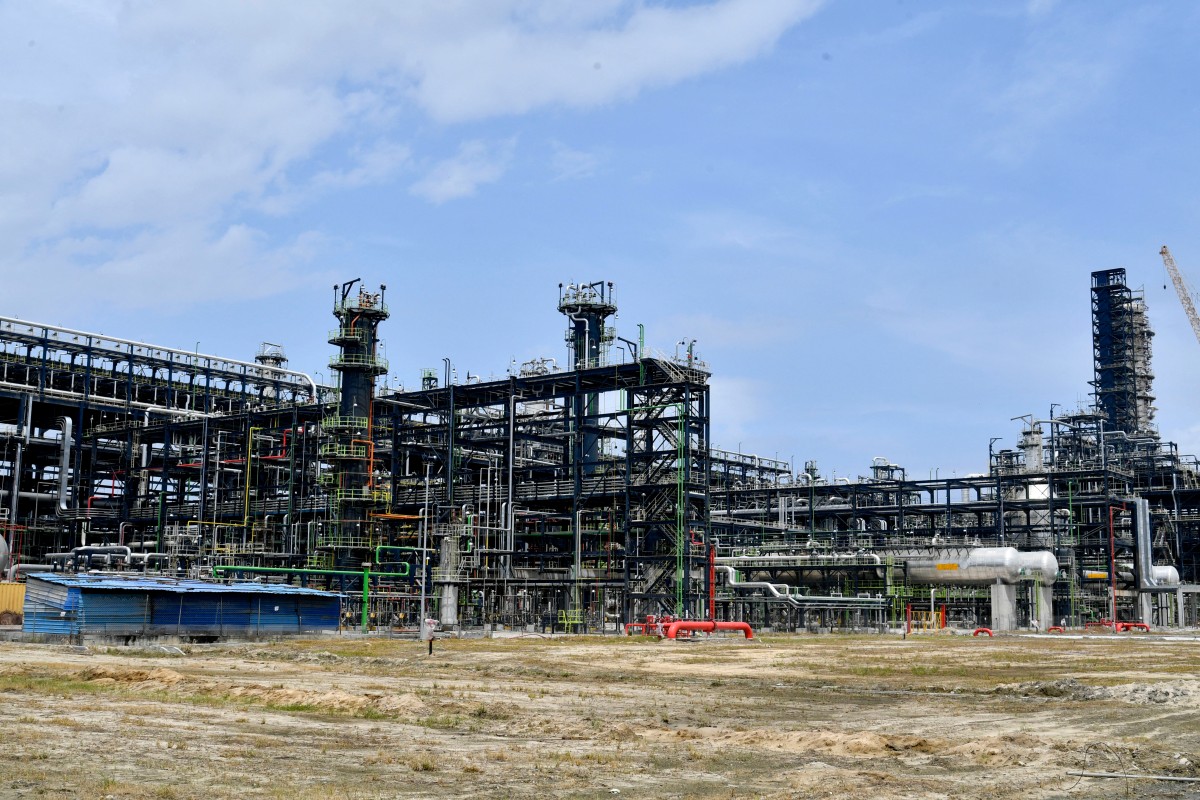

Lagos, Nigeria — Nigeria’s Dangote oil refinery, already the largest in Africa, aims to become the biggest in the world in three years’ time with an expansion doubling its capacity, its owner said on Sunday.
“We are more than doubling the barrels… to 1.4 million from 650,000,” said Aliko Dangote, a Nigerian businessman who is Africa’s richest person.
“This will make it the largest refinery” globally, surpassing India’s Jamnagar Refinery, he said.
The privately run Dangote refinery, which started operations last year, is a gamechanger for Nigeria, which previously had to import almost all its petrol despite being a major oil producer.
After years of neglect and mismanagement of public refineries, Dangote has shaken up the corruption-marred players in Nigeria and driven down prices of petrol for consumers.
“This expansion reflects our confidence in Nigeria’s future, our belief in Africa’s potential and our commitment to building energy independence for our continent,” Dangote said.
The Dangote refinery has sparked monopoly fears as it becomes a powerful player itself.
Recent moves to bring its own, natural gas-powered trucks to distribute petrol in the country in September sparked a strike by a fuel tanker drivers’ union, which accused the company of hiring new drivers on the condition they didn’t join a union.
The refinery denied the allegations.
The refinery suffered a two-day strike that ended October 1 after government mediation.
The PENGASSAN oil and gas workers’ union accused the refinery of firing 800 local workers because they unionized, and replacing them with 2,000 workers from India.
The refinery called the allegation false, and said it had fired an unspecified number of workers over “acts of sabotage”.