
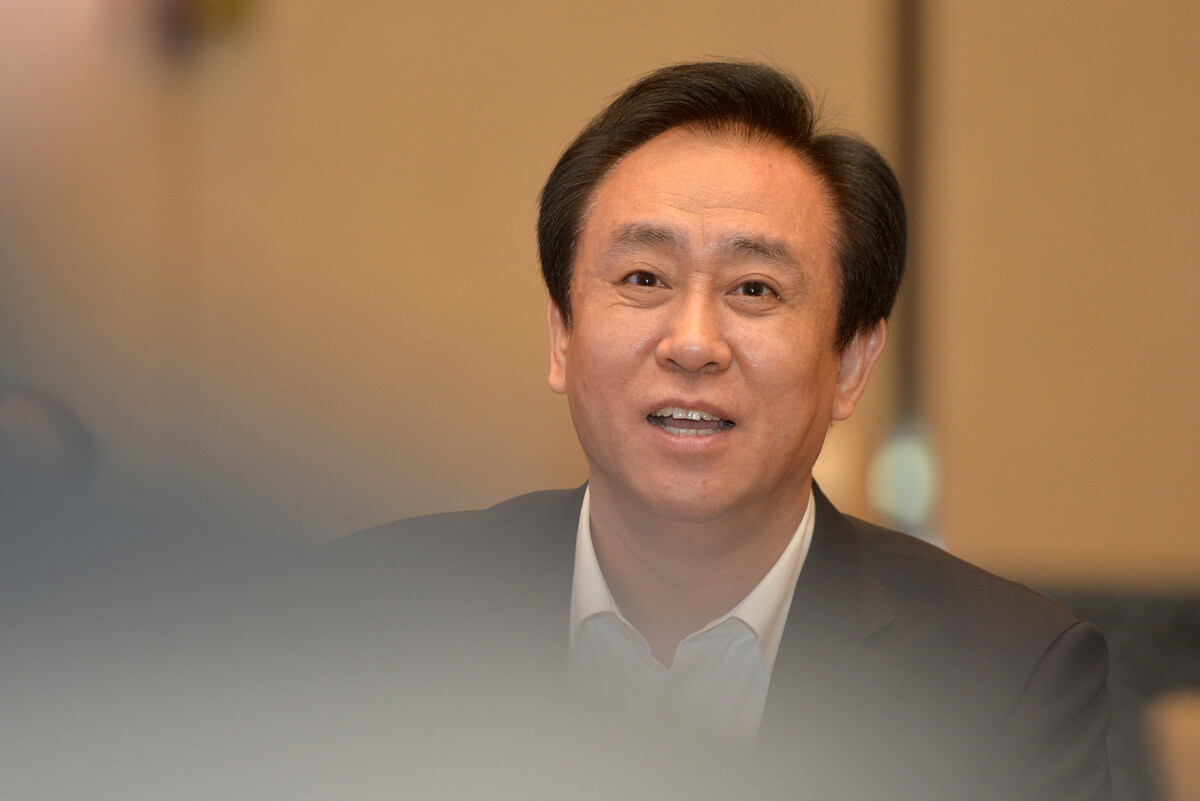


Beijing, China– The billionaire boss of beleaguered Chinese property developer China Evergrande is being held by police, a report said Wednesday, as the debt-ridden company grapples with severe financial difficulties.
Xu Jiayin, who is known as Hui Ka Yan in Cantonese, was taken away by authorities earlier this month, according to anonymous sources cited by Bloomberg News.
He is being held under “residential surveillance”, the report said, which does not mean he has been arrested or charged with a crime.
Privately run pro-government Chinese outlet Guancha also said informed sources had confirmed the report.
It added that Xu had been brought under control by authorities “a few days ago” and that he is being held in Beijing.
Calls by AFP to Evergrande offices in Hong Kong and mainland China went unanswered and the company did not respond to a request for comment.
Asked about the Bloomberg reporting at a Wednesday news briefing, Chinese foreign ministry spokesman Wang Wenbin said he was “not aware of the situation”.
Evergrande stocks in Hong Kong fell precipitously on Wednesday afternoon following a moderate rise in morning trading, closing the day 19 percent down.
Evergrande’s enormous debt — the firm estimated it at $328 billion at the end of June –has contributed to the country’s deepening property sector crisis, raising fears of a global spillover.
The company’s property arm this week missed a key bond payment, and Chinese financial website Caixin reported that former executives at the firm had been detained.
Dire straits
The 65-year-old chairman was once China’s richest man, with a taste for luxury labels and yachts and a nose for praising the Communist Party that steered the economy to a home-ownership boom.
Xu’s wealth is now estimated at $1.8 billion — down from $42 billion in 2017 — according to the Bloomberg Billionaires Index.
On Sunday evening, Evergrande said it was unable to issue new debt as its subsidiary, Hengda Real Estate Group, was being investigated.
That came two days after the company said meetings this week on a key restructuring plan would not take place, adding it was “necessary to reassess the terms” of the plan in order to suit the “objective situation and the demand of the creditors”.
China’s property sector is a key pillar of growth — along with construction it accounts for about a quarter of gross domestic product — and has experienced a dazzling boom in recent decades.
But the massive debt accrued by the industry’s biggest players has been seen by Beijing in recent years as an unacceptable risk for the financial system and overall economic health.
Authorities have gradually tightened developers’ access to credit since 2020, and a wave of defaults have followed — notably that of Evergrande.
Earlier this month, authorities in the southern city of Shenzhen said they had arrested several Evergrande employees, also calling on the public to report any cases of suspected fraud.
Another Chinese property giant, Country Garden, has narrowly avoided default in recent months, after reporting a record loss and debts of more than $150 billion.