
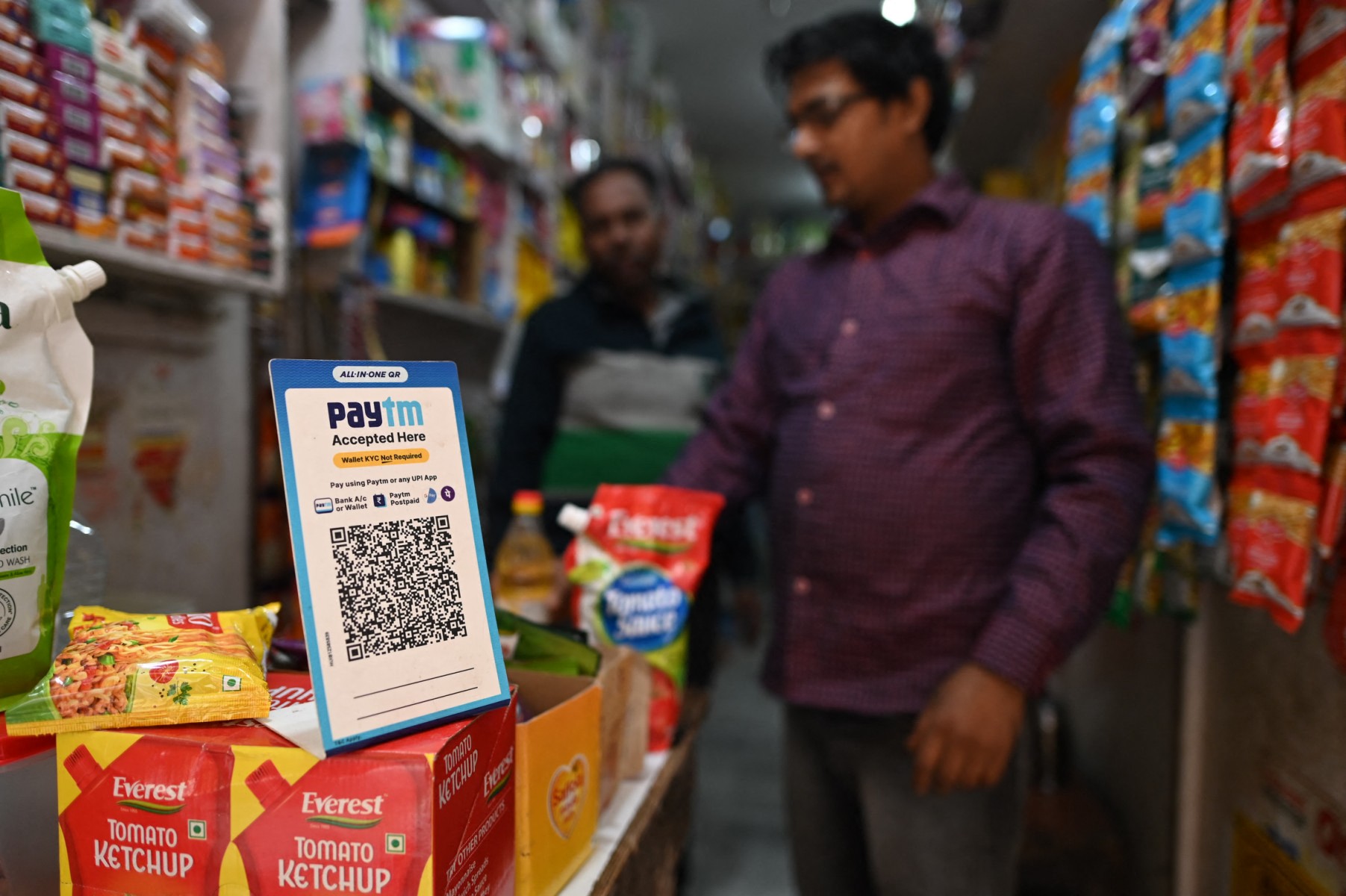


New Delhi, India— Shares in Indian mobile payments giant Paytm nosedived Thursday after regulators ordered its banking arm to stop accepting fresh deposits, dealing a fresh blow to the fintech firm after years of losses.
The company collapsed 20 percent at the open of trade in Mumbai before a trading halt, the day after the Reserve Bank of India (RBI) reported “persistent non-compliances” at Paytm Payments Bank.
The RBI said it would not be able to accept new deposits, offer fund transfers or help facilitate credit transactions from March, although customers will be able to withdraw cash already deposited.
Paytm said in a statement Thursday that it was taking “immediate steps” to comply with the RBI’s demands.
It said the order would have an annual “worst case impact” of between 3-5 billion rupees ($36-$60 million) on earnings but added that it “expects to continue on its trajectory to improve its profitability”.
The decision is the second major regulatory action against the bank, after the RBI asked it to stop adding new customers in 2022.
Paytm’s platform was launched in 2010 and quickly became synonymous with digital payments in a country traditionally dominated by cash transactions.
Indian shop owners, taxi and rickshaw drivers and other vendors accept payments as low as 10 rupees ($0.13) using Paytm’s ubiquitous blue-and-white QR code stickers.
Paytm holds a 49 percent stake in the payments bank, a separate but connected business, while founder Vijay Shekhar Sharma holds the remaining 51 percent.
The firm listed in Mumbai in November 2021 but its shares have since been hammered and are down more than 70 percent since the initial public offering as investors fret over its profitability and grow worried about regulatory rows.
Analysts said the RBI order effectively stalled the bank.
“For all practical purposes, the above notifications end the operations of Paytm Payments Bank,” brokerage firm Bernstein said in a note.
“This is a definite negative development and adds to the already heavy regulatory overhang on the business.”