
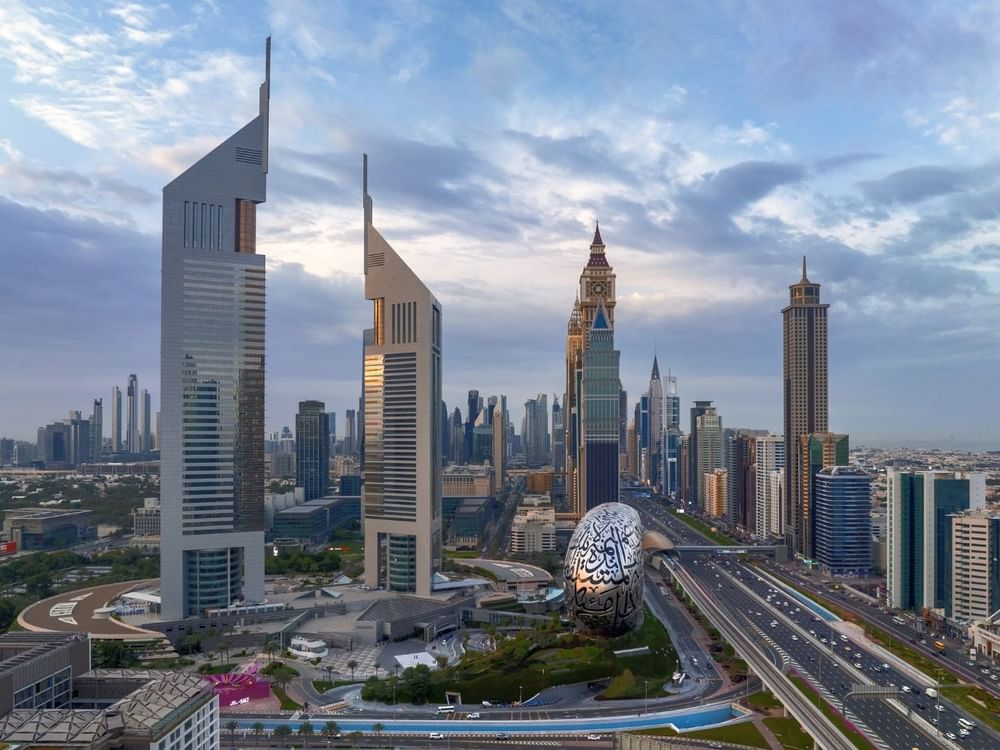


Dubai, UAE — The UAE’s real estate sector extended its upward trajectory in March, with robust project launches, steady construction activity and record-setting transactions reinforcing its position as a global investment hub.
The momentum builds on a strong 2025 performance, when Dubai recorded one of its busiest years on record, with property transactions exceeding AED 400 billion and sustained demand across luxury and off-plan segments. In Abu Dhabi, the market also saw solid growth, with transaction values rising year-on-year and increased activity in high-end developments, particularly on Saadiyat and Yas islands.
In Dubai, March saw a fresh wave of residential and commercial project launches alongside record sales. A landmark AED422 million luxury apartment deal ranked among the most expensive in the emirate’s history, underscoring continued appetite for premium assets.
Major developers accelerated launches across key masterplans. Emaar Properties unveiled Golf Valley within Emaar South, offering 262 homes, while National Properties announced a AED500 million commercial tower in Barsha Heights.
New mid-market and lifestyle-focused developments also entered the pipeline. Zoya Developments launched the Nové project in Dubailand with investments exceeding AED200 million, and OAM Real Estate Development introduced Rise Residences in Warsan, reflecting sustained end-user demand across segments.
Meanwhile, Dubai Multi Commodities Centre advanced plans for its Uptown district, including an iconic tower set to exceed 600 metres, adding to Dubai’s evolving skyline.
Construction activity remained firmly on track. Deyaar Development is nearing early completion of its Jannat project in Dubai Production City, while preparing to deliver around 2,000 residential units across multiple developments. Azizi Developments launched Creek Views 4 in Al Jaddaf, building on earlier phases at varying stages of completion.
Other developers, including Dubai Investments Real Estate and Binghatti Holding, reported steady progress, with Binghatti noting average weekly sales of around AED500 million since late February. Master developers Nakheel, Dubai Properties and Meraas confirmed uninterrupted execution across projects.
Dubai’s resilience, supported by a stable regulatory environment, continues to underpin investor confidence, according to DAMAC Properties.
In Abu Dhabi, Aldar Properties said operations across its portfolio — spanning residential, retail, commercial and hospitality assets — remain strong amid favourable market conditions. The developer recently launched Baccarat Residences on Saadiyat Island, featuring a mix of apartments, villas and penthouses.
New launches are also driving demand in the capital. Modon introduced the Tara Park project on Reem Island, while Ohana Development reported approximately AED6 billion in sales within 72 hours for its Manchester City-branded Yas Island residences.
Elsewhere, Sharjah recorded strong activity during Ramadan, with transactions reaching AED4.6 billion, up 71.8 percent, as Arada awarded a AED183 million contract to build a school within its Masaar community.
Analysts say the current pace of launches and sales reflects structural demand drivers — including population growth, investor-friendly policies and long-term residency initiatives — that have carried over from 2025 into 2026, positioning the UAE property market for sustained expansion.