
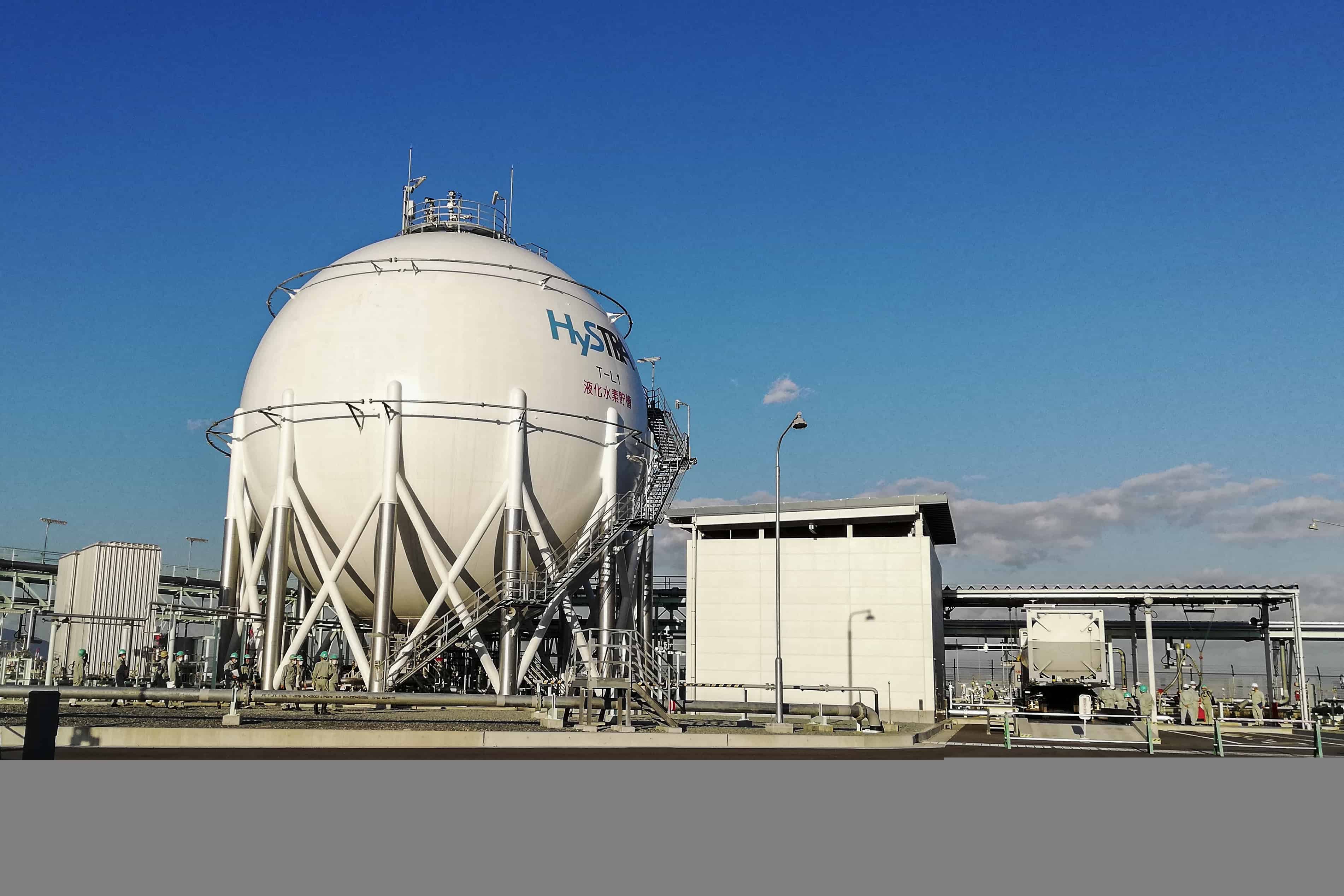


A state-of-the-art liquid hydrogen tanker readied for loading in Australia Friday ahead of shipment to Japan, in what Canberra described as a “world first” trial of the technology.
The Suiso Frontier is docked near Melbourne and is being loaded with super-cooled hydrogen, a source of fuel that supporters hope could one day rival LNG.
The ship is part of the Hydrogen Energy Supply Chain (HESC), a joint Japanese-Australian project intended to produce plentiful, affordable fuel for Japan.
“This is a historic day, this is the beginning of an industry that will shape the future of global energy,” said Australian energy minister Angus Taylor.
Hydrogen produces only steam and no carbon dioxide when burnt, making it an attractive possible alternative to dirtier fossil fuels.
It can be made from renewable sources like water — but in Australia is extracted from brown coal or lignite, significantly reducing its green credentials.
Australia hopes to win over increasingly environmentally conscious investors by capturing the carbon emitted in production.
Australia’s pro-coal government has thrown its weight behind the new industry, while trying to reassure supporters it is not the end of locally produced fossil fuels.
“We will continue to support our traditional industries, our traditional exports, but we’ll also grow areas like hydrogen,” said resources minister Keith Pitt.
“Today’s shipment comes from brown coal. It is available, it’s affordable, it’s local and delivers jobs into regional areas,” Pitt said.
Australian government advisor Alan Finkel said the shipment was “the beginning of an international hydrogen shipping industry that might one-day rival the global LNG industry”.
The ship is expected to set sail for Kobe, western Japan, in around a week.
If the tests are successful the project will be extended and will enter a commercial phase after 2030 and a new terminus in Japan will then be built, along with larger ships.
And the process is complicated, expensive and energy demanding: to be transported by sea as a liquid, hydrogen needs to be cooled to -253 degrees Celsius (-423.4 degrees Fahrenheit)
When liquified hydrogen is 800 times less than its gaseous volume, according to HESC.