
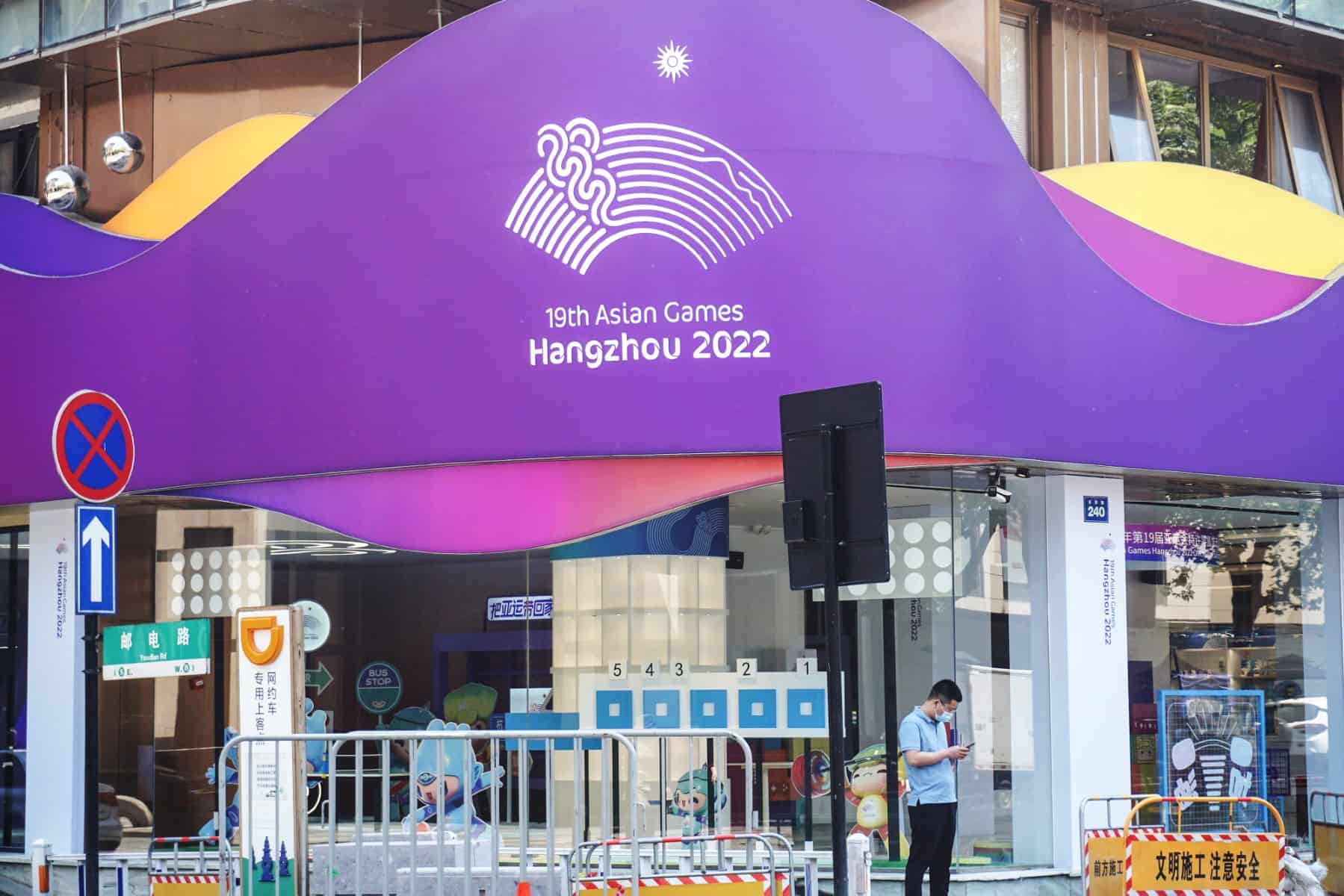


The Asian Games in September in the Chinese city of Hangzhou have been postponed because of Covid with new dates to be announced “in the near future”, organisers said on Friday.
The Games were scheduled to be held from September 10 to 25 but have now been delayed as China tries to stamp out a large resurgence in infections in several parts of the country.
Hangzhou lies less than 200 kilometres (120 miles) from the country’s biggest city Shanghai, which has endured a weeks-long lockdown as part of the ruling Communist Party’s zero-tolerance approach to the virus.
The Olympic Council of Asia (OCA) said in a statement that the decision to postpone “was taken by all the stakeholders after carefully considering the pandemic situation and the size of the Games”.
The Asian Games typically attract more than 10,000 athletes from across the region.
The World University Games, scheduled to begin next month in Chengdu and already delayed from last year, have also been postponed again, until 2023.
Organisers said last month that Hangzhou, a city of 12 million in eastern China, had finished constructing 56 competition venues for the Asian Games and Asian Para Games.
At the time, they indicated that they planned to hold the event under a virus control plan that “learns from the successful experience” of the Beijing Winter Olympics, which were held in February in a strict Covid-secure bubble.
Hangzhou was poised to become the third city in China to host the continental competition after Beijing in 1990 and Guangzhou in 2010.
Some events were due to be held in other provincial cities including Ningbo, Wenzhou, Huzhou, Shaoxing and Jinhua.
Taiwan’s star weightlifter Kuo Hsing-chun, a gold medallist at the Tokyo 2020 Olympics — which were pushed back to last year by the pandemic — told AFP she had already accepted the latest disruption.
“With the coronavirus outbreak getting more and more serious (in some places), I was more or less mentally prepared for this,” she said.
But some national Olympic bodies lamented the impact the delay would have on their competitors.
A delay was “not good for the athletes”, Rajiv Mehta, secretary of the Indian Olympic Association, told AFP.
“The athlete will be older by a year. Your practice changes.”
The OCA also said that the Asian Youth Games, scheduled to be held in December in the Chinese city of Shantou, would be cancelled having already been postponed once.
‘Resolutely fight’
Almost all international sport has ground to a halt in China since Covid emerged in the Chinese city of Wuhan in late 2019.
The Beijing Olympics was an exception but it was held in a “closed loop” with everyone inside it — including athletes, staff, volunteers and media — taking daily Covid tests and not allowed to venture into the wider city or have contact with the public.
China has stubbornly stuck to its zero-Covid policy, imposing strict lockdowns, quarantines and mass testing programmes even while other countries start to reopen.
Hangzhou last week beefed up virus curbs after logging a handful of cases, ordering around three-quarters of its population to get tested every 48 hours to access public spaces and transportation.
Officials in the city, home to some of China’s biggest companies including technology giant Alibaba, said the moves would ensure “the virus has nowhere to hide or settle”.
Beijing has touted the zero-Covid strategy as proof that it values human life above material concerns and can avert the public health crises seen in many Western countries.
Top Chinese leaders on Thursday again vowed to “unwaveringly adhere” to zero-Covid and “resolutely fight against” criticism of the policy, despite a growing public outcry.