
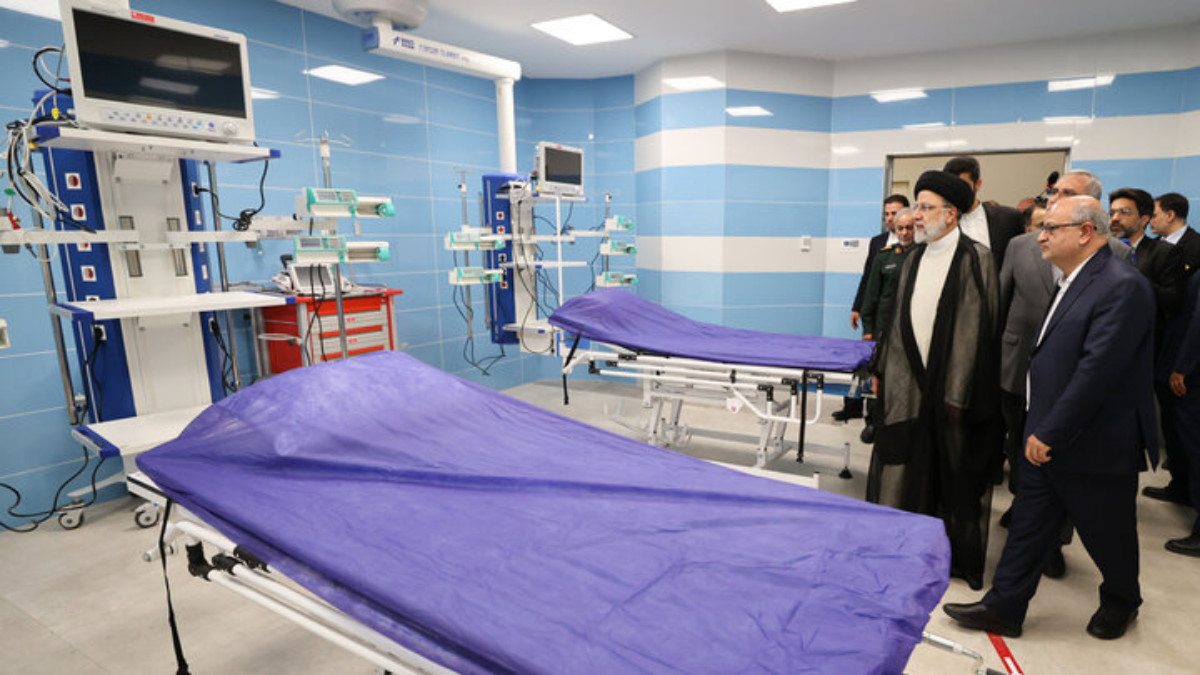


Tehran, Iran–Iranian President Ebrahim Raisi has claimed that health tourism in the country has attracted patients from neighboring countries and even Central Asian states who prefer to get medical care in Iran rather than in Europe.
Raisi made the remarks on Friday as he inaugurated Ghadir Major Hospital in the north of the Iranian capital of Tehran.
He highlighted Iran’s status as a hub for health tourism in West Asia, saying that patients from regional countries and even Central Asian states choose to come to the country over Europe for treatment.
“This is because of the lower costs and high expertise available in Iran,” he said.
In late May, Iran’s Health Minister Bahram Einollahi said the country had made remarkable progress in the health sector since the 1979 Islamic Revolution, adding that more than 1.2 million foreign patients were treated in Iranian hospitals last year.
“Today, the Islamic Republic of Iran is one of the best countries in the field of health, not only in the region but also in the world,” Einollahi said in a meeting of the chief representatives of the Islamic Republic of Iran abroad.
Pointing to a study of 7,000 foreign students in the field of health in Iran, Einollahi said, “Last year, we treated more than 1,200,000 foreign patients in the country’s hospitals, most of them from Afghanistan, Iraq, Azerbaijan, Pakistan, Turkey, India, Armenia, Turkmenistan, Lebanon and Tajikistan.”
The Iranian minister touched upon the development of health tourism in the country. “The fields of gynecology and obstetrics, eye surgery, orthopedics, cosmetic surgery, cardiovascular diseases, urology, unnecessary medical treatments, general surgery, cancers and trauma are the most common diseases that encourage health tourists to visit Iran.”
Einollahi said health tourists acknowledge that Iranian doctors are highly skilled and competent.
A large, modern, and well-equipped center that meets international standards, Ghadir Hospital has an area of 62,000 square meters, divided into five blocks and 13 floors. It can accommodate 821 patients in different departments, such as smart operating rooms, CCU, NICU, ICU, LDR delivery, and emergency.
The hospital has been equipped with the latest technologies in the world to provide high-quality care. It has been described as one of the leading hospitals in West Asia.
Iran’s success in becoming a prominent destination for health tourism can be attributed to its well-established healthcare infrastructure, highly skilled medical professionals, and advanced medical facilities.
The affordability of medical treatments in the country compared to European states has been a significant factor driving the influx of health tourists. Patients from regional governments and Central Asia have found that they can receive the same level of care in Iran at much cheaper costs.