
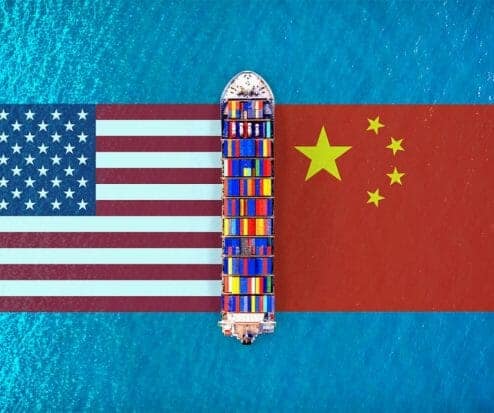


US Trade Representative Katherine Tai spoke with Chinese Vice Premier Liu He on Friday evening to discuss Chinese commercial practices that Washington deems unfair.
“During their candid exchange, Ambassador Tai and Vice Premier Liu acknowledged the importance of the bilateral trade relationship and the impact that it has not only on the United States and China but also the global economy,” the USTR said in a statement.
This was the second consultation between the two countries’ chief trade negotiators after relations were seriously damaged under former US president Donald Trump. The two last spoke in May.
Friday’s talk was “an opportunity for the United States and China to commit to forging a trade relationship that is managed responsibly,” a USTR official said on condition of anonymity.
Tai underscored US concerns “relating to China’s state-led, non-market policies and practices that harm American workers, farmers and businesses,” the USTR said.
The Biden administration says China’s massive state subsidies for national companies, intellectual property theft and other factors create a heavily uneven playing field in trade.