
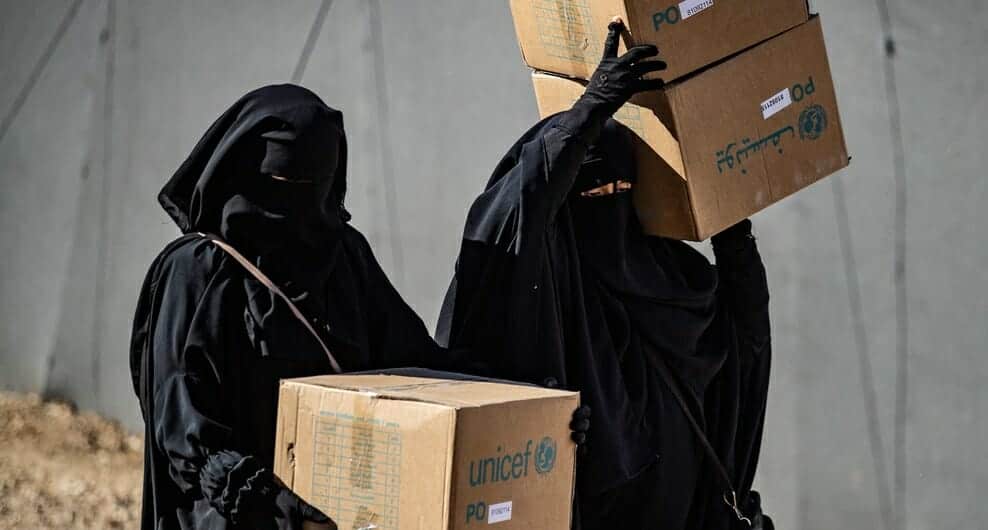


World Food Program Executive Director David Beasley has warned that more people in Syria are in the grips of hunger than at any time in the country’s decade-long conflict.
Beasley’s comments came as he concluded a three-day visit to Syria on Friday, November 12.
He blamed a deadly combination fighting, climate change, Covid-19, and rising food and fuel costs for the problems.
An official release quoted him as saying: “Mothers are telling me that with the upcoming winter they are caught between a rock and a hard place.
“They either feed their children, and let them freeze, or keep them warm and let them go hungry. They cannot afford both fuel and food,” he added.
He said that the deadly mix of the problems was “pushing people [in Syria] beyond their limits.”
One example the release put forward was of a mother of four children whom Beasley met in Aleppo.
The woman, identified by the mononym Hanan, was quoted as saying: “We are tired, worn out and now hungry too as the economic situation takes its toll.”
She added: “I have not been able to get any fresh food, dairy, or eggs for my children for the last four months. I have to make difficult decisions, like deciding which of my children should eat on the basis of who is most fragile and sick or who will slip into severe malnutrition if not fed today.”
Hanan is not alone. Some 12.4 million people — almost 60 percent of the population — are now said to be food insecure and do not know where their next meal will come from.
This is a 57 percent increase since 2019 and the highest number ever recorded in the history of Syria, the WFP said in its release.