
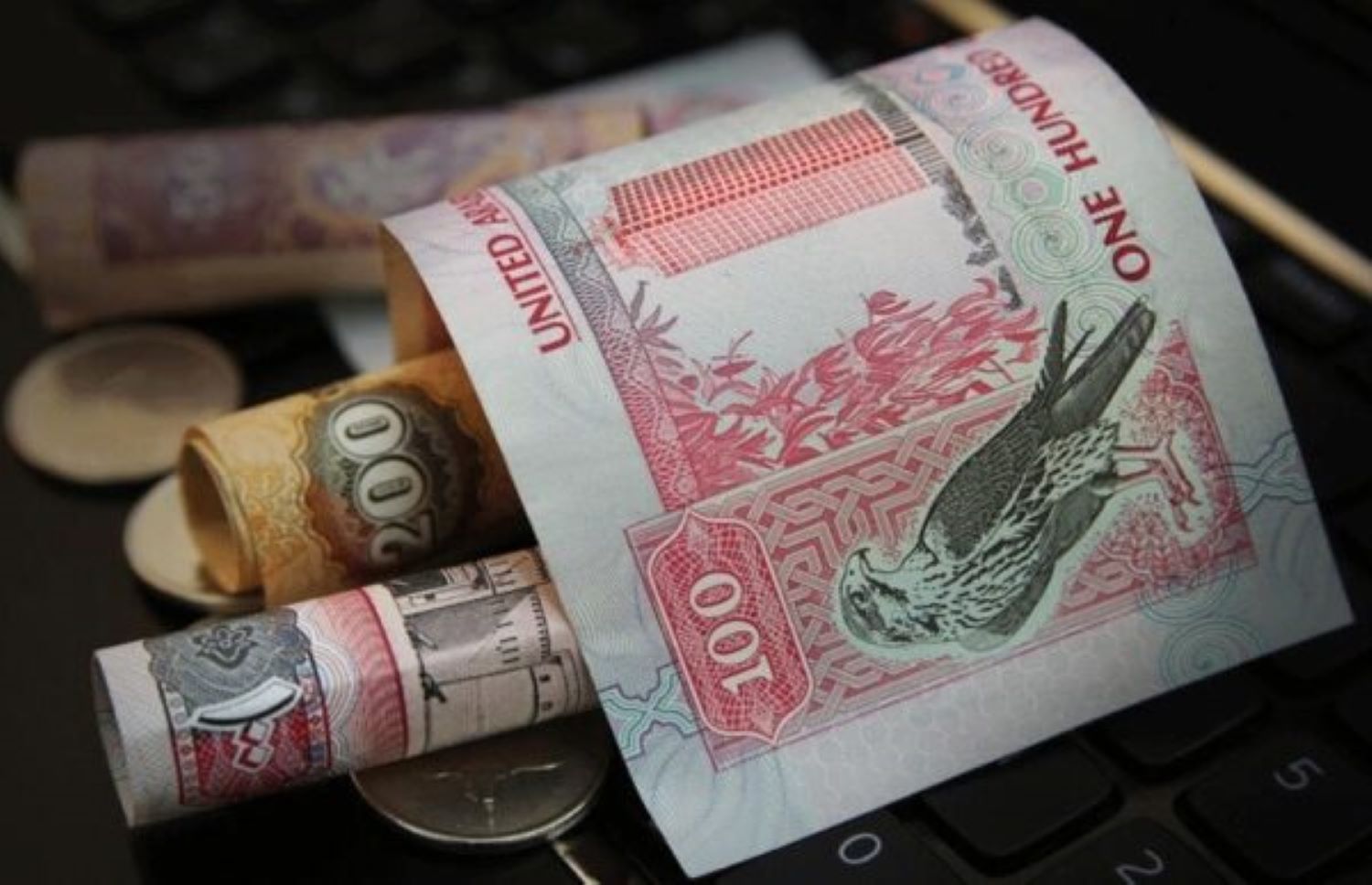

RIYADH, SAUDI ARABIA – As the world grapples with the economic aftermath of the COVID-19 pandemic, Middle Eastern countries, particularly Saudi Arabia and the UAE, have showcased resilience with their currencies holding firm against the US dollar.
According to recent data, the Saudi Riyal (SAR) and the UAE Dirham (AED) have both maintained a stable exchange rate against the USD from 2020 to 2023.
Specifically, the Riyal and the Dirham have both seen a negligible change of 0.01 percent in their strength against the dollar.
This stability comes amidst a backdrop of significant GDP growth for both nations.
Saudi Arabia witnessed a 45 percent increase in its GDP, amounting to $328 billion, while the UAE saw its GDP grow by 43 percent, reaching $150 billion.
In contrast, countries like Mexico, Singapore and Brazil have experienced notable shifts in their currency strength against the USD.
Mexico’s peso emerged as the top performer, strengthening by 19.72 percent post-Covid, buoyed by a $573 billion increase in GDP between 2020 and 2023.
Singapore and Brazil followed, with their currencies strengthening by 3.33 percent and 2.77 percent respectively.
However, not all nations fared as well. Israel’s currency, the Israeli New Shekel (NIS), weakened by 4.73 percent against the USD, despite a 30 percent increase in its GDP.
Experts from City Index provided insights into the global economic landscape, highlighting the UK’s challenges.
Despite a 17 percent increase in its GDP, the UK’s currency strength against the USD decreased by 3.92 percent.
Factors such as government spending and high energy prices, primarily from natural gas, have contributed to the UK’s cost-of-living crisis.
The data underscores the varying economic trajectories of nations post-Covid. While some countries have managed to strengthen their currencies and boost their GDPs, others face challenges in regaining their economic footing.
Yet, the stability of Middle Eastern currencies, especially those of Saudi Arabia and the UAE, stands out as a testament to the region’s economic resilience and strategic financial management.