


DUBAI, UAE — European Commissioner for Cohesion and Reforms, Elisa Ferreira, emphasized the importance of diversifying economies and adopting sustainable practices to tackle both economic and environmental challenges, especially in oil-rich nations, in a recent interview with TRENDS.
“Diversification provides multiple income streams and boosts competitiveness, fortifying economies against shocks,” Ferreira said, referencing the diversification efforts of countries like the UAE and Saudi Arabia.
Drawing from Europe’s experience, Ferreira advised the Gulf region to recognize the vulnerabilities of regions that are heavily reliant on a single sector, such as tourism. “The COVID-19 pandemic highlighted these vulnerabilities, leading to abrupt economic downturns in such areas,” she said.
Regarding the potential for oil-rich countries to sustain their wealth through diversification, Ferreira suggested that industry insiders would offer the most informed perspective. Nonetheless, she underscored the pressing need to shift to a more sustainable economic model, especially in light of the escalating frequency and severity of extreme weather events. She highlighted the immense potential of renewable energy, particularly solar power, in sun-abundant regions.
Ferreira also championed a global approach to sustainability, advocating for localized and equitable transitions. She emphasized the imperative of ensuring no one is left behind and the urgency of pivoting toward a sustainable development model.
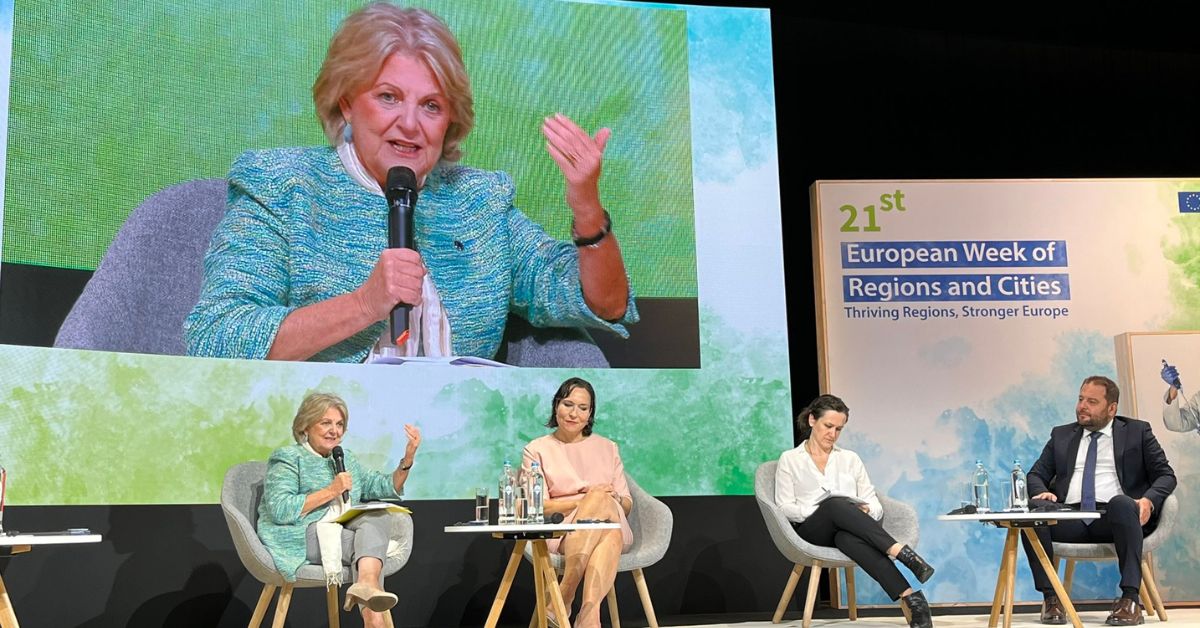
Touching on regulatory measures, Ferreira reiterated Europe’s pledge to achieve carbon neutrality by 2050. “Even though Europe’s contribution to the global climate crisis is relatively minor, the aspiration is that by leading in the development of new energy technologies, we can foster sustainable job opportunities for the future,” she explained.
Ferreira, while speaking on the sidelines of the recently held meeting of Global Future Councils in Dubai, stressed that combatting climate change demands global collaboration and collective action.
The Global Future Councils emphasize the strategic partnership between the UAE government and the World Economic Forum (WEF). They witness participation from approximately 600 leaders and officials across government, private sectors, international organizations, and academic institutions, including distinguished experts and futurists.
These councils are committed to shaping visions for the future, tackling global challenges across various domains such as the economy, technology, geopolitical shifts, infrastructure, health, society, the Fourth Industrial Revolution, artificial intelligence, environmental and climate issues, governance, and more.