
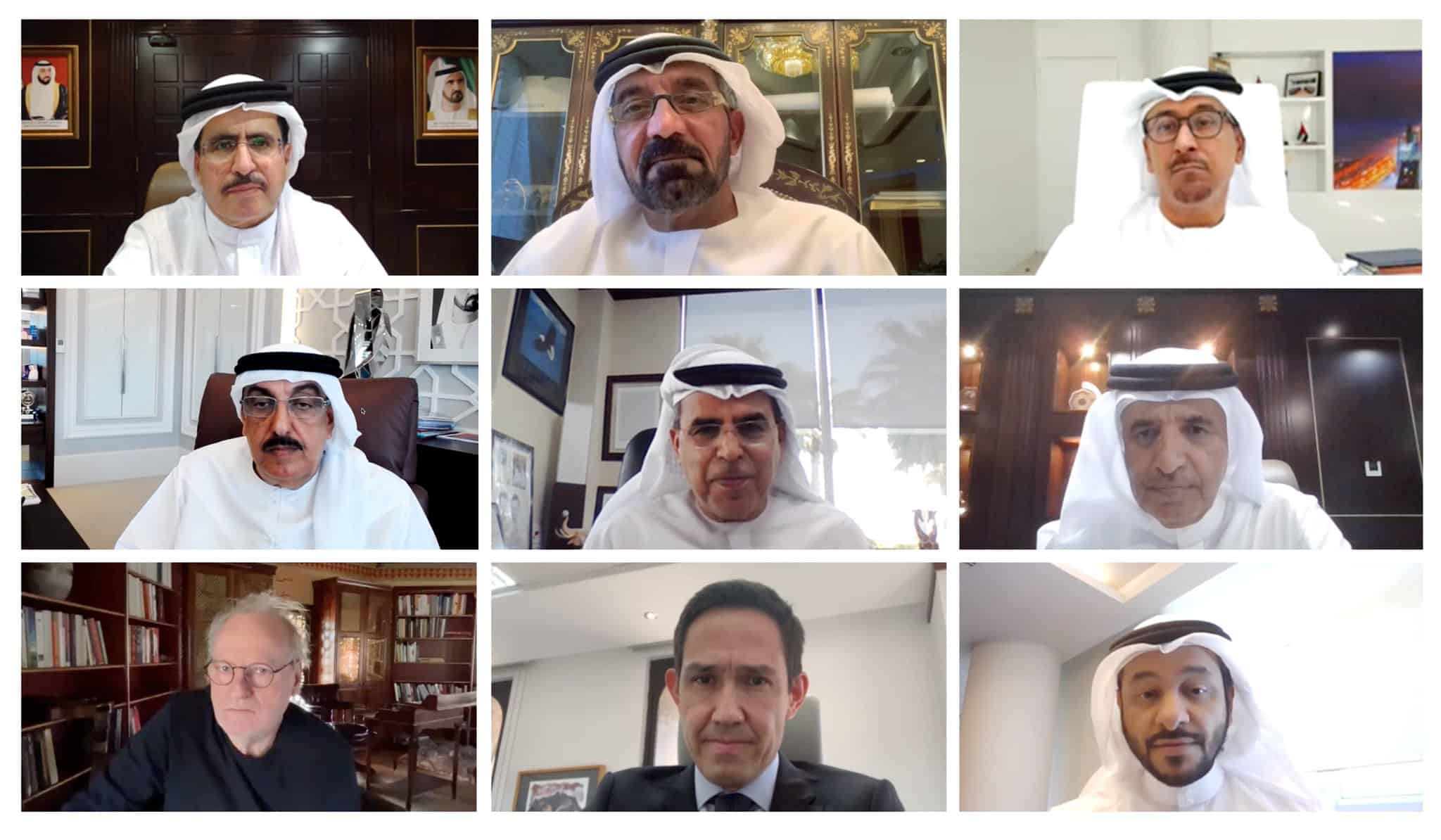

Dubai’s carbon emissions have fallen by 22 percent in 2019, reflecting the efforts made by its strategic partners to support the green economy of the emirate, said Ahmed Buti Al Muhairbi, Secretary-General of the Dubai Supreme Council of Energy.
Al Muhairbi was attending the Dubai Supreme Council of Energy’s 67th meeting that was chaired by its chairman, Sheikh Ahmed bin Saeed Al Maktoum,
Saeed Mohammed Al Tayer, Vice Chairman of the Dubai Supreme Council of Energy, also attended the meeting.
The meeting discussed several topics, including the planning stage for the Supreme Council’s Resolution regarding Dubai achieving carbon neutrality (zero-carbon emissions) by 2050.
The meeting also discussed the implementation stage for resolution number 6 of 2021 issued by the Executive Council of Dubai to regulate district cooling services in Dubai.
The resolution aims to develop a legislative framework for cooling services in Dubai to increase their efficiency and the activities related to generating, distributing, and selling cooling capacity, as well as issuing permits and complaints management, an official statement said.
RTA presented its plan to achieve zero carbon emissions in its fleet by 2050.
The strategy was developed in line with the vision of the wise leadership to make Dubai a leading city in sustainable development, the statement said.
The strategy includes goals and implementation mechanisms. These include increasing the number of electric and hybrid vehicles, efficiency of facilities, road lighting, waste reduction, as well as retrofitting RTA’s buildings.
Dubai Regulatory Committee for Petroleum Products Trading discussed the regulatory framework for building fixed and mobile fuel retail stations.
Saeed Mohammed Al Tayer, Vice Chairman of the Dubai Supreme Council of Energy, said the meeting reviewed the Council’s in-depth study on how the Emirate of Dubai can achieve carbon neutrality by 2050 through a clear strategy and roadmap to implement the strategy using the latest technologies in this regard.
“This is in line with the vision of His Highness Sheikh Mohammed bin Rashid Al Maktoum, Vice President and Prime Minister of the UAE and Ruler of Dubai, to enhance sustainable development and increase the share of clean and renewable energy sources,” said Al Tayer.
“During the meeting, we were also briefed by the Dubai Regulatory Committee for Petroleum Products Trading. Through this Committee, we aim to set the regulatory framework, strategies, and legislation to regulate business practices and implement the highest international safety and security standards,” said Al Tayer.
“Dubai has achieved a significant reduction in carbon emissions by 22% in 2019. This reflects the efforts made by our strategic partners to support the green economy of Dubai,” said Al Muhairbi.
The Supreme Council has started evaluating carbon emissions for the next ten years, with the participation of the concerned authorities in Dubai, to outline the necessary measures to limit the increase in emissions and then build a roadmap to achieve carbon neutrality goals by 2050.