
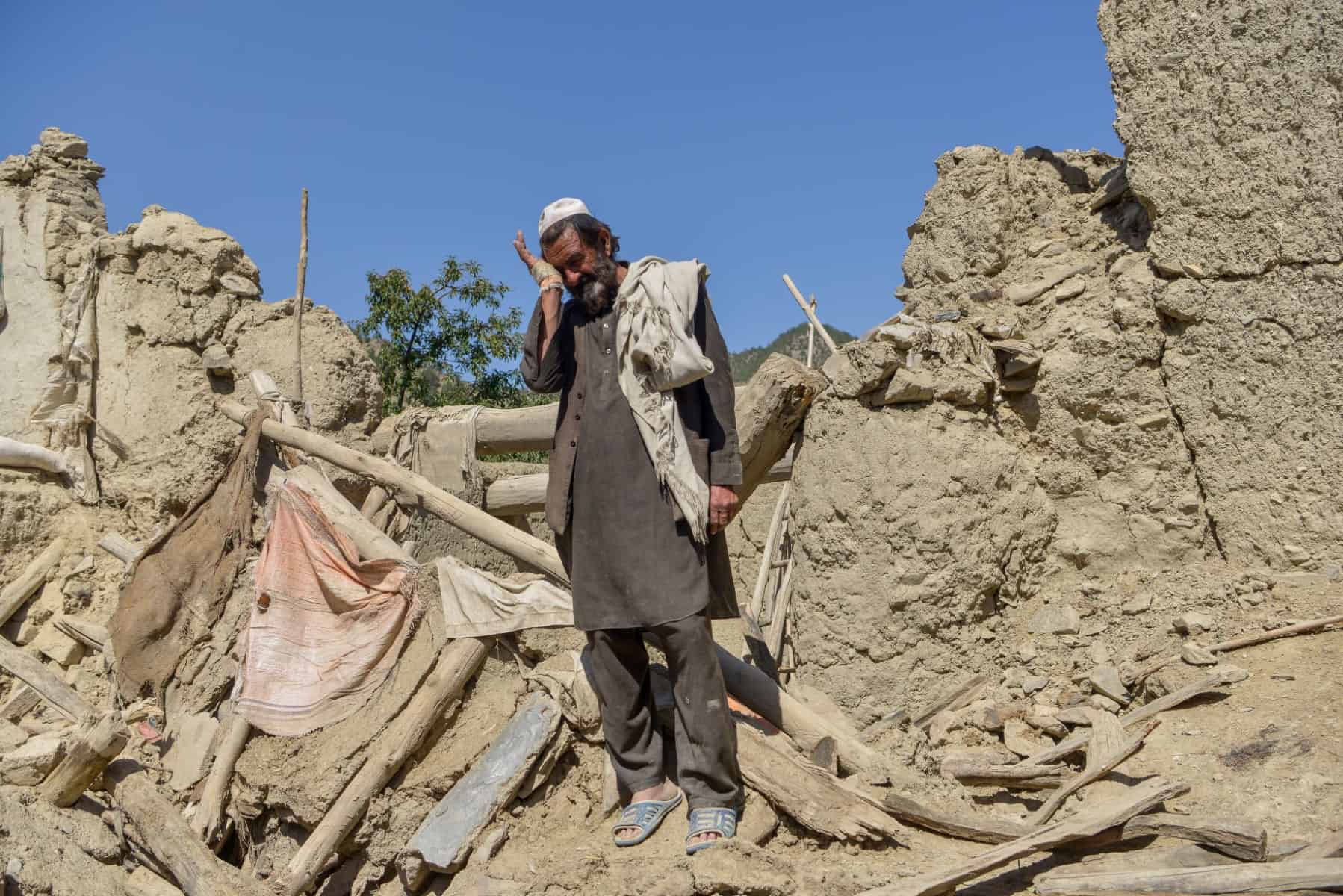


Kabul, Afghanistan–A magnitude 6.3 earthquake struck western Afghanistan on Wednesday, hitting an area where some 1,000 people were killed after a series of similar tremors on the weekend.
The quake occurred at a shallow depth at around 05:10 am local time (00:40 GMT), with its epicentre about 29 kilometres north of the city of Herat, the United States Geological Survey said.
At least one person was killed and 120 injured by the latest quake, said Abdul Zahir Noorzai, ambulance manager for Herat Regional Hospital.
“The people in these (rural) areas were living outside their homes which are already destroyed” but were hit by fresh falling debris from unstable ruins, he told AFP.
The quake was followed by aftershocks measuring 5.0 and 4.1, but an AFP reporter said damage in Herat city — home to more than half a million — was minimal.
Volunteers and rescuers have been working since Saturday in what are now last-ditch attempts to find survivors from the earlier series of earthquakes, which levelled entire villages and affected more than 12,000 people, according to UN estimates.
Afghan authorities on Wednesday significantly lowered the death toll from a series of quakes that struck western Herat at the weekend to around 1,000.
The Taliban government had originally said over 2,000 people had been killed in Saturday’s magnitude 6.3 quake, centred on rural communities northwest of Herat city.
The initial quake was followed by a series of powerful aftershocks.
Public Health Minister Qalandar Ebad on Wednesday lowered the toll to around 1,000, attributing the confusion to the remoteness of the area and double reporting by agencies involved in the rescue effort.
“We have over 1,000 people martyred from the first incident,” Ebad told reporters in Kabul.
Another earthquake of magnitude 6.3 struck Wednesday morning in the same area, where thousands were spending a fourth night in the open.
Officials said one person died and 130 were injured.
The earlier earthquakes completely destroyed at least 11 villages in Herat province’s Zenda Jan district, according to the UN.
“Not a single house is left, not even a room where we could stay at night,” said 40-year-old Mohammad Naeem, who told AFP he lost 12 relatives, including his mother, after Saturday’s earthquakes.
“We can’t live here anymore. You can see, our family got martyred here. How could we live here?”
Local media reported that many Herat residents had been spending their nights living in tents in the open air due to a fear of aftershocks following the weekend tremors.
Providing shelter on a large scale will be a challenge for Afghanistan’s Taliban authorities, who seized power in August 2021, and have fractious relations with international aid organisations.
Afghanistan is frequently hit by deadly earthquakes, but the weekend disaster was the worst to strike the war-ravaged country in more than 25 years.
Most homes in rural Afghanistan are made of mud and built around wooden support poles, with little in the way of steel or concrete reinforcement.
Multi-generational extended families generally live under the same roof, meaning serious earthquakes can devastate communities.
Afghanistan is already suffering a dire humanitarian crisis, with the widespread withdrawal of foreign aid following the Taliban’s return to power.
Herat province, on the border with Iran, is home to around 1.9 million people, and its rural communities have been suffering from a years-long drought.