
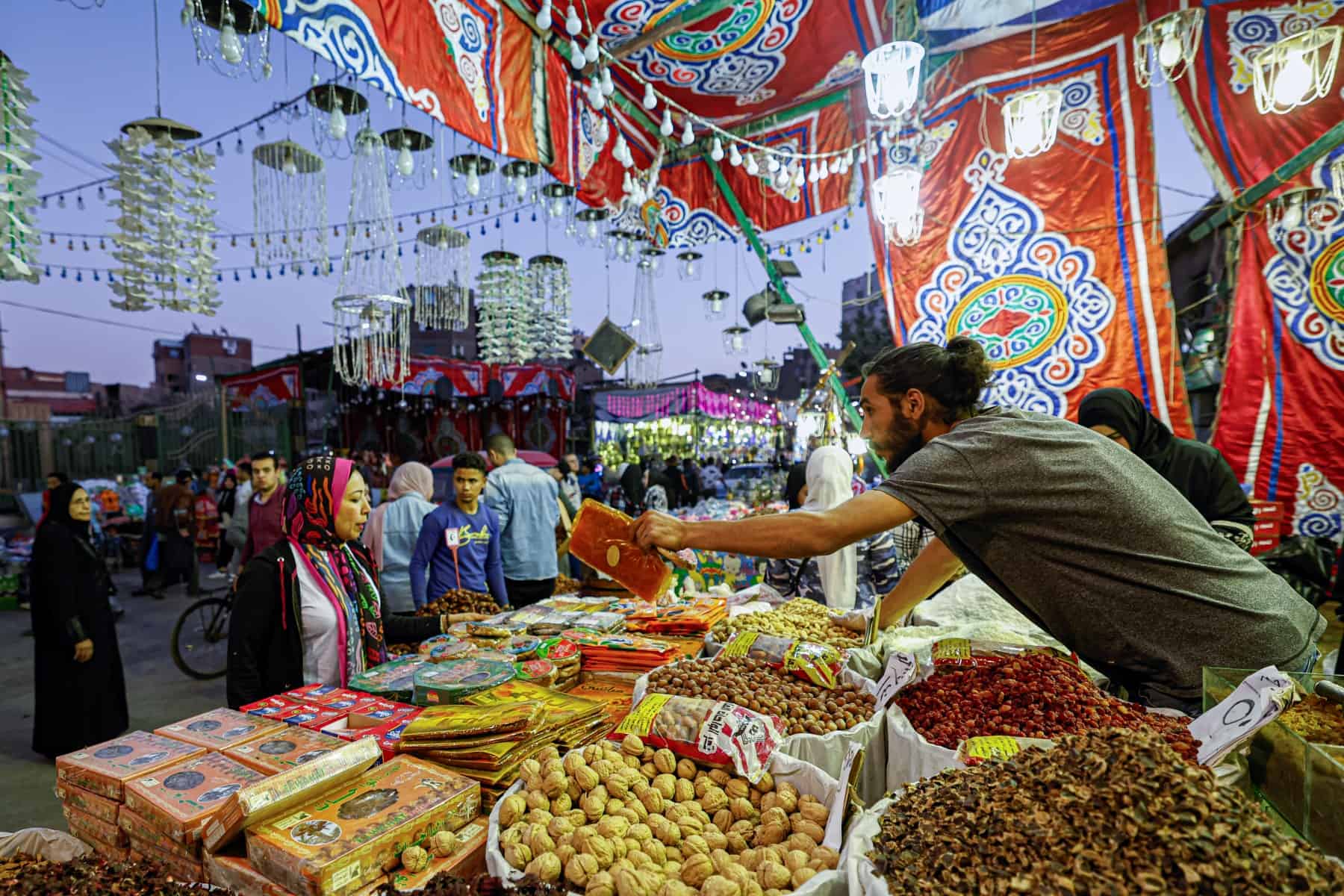


Cairo, Egypt– In a time of dire economic trouble, Egyptians are holding fast to the Ramadan tradition of charity, with both donors and those in need pinning hopes on holiday generosity.
Families have buckled under the weight of inflation, which hit 32.9 percent in February as Egyptians tried to fill their shelves ahead of the Islamic holy month of daytime fasting and special evening meals, known as iftar.
“Last year, we were giving out 360 iftar meals every day — this year, I’m not sure we’ll make it to 200,” said the founder of a small charity in the working-class Cairo district of al-Marg.
Yet those meals have never been more vital, the charity worker said, asking not to be named for privacy concerns.
For many families, Ramadan boxes of food staples or daily charity iftar meals, organised in droves across the country, “are their only chance to eat meat or chicken,” she added.
Even before the current economic crisis — worsened by Russia’s invasion of Ukraine last year, which destabilised crucial food imports — 30 percent of Egyptians were living under the poverty line, with the same number vulnerable to falling into poverty, according to the World Bank.
In addition, surging costs of animal feed have pushed the once-affordable meal of chicken out of reach for most of Egypt’s nearly 105 million-strong population.
Before Ramadan began, the charities upon which tens of millions of Egyptians depend raised the alarm that they were struggling to meet more people’s needs, at higher costs, with dwindling donations.
‘Tis the season’
But a focus on generosity, even and especially in times of trouble, is baked into Ramadan, “when most Egyptians give out their yearly charity, a very cherished custom,” said Manal Saleh, who heads the Egyptian Clothing Bank.
Egyptians gave nearly five billion Egyptian pounds to charity (at the time, around $315 million) during 10 months of donations recorded in 2021, according to state media.
But of that, around “90 percent” was given during Ramadan, Saleh estimated, who also helped found one of the country’s biggest charities, the Egyptian Food Bank.
Each day of the holy month, a staple of Egyptian city streets at sunset is the sight of mawaed al-rahman, charity tables where strangers come to break their fast for free, sometimes hundreds at a time.
Many are organised by anonymous donors such as Fouad, a 64-year-old retired engineer, who asked to use a pseudonym because his initiative is not a legally recognised charity.
This year, he and his group of friends who run the soup kitchen out of a local mosque have had to double their budget, committing to feeding even more people in their community and “not just the least fortunate.”
Since the Covid-19 pandemic, they have forgone the conventional banquet table for a grab-and-go makeshift cafeteria.
All month, the kitchen serves meals to the community, including underprivileged families and, increasingly, store clerks and other workers who can no longer afford a mid-shift hot meal, saving them some 60 or 70 pounds, around two dollars.
“They know their family needs that money,” Fouad said.
‘People stick together’
According to the latest official figures from 2021, the average salary in Egypt is 4,000 pounds a month, or $129.
Meanwhile, the price of a kilogramme of the cheapest subsidised local meat has nearly doubled to 220 pounds, about a quarter of a week’s pay.
Savings have been slashed as the currency lost half its value in a year, and more and more people are struggling to make ends meet.
With families across classes cutting back on everything from grocery bills to schooling, charity budgets could have been the first to go.
“Honestly, I had grown almost hopeless a couple of weeks ago, when we looked at the numbers and realised we may not be able to pull it off this year,” Fouad told AFP.
“But those who could have doubled their donations from last year, because they know how important it is for us to step up in times like this.”
Saleh said that Ramadan charity is a tough habit to break.
“We’ve seen crises before, and people stick together,” Saleh said.
“I think that even if individuals can’t give as much, you’ll see more people lending a hand, volunteering, making meals for those around them, even if cash is tight.”