
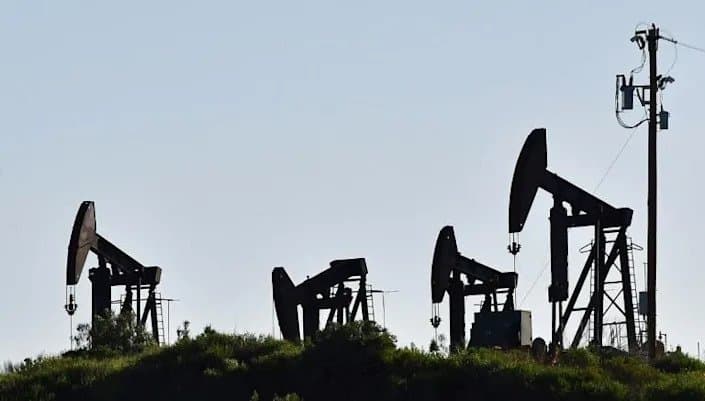


Libya’s National Oil Corporation announced on Sunday the suspension of production from two major oil fields after an armed group shut down valves delivering crude.
The NOC declared “force majeure” at the Al-Sharara and Al-Fil fields due to the shutdown, according to a statement published on Facebook. Declaring force majeure is a legal move allowing parties to free themselves from contractual obligations when factors such as fighting or natural disasters make meeting them impossible. The company said the move would result in “losses of 330,000 barrels per day and a daily loss exceeding 160 million Libyan dinars” or about $35 million.
Oil revenues are vital to the economy of Libya, a country sitting on Africa’s largest known reserves.NOC chief Mustafa Sanalla said Sunday that Libyan oil infrastructure was often the target of attacks “in plain sight”.
“Who does this benefit?” he was quoted as saying, noting that the suspension comes as oil prices have leapt past $100 a barrel following Russia’s invasion of Ukraine.
The Al-Sharara field, in the desert 900 kilometres (560 miles) south of Tripoli, is operated by a joint venture between the NOC and four European companies.It contributes up to 315,000 bpd to Libya’s national production of 1.2 million bpd, a figure still down from around 1.6 million bpd prior to dictatorMoamerKadhafi’s fall in 2011.
Al-Fil, some 750 kilometres southwest of Tripoli, is jointly managed by the NOC and Italian energy giant Eni and produces around 70,000 bpd.The NOC is one of the few institutions to have stayed in one piece despite a decade of violence that has for years seen Libya with two governments.