
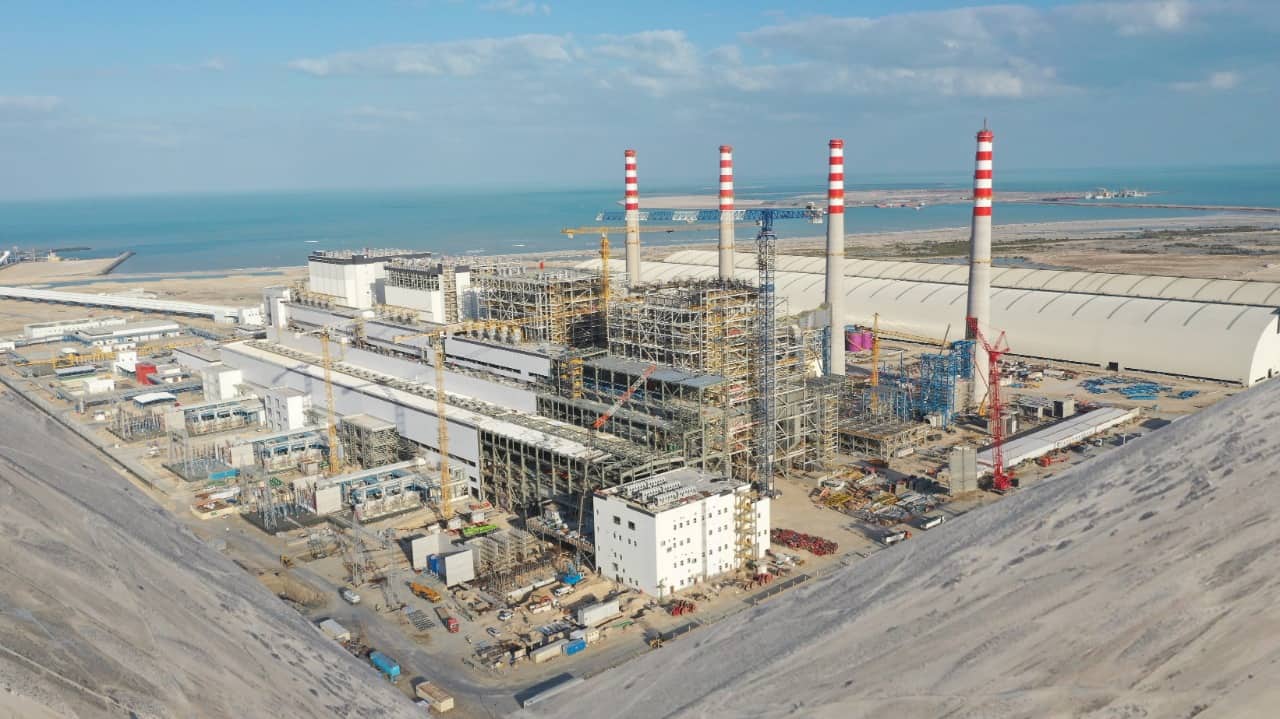


Dubai Electricity and Water Authority (DEWA) has said the production capacity of Hassyan Power Complex reached 1,200 megawatts (MW), using the Independent Power Producer (IPP) model.
A further 600 MW will be added in Q4 of 2022, and an additional 600 MW will be added by Q3 of 2023. This will raise the capacity of Hassyan Power Complex, which has been converted recently to run only on natural gas instead of clean coal, to 2,400MW.
The Hassyan Power Complex was initially designed and built for purpose as a dual-fuel plant with the ability to operate full-time on both natural gas and clean coal. It now relies only on natural gas.
Saeed Mohammed Al Tayer, MD and CEO of DEWA, said the Hassyan Power Complex adds to the Jebel Ali Power Plant and Water Desalination Complex, as one of the critical pillars to providing Dubai with electricity and water services.
Jebel Ali has a total production capacity of 9,547 MW of electricity. DEWA’s full production capacity is now 13,417MW, including 1,527 MW of renewable energy using photovoltaic solar panels from the Mohammed bin Rashid Al Maktoum Solar Park, he added.
“The Hassyan Power Complex, which uses the IPP model, adopts the latest technologies in energy production. The power plant’s turbines were originally designed to operate on dual fuels: gas and clean coal. So, when we decided to convert the complex to run on natural gas, there was no downtime, and the conversion process went smoothly,” Al Tayer said.
The Hassyan Power Complex includes a water desalination project with a production capacity of 120 Million Imperial Gallons Per Day using Reverse Osmosis (RO) and the Independent Water Producer model. New RO stations are currently underway, as they use less energy than Multi-Stage Flash, which makes it the best option for water desalination.