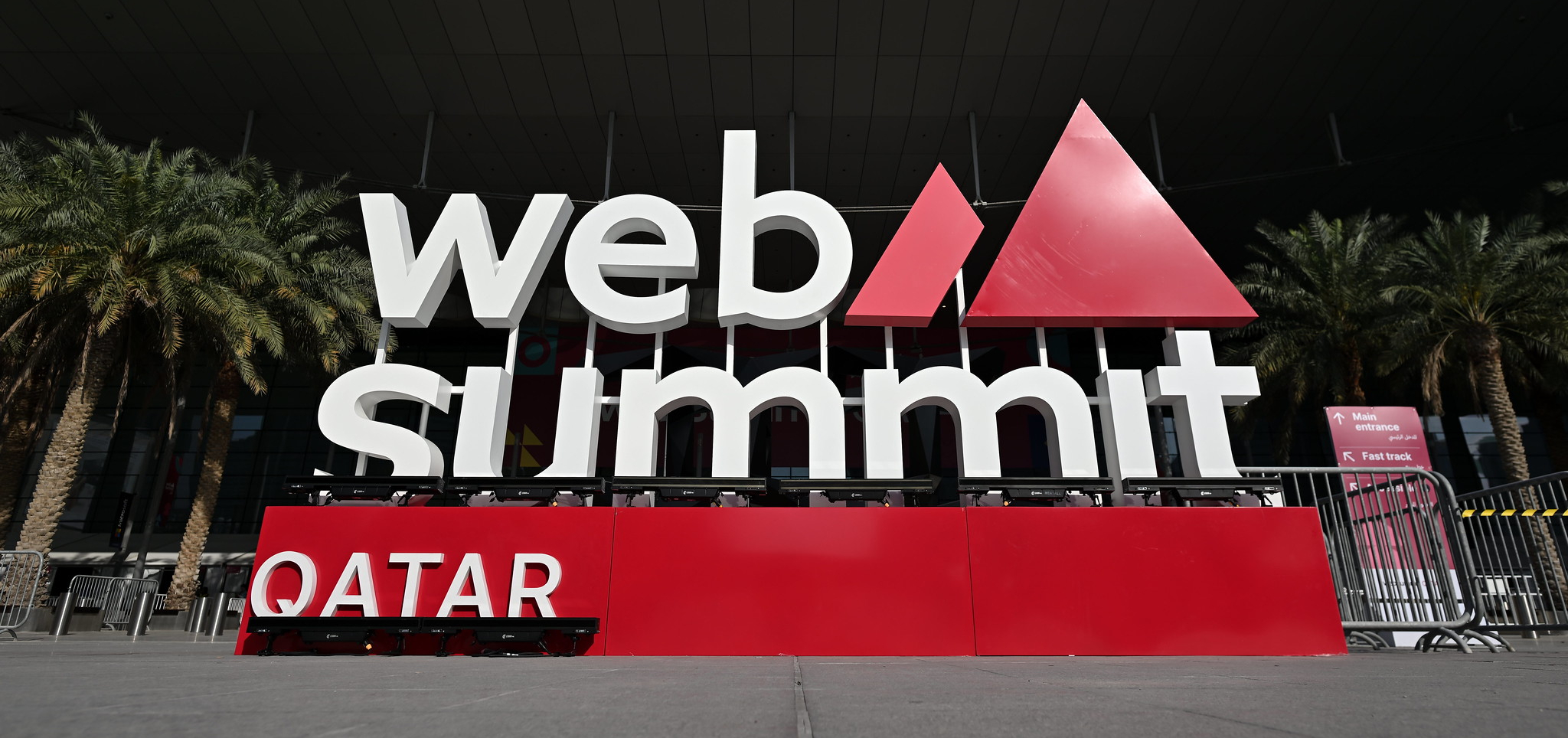

In a region long defined by hydrocarbons, Qatar is flipping the narrative. Rather than another lofty diversification plan, Doha has anchored its innovation ambitions on a bold bet: use Web Summit — the global technology conference giant — as the structural foundation for a national startup and knowledge economy. Two editions in, and the results suggest the strategy is paying off.
When Web Summit Qatar was first announced in April 2023, the regional response was polite — perhaps politely skeptical. Could a conference, even one with global heft, meaningfully shift a nation’s economic trajectory? But under the stewardship of Sheikh Jassim bin Mansour bin Jabor Al Thani, Director of Qatar’s Government Communications Office, the deal was cast not as a one‑off event but as the cornerstone of a coordinated national push: aligning capital, regulation, institutions, and global visibility.
By using Web Summit as a recurring, high-profile “anchor”, the Qatari state effectively created a coordination mechanism — a predictable junction where startups, investors, regulators and global tech firms converge.
From First Edition to Boom
The first Web Summit Qatar in 2024 delivered encouraging results: more than 100 companies registered on the spot under the Qatar Financial Centre (QFC), thanks to on-the-spot licensing, waived registration fees and a favourable tax and regulatory framework.
But the transformation sharply accelerated in the second edition in 2025. According to official figures, the summit drew 25,747 attendees from 124 countries — compared to 15,453 in 2024. The 2025 edition featured 1,520 startups and 723 investors.
Crucially, the number of Qatari startups participating reportedly rose by 90–140% over the previous year. And nearly 47% of startups at the 2025 summit were founded by women — a striking statistic in a region where gender balance in entrepreneurship is often elusive.
A defining advantage of Qatar’s approach has been its strategic use of capital and regulatory incentives. Ahead of the first summit, through its sovereign wealth arm Qatar Investment Authority (QIA), Doha announced a US$ 1 billion “Fund of Funds” to support venture capital firms willing to open offices in Doha.
The QFC complemented this with business‑friendly policies: free company registration, waived annual fees for several years, tax exemptions, 100% foreign ownership and profit repatriation, and a legal framework based on English common law.
During Web Summit Qatar 2024, QFC registered over 100 companies; in 2025 that number had ballooned to more than 1,600 across sectors like tech, finance and professional services.
These moves helped crack one of the toughest problems for emerging ecosystems: startups need capital — but capital only flows where ecosystems already exist. By providing capital and frictionless regulation first, Qatar reversed the order.
Global Partnerships
Web Summit Qatar is not just a talent‑show for local startups — it has become a hub for global firms and partnerships. The 2025 edition saw 56 MoUs signed between Qatari institutions and major international tech, finance and innovation firms.
Through initiatives like Startup Qatar (launched by Invest Qatar), the country offers a centralized platform for startups to tap funding, workspace, entrepreneur visas and regulatory support.
These collaborations are not cosmetic — they represent capability transfer: fintech innovation via partnerships with major banks, digital infrastructure through collaborations with global tech firms, and access to international networks that deepen Qatar’s integration in the global innovation economy.
From Numbers to Momentum: Early Signs of Ecosystem Maturity
The early impact of this structured effort is visible. Startups that participated in Web Summit Qatar 2024 are reported to have raised roughly US$ 120 million in follow-up funding in 2025.
At a macro level, the summit lends momentum and global visibility to Doha’s ambitions under the Third National Development Strategy 2024–2030 — tying together infrastructure, regulatory reform and talent development.
With global media covering the event (from fintech to AI and sustainability), and with 381 speakers and 168 global partners at the 2025 summit, Doha is turning Web Summit into an annual convergence point for global capital, ideas and talent.
Many Gulf states talk diversification; many publish long-term visions. But many struggle to turn plans into momentum. Qatar’s path is different because it chose a single organizing principle — Web Summit — and built around it a cohesive ecosystem of capital, regulation, global integration and inclusion.
The Long‑Term Test
Of course, the real challenge lies ahead. 2025’s numbers are impressive. But the test will come in the next few years: Will VCs stay, will startups scale, will exits multiply, will talent settle and grow roots?
The 2026 Web Summit Qatar is already being planned with expanded tracks (New Media, Health, AI, etc.). If the momentum persists — capital flowing, regulations remaining startup‑friendly, global firms embedding, and a cycle of talent and ideas taking root — Qatar could well emerge as one of the Middle East’s first success stories of turning a conference into permanent economic infrastructure.