
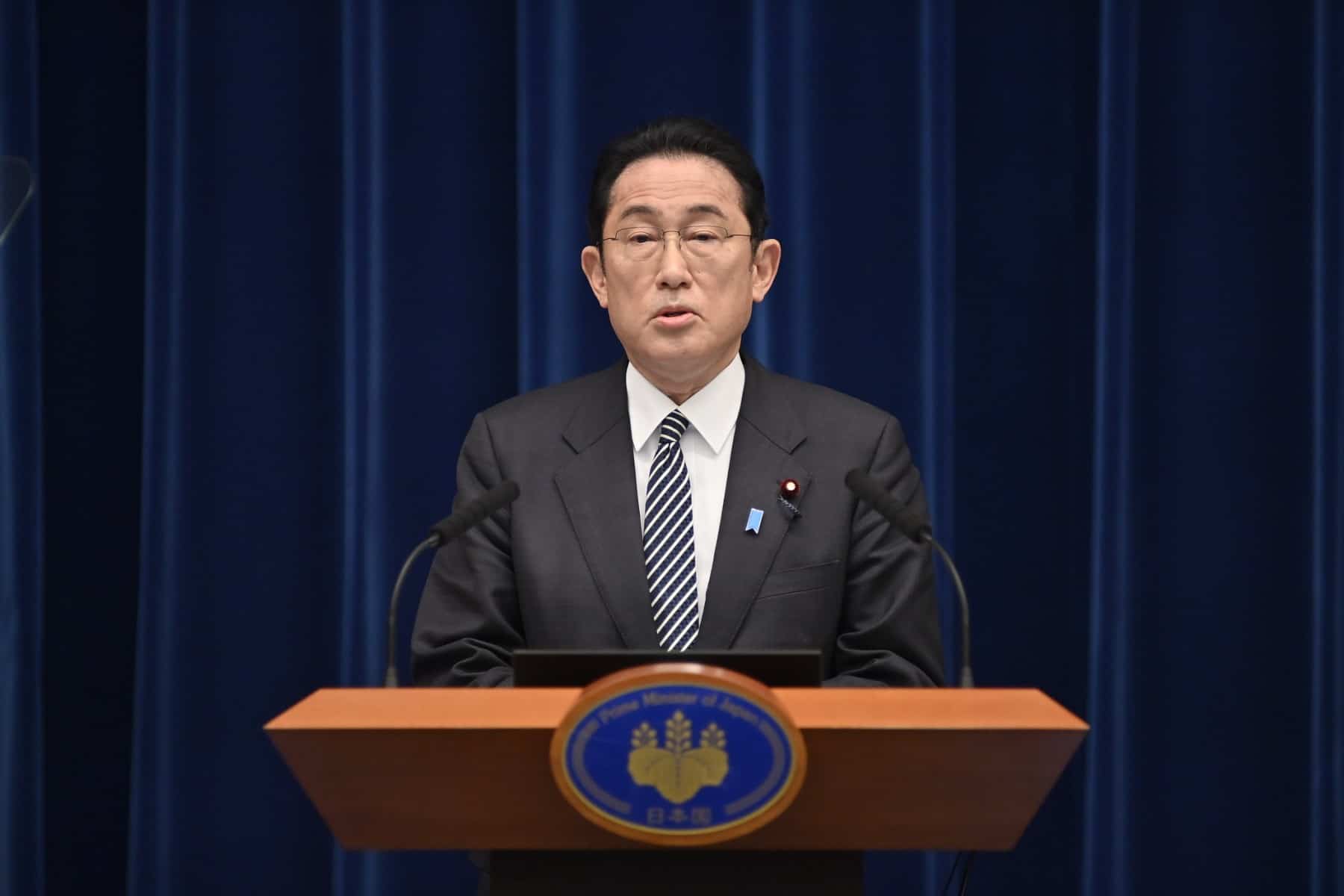


It is the first TICAD held every three years either in Japan or an African country since the pandemic began and Prime Minister Fumio Kishida will be attending remotely after testing positive for Covid-19.
Replacing him at the head of the Japanese delegation will be his Foreign Minister Yoshimasa Hayashi, and about 5,000 participants are expected to attend.
Among them will be 30 heads of state and government, converging on the Tunisian capital from across the continent.
Alongside the summit, businesspeople will attend an economic conference while various parallel events and workshops will address civil society and women’s inclusion.
Since their inception in 1993, the TICAD conferences, co-sponsored by the United Nations, World Bank and African Union, have generated 26 development projects in 20 African countries, largely funded by the Japan International Cooperation Agency (JICA).
An alternative to China
With a view to “accelerating Japanese investment in Africa”, the conference will focus on three pillars: economy; society; and peace and stability, according to the official presentation.
With more than $130 million already set to be delivered in food aid, Japan will also provide assistance for “rice production and food security” in view of the food crisis worsened by the Ukraine war.
Japanese economic paper Nikkei reported that aid to Africa could increase by 40 percent over the next three years, compared to 2020-2022.
Such assistance comes “in response” to other powers that have bolstered their presence in Africa, namely the United States, Europe and in particular China, Nikkei said.
In response to competition from China, a Japanese foreign ministry official said Tokyo’s “African diplomacy… can be boiled down to two words: ownership and partnership”.
“Japan has a 30-year history of involvement” in the continent through TICAD, he said.
“The core message we would like to get across this time is that Japan wants to remain Africa’s partner.”
At the closing of the last TICAD in 2019, former premier Shinzo Abe who was assassinated at a campaign event last month warned investors in Africa that they must beware of burdening countries with “excessive” debt, in an apparent swipe at China.
Production hub
On the Tunisian side, authorities hope to profit from holding the summit, particularly as Tunis is a two-hour flight from many major European capitals.
Tunisia hopes to attract Japanese investment domestically, particularly for its health, automotive and renewable energy sectors.
More than 80 projects are on the table with a value of $2.7 billion, according to Hedi Abbes, head of the Tunisian-Japanese chamber of commerce.
These projects, on offer to Tunisian and other African private investors, are expected to create about 35,700 jobs, he said.
With its industrial capacities, Tunisia hopes to become a hub for the production of medicines and vaccines, as some African countries have lagged far behind in vaccination efforts.
During a global Covid-19 summit in May, the Japanese premier stressed the importance of promoting “local production capacity for pharmaceuticals and medical products, including vaccines”.
“To that end, we have decided to provide assistance of up to $200 million through JICA to enhance the capacity in Africa,” Kishida said.