


Amman, Jordan–Jordan has succeeded in securing US$1.9 billion in foreign aid and negotiations are underway to ramp it to $3.2 billion by the end of the year.
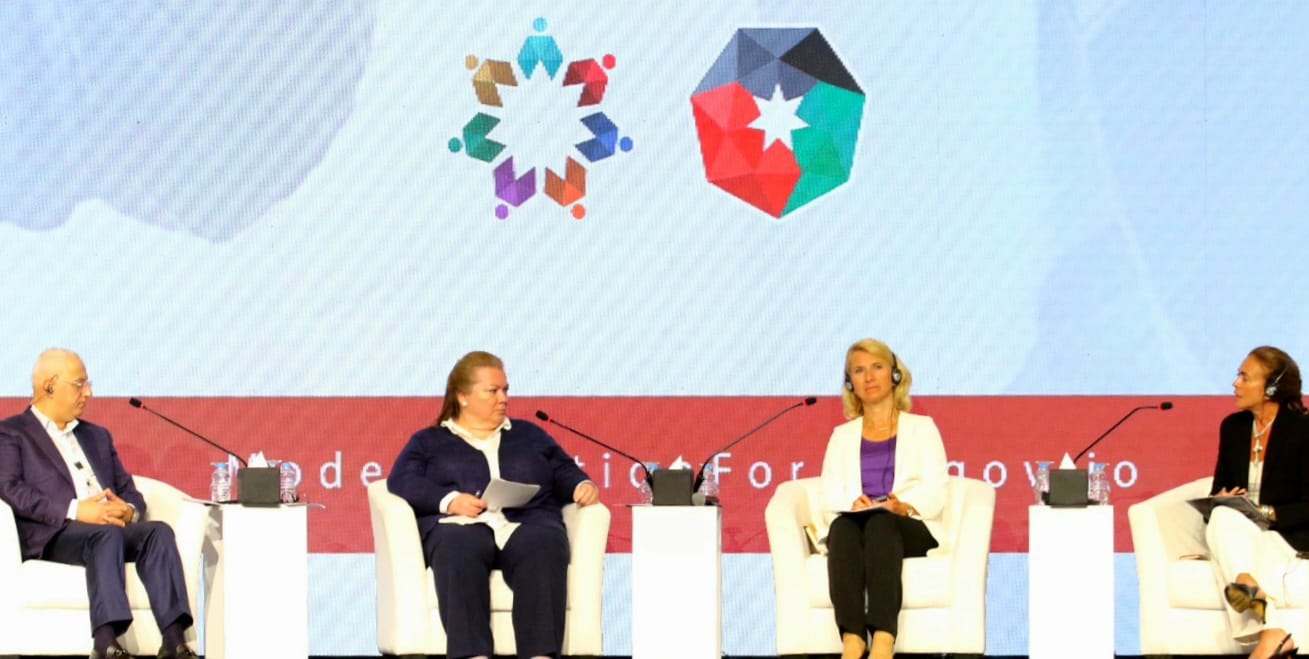
Addressing Jordan’s financial assistance at a forum convened by the government on the shores of the Dead Sea on Friday, Minister of Planning and International Cooperation Zina Touqan shed light on Jordan’s financial landscape and its interactions with global economic trends.
Touqan accentuated the kingdom’s global economic alignment, saying, “The Jordanian economy, deeply integrated with the world, cannot remain impervious to international occurrences. Hence, our economic strategies always resonate with global forecasts, influencing the kingdom’s fiscal policies.”
.A highlight of the forum was the acknowledgment that only 9 percent of the financial requirements for the Jordanian response plan to the Syrian refugee crisis have been met, despite the substantial stress it has placed on the nation’s infrastructure and social amenities.
Touqan accentuated the kingdom’s global economic alignment, saying, “The Jordanian economy, deeply integrated with the world, cannot remain impervious to international occurrences. Hence, our economic strategies always resonate with global forecasts, influencing the Kingdom’s fiscal policies.”
Furthermore, she highlighted the meticulous crafting of the economic modernization vision, which incorporates realistic economic indicators, periodically revised to mirror global political and economic shifts.
Reflecting on the recent positive economic transformations in Jordan, Touqan voiced concerns over global adversities, such as the Russian-Ukrainian standoff, escalating foreign financing expenses, and worldwide inflationary slowdown. However, she also recognized the fruitful collaborations with international financing entities that offer affordable funding to Jordan’s private sector.
Roberta Gatti, the World Bank’s Chief Economist for the Middle East and North Africa, anticipated constrained global economic growth due to the prevailing challenges, notably the Ukrainian-Russian conflict, supply chain disruptions, climate change, and global inflation.
She commended Jordan for its resilience and adept management, especially in sustaining stable inflation rates, a testament to the prudent monetary strategies of the Central Bank of Jordan.
Similarly, Beata Javorcik, Chief Economist at the European Bank for Reconstruction and Development (EBRD), emphasized the pivotal role of foreign investments in bolstering Jordan’s economy.
She advised Jordan to enhance its investor appeal by expediting information dissemination, underscoring the investors’ disdain for bureaucratic lags.
The forum, acting as a nexus for around 600 local and foreign figures, will resume its deliberations on economic modernization strategies through various sessions concluding tomorrow, Saturday.