
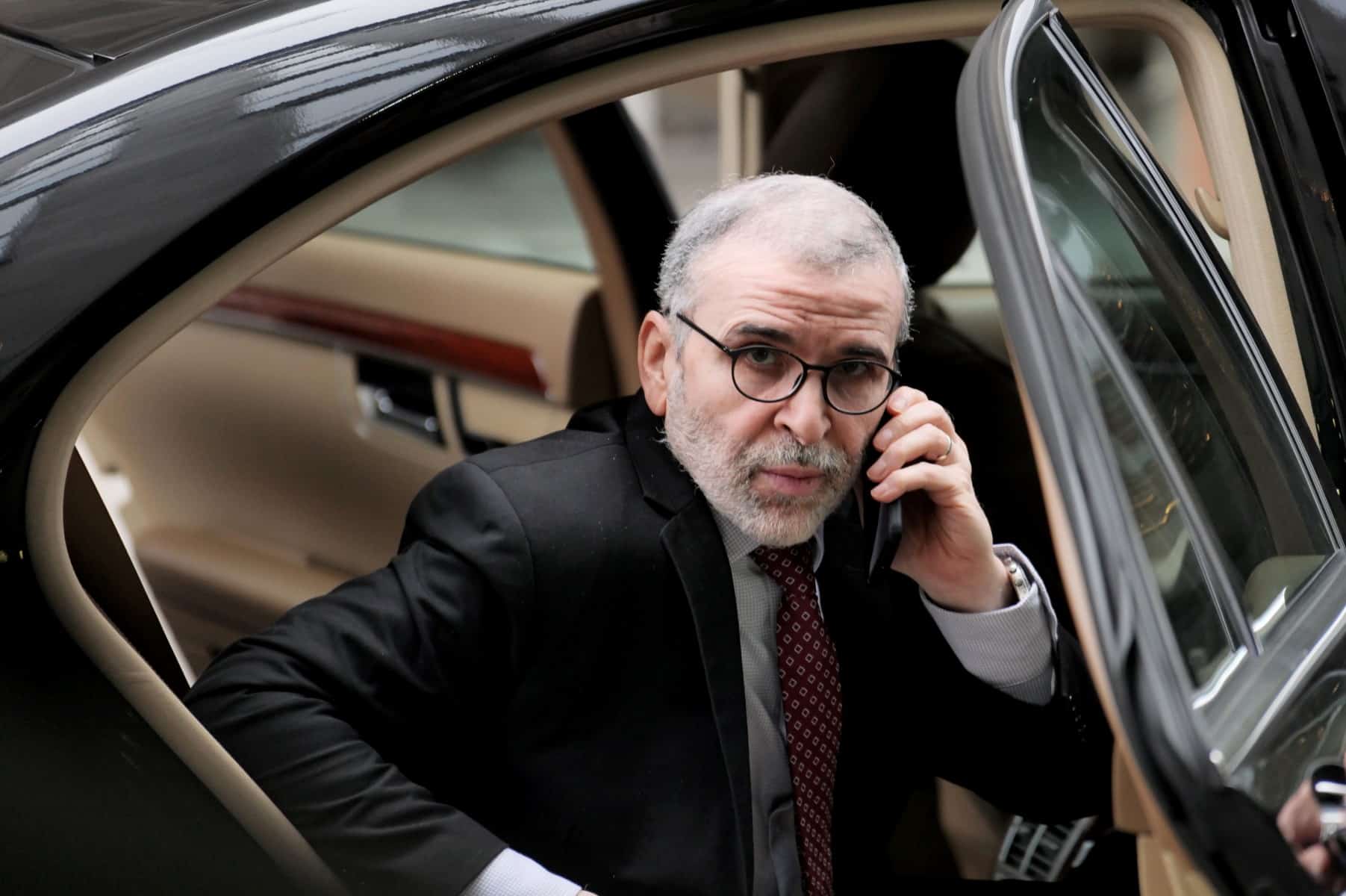


Libya’s Tripoli-based government has named a new head of the state oil company to replace veteran technocrat Mustafa Sanalla, who refused to give up his post.
Unlike many other Libyan state bodies, the National Oil Corporation, led by Sanalla since 2014, has largely managed to remain neutral in the face of political wrangling.
But petrol is at the heart of political rivalries in Libya, which has two governments, one in Tripoli led by Abdulhamid Dbeibah, appointed last year as part of a United Nations-backed peace process to end more than a decade of violence in the North African country.
Dbeibah has refused to cede power to Fathi Bashagha, named in February as prime minister by a parliament based in Libya’s east and backed by military strongman Khalifa Haftar.
According to a July 7 decree made public on Wednesday, Farhat Bengdara and four others will from now on make up the “board of directors of the National Oil Corporation”.
Bengdara, 57, was governor of Libya’s central bank from 2006 to 2011 before he joined the revolt which overthrew dictator Moamer Kadhafi.
An ad hoc committee that was on Wednesday to organise the handover at the head of the NOC had to suspend its work because of employee reluctance — including from the very top.
Sanalla said late Wednesday he would not give up his post.
“This institution belongs to all Libyans and not to you,” he said in a live video address to Dbeibah.
“The mandate of your government has expired,” he said, emphasising the technical and apolitical nature of the oil firm.
Sanalla has positioned himself as an interlocutor with foreign powers and oil firms. He has also skillfully mediated disputes to keep Libya’s crude flowing during times of war, as well as boosting production during peacetime.
However, Dbeibah’s Oil and Gas Minister Mohammed Aoun has on several occasions attempted to oust Sanalla.
In an April interview with AFP, Aoun accused Sanalla of not respecting laws governing the sector “and exceeding his prerogatives”.
Bengdara is reputedly close to the United Arab Emirates which backs Libya’s eastern camp. Sanalla accused the UAE of involvement in his sacking.
Despite sitting on Africa’s biggest proven oil reserves, war-battered Libya suffers chronic power outages and rising poverty. This has fuelled public anger that has piled pressure on both the Tripoli-based administration and its eastern rival.
On Wednesday the NOC said it was lifting a force majeure at two eastern export terminals. They had been blockaded for three months by groups demanding Dbeibah’s departure.