
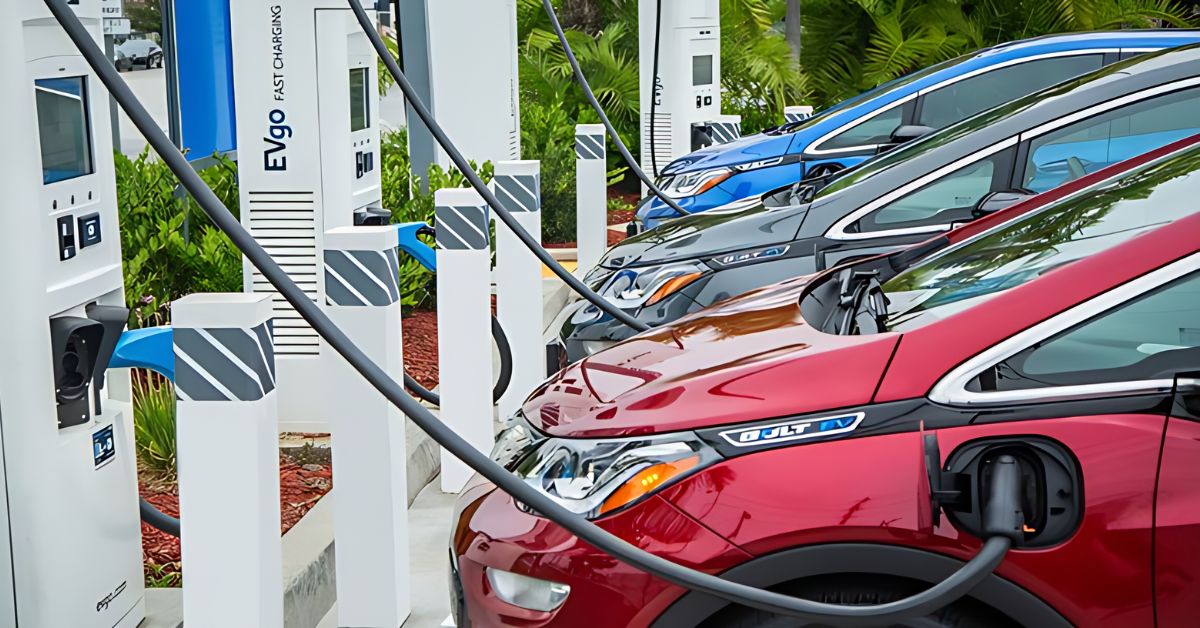


More people than ever are purchasing electric vehicles (EVs). However, in the United States, the majority of these buyers are white and affluent. This disparity stems from biases in the EV charging infrastructure. Convenient and affordable charging primarily benefits private homeowners who can easily install EV charging equipment on their property and use it to charge their vehicles securely and conveniently overnight.
For many others, especially those in urban settings, public charging remains the only option. Yet, bias persists: reports indicate that in the U.S., predominantly white neighborhoods are 1.4 times more likely than majority non-white neighborhoods to have a public charger.
The path forward is clear: We need more chargers, and they need to be accessible to everyone.
Growing Demand
In the US, it’s projected that the demand for non-residential Level 2 charging will necessitate the installation of 1 million plugs to accommodate 48 million EVs by 2030. However, even this ambitious addition might fall short. Some projections suggest a need for up to 2 million public chargers.
Today, EVs are more affordable than ever, especially when considering the clean vehicle tax credit of $7,500. But urban residents might hesitate to switch to an EV unless they’re confident about charging availability.
A Network of Public Charging Stations
How can we efficiently provide public charging for the roughly 40 million drivers residing in U.S. cities? The solution lies in establishing an extensive network of chargers where these drivers already park: on the streets.
However, this requires overcoming the challenge of building density to access the necessary power for public charging. One potential solution is repurposing existing street infrastructure, like electrified street furniture. While Los Angeles has innovatively converted streetlights for this purpose, this method heavily depends on a city’s specific electrical voltage characteristics. Los Angeles benefits from its streetlight network’s high voltage circuit (240V), whereas most U.S. cities use lower voltage systems (120V) for their accessory feeds.
The high voltage infrastructure in Los Angeles facilitates the straightforward conversion of streetlights into charging points for electric vehicles. This is one of the reasons why California boasts an exceptionally high number of public chargers compared to the rest of the country. However, this approach becomes more complex and expensive in U.S. cities operating on a lower voltage system. Such cities would face significant, time-consuming upgrades to implement a solution similar to Los Angeles.
From Barrier to Solution
What if the very building density that poses a challenge for urban charging became the solution?
Nearly every building can power a Level 2 EV charger, as it requires the same energy as standard U.S. household appliances like electric clothes dryers or ranges. This innovative perspective could revolutionize how some U.S. cities address their public charging challenges.
By partnering with urban property owners, a unique charger solution offers a scalable model for curbside charging in urban areas. This approach alleviates the need for cities to modify utility poles. These innovative charging stations can be rapidly and equitably installed across the nation.
Moreover, this business model could gain substantial community backing. Each charger installation would share its revenue with the hosting property owner. Without any initial or operational expenses, this passive income could help property owners, including schools, businesses, and places of worship, significantly reduce their annual electric bills by merely hosting compact chargers on their curbs.
Innovating Through the Energy Transition
Incentives that promote widespread adoption ensure that everyone, irrespective of their income or the availability of a driveway or garage, can access EV charging.
As the US undergoes a monumental energy transition, innovative solutions are crucial to help cities meet their carbon-reduction goals. Creating universally accessible EV charging is precisely the kind of innovation we need.
Tiya Gordon is Co-Founder & CEO of ItsElectric. This write-up was originally published on the World Economic Forum’s website.
The opinions expressed are those of the author and may not reflect the editorial policy or an official position held by TRENDS.