
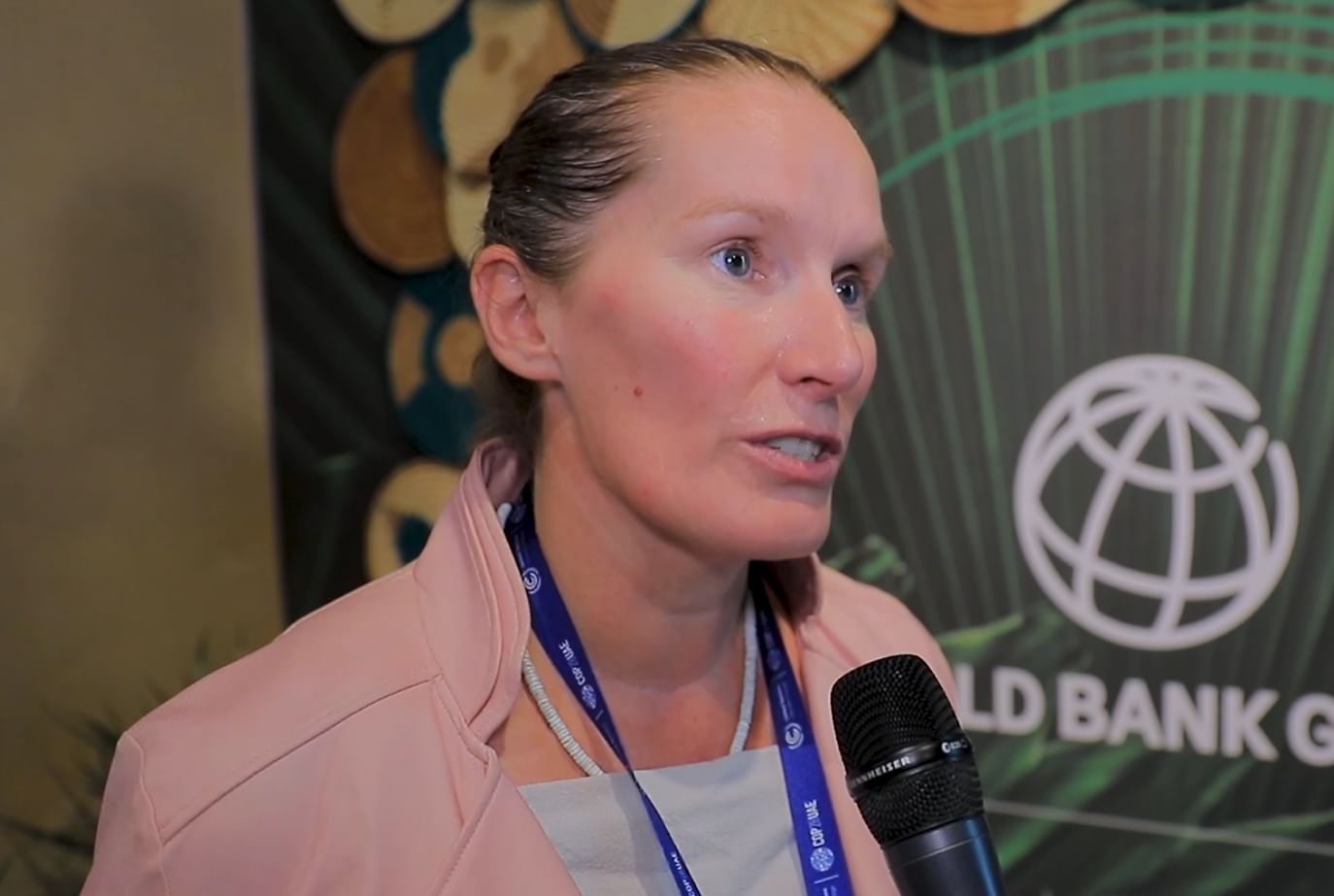


Dubai, UAE— Protecting nature could avert global economic losses by 2030 of US$2.7 trillion per year, or 2.3 percent annually, according to Valerie Hickey, Global Director for Environment, Natural Resources and Blue Economy at the World Bank.
Speaking to media at COP28, she said that low-income countries could lose around 10 percent of their GDP annually by 2030 if select ecosystem services, such as forests, fisheries, and pollinators, collapse.
Hickey stressed that the unprecedented decline of nature is exceeding its ability to regenerate, jeopardising hard-won development gains and disproportionately impacting low-income countries.
She affirmed that nature loss is at the core of central development challenges, mainly health, livelihoods, inequality, climate change, food security, fragility and energy, adding that “If no action is taken, the impacts will be cataclysmic”.
Hickey explained that the World Bank sees nature as a solution that can also help inform the design of better economic production systems and better infrastructure, stressing that the bank develops and applies in its projects nature-based solutions (NBS) that protect nature, support development, and help countries mitigate and adapt to climate change.
Nature is critically important for climate and NBSs offer benefits for climate mitigation and adaptation, Hickey noted. “The World Bank’s Climate Change Action Plan recognises that NBSs for terrestrial, coastal and marine areas will be critical for achieving the goals outlined in the Paris Agreement and helping countries adapt to and remain resilient to climate change and providing human well-being and biodiversity benefits.”
Research shows that NBSs could provide around 37 percent of the cost-effective climate mitigation that is needed by 2030 to achieve the goals of the Paris Agreement (IPBES), Hickey highlighted, adding that they are a cost-effective way of addressing climate change while also tackling biodiversity loss and land degradation.
She said that NBS can also effectively address key challenges including food and water security, disaster risk, human health, and climate change, she underscored.
Hickey affirmed that NBS, such as mangrove restoration or improving the sustainability of fisheries and aquaculture, are an integral part of the Blue Economy approach adopted by the World Bank to support client countries. “These solutions ensure that ocean resources are used in an integrated and sustainable way and preserve ocean health,” she concluded.