
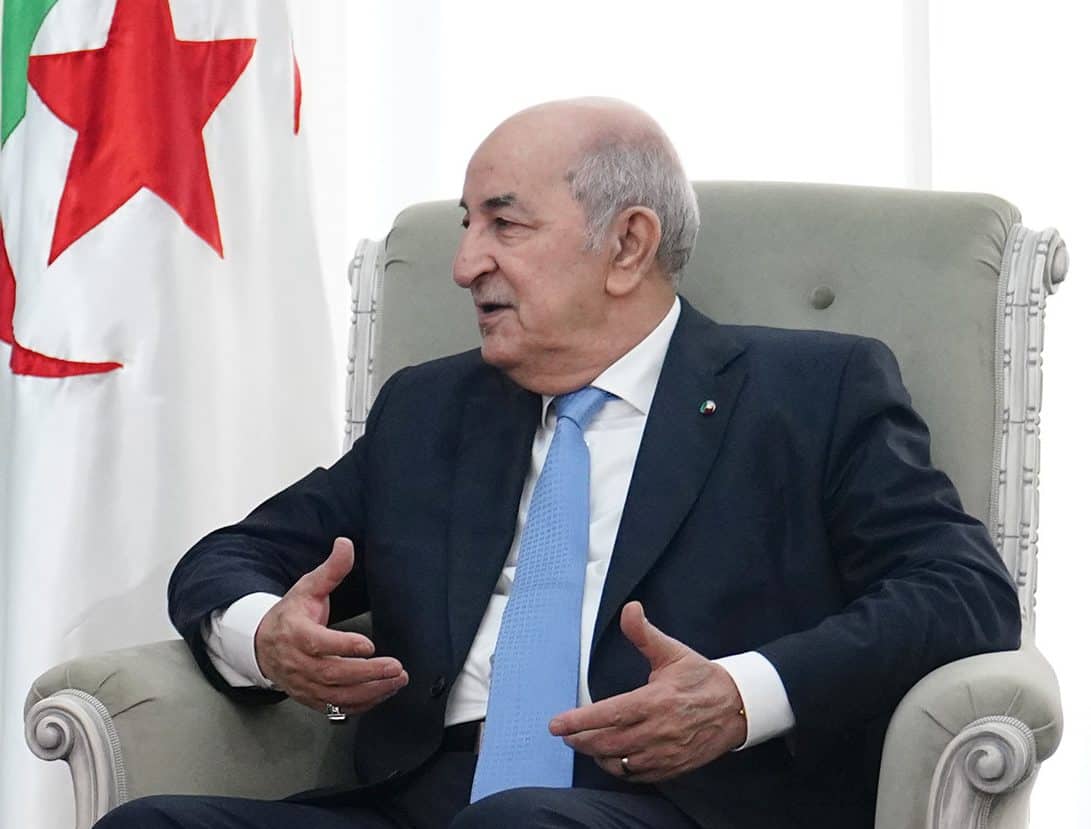


Algerians vote on Saturday, November 27, in local elections seen as key in President Abdelmadjid Tebboune’s push to turn the page on the two-decade rule of late president Abdelaziz Bouteflika.
But despite official campaigns urging Algerians to “make their mark”, the vote for municipal and provincial councils has sparked little public interest.
Observers are predicting a low turnout, as with a string of poorly-attended votes since the Hirak pro-democracy protest movement that drove Bouteflika from power in April 2019.
The North African country’s rulers are trying to “impose their will despite the embarrassing results of previous elections”, said analyst Mohamed Hennad.
But he said voters saw the exercise as producing “an electoral mandate stripped of any political content”.
Tebboune has vowed to reform state institutions inherited from Bouteflika, who died in September at the age of 84.
Algeria’s local assemblies elect two-thirds of members of the national parliament’s upper house, with the president appointing the remainder.
But while the national elections board ANIE says more than 15,000 candidates are in the running, campaigning has been muted.
Redouane Boudjemaa, a journalism professor at the University of Algiers, said the vote was simply “an attempt to clean up the facade of local councils by changing their members, to benefit the ruling class”.
“Politics at the moment is limited to slogans proclaiming that the country has entered a new era, while all indicators point to the contrary,” he said.
‘Huge challenges’
Tebboune was elected in a contentious, widely boycotted 2019 ballot months after Bouteflika stepped down under pressure from the army and vast rallies by the Hirak.
He has vowed to “build the institutions of the state on a solid foundation” and break with Bouteflika-era local and regional elections marred by widespread claims of fraud.
Tebboune’s rule has seen a crackdown on journalists and Hirak activists, even as he has packaged major policy moves as responses to the “blessed Hirak” and its calls for reform.
Hennad said that the ruling elite in power since Algeria’s independence from France in 1962, was using slogans around change to impose its agenda, without truly engaging other political forces.
The president pushed through an amended constitution in November 2020, approved by less than 24 percent of the electorate, and oversaw parliamentary elections that saw just 23 percent of voters take part.
But Tebboune, a former prime minister under Bouteflika, has downplayed the significance of turnout and said the key question is whether representatives have legitimacy.
Despite a declared boycott by the opposition Rally for Culture and Democracy (RCD), party activists are standing on independent lists, setting up a showdown with the rival Front of Socialist Forces (FFS) in the Kabylie region that often sees significant abstentions.
Electoral board head Mohamed Charfi has stressed the body’s efforts to boost turnout.
But Boudjemaa said the main issue at stake was the “huge economic and social challenges of the coming year”, warning that Algerian’s purchasing power could “collapse”.
“Several indicators show that the pouvoir (ruling elite) has neither the vision nor the strategy to respond to the crisis,” he said.