
BEIRUT, LEBANON – Sporadic clashes took place on Saturday in a Kurdish-held area of eastern Syria, a monitor said, after a curfew was imposed following the arrest of an Arab armed group’s leader.
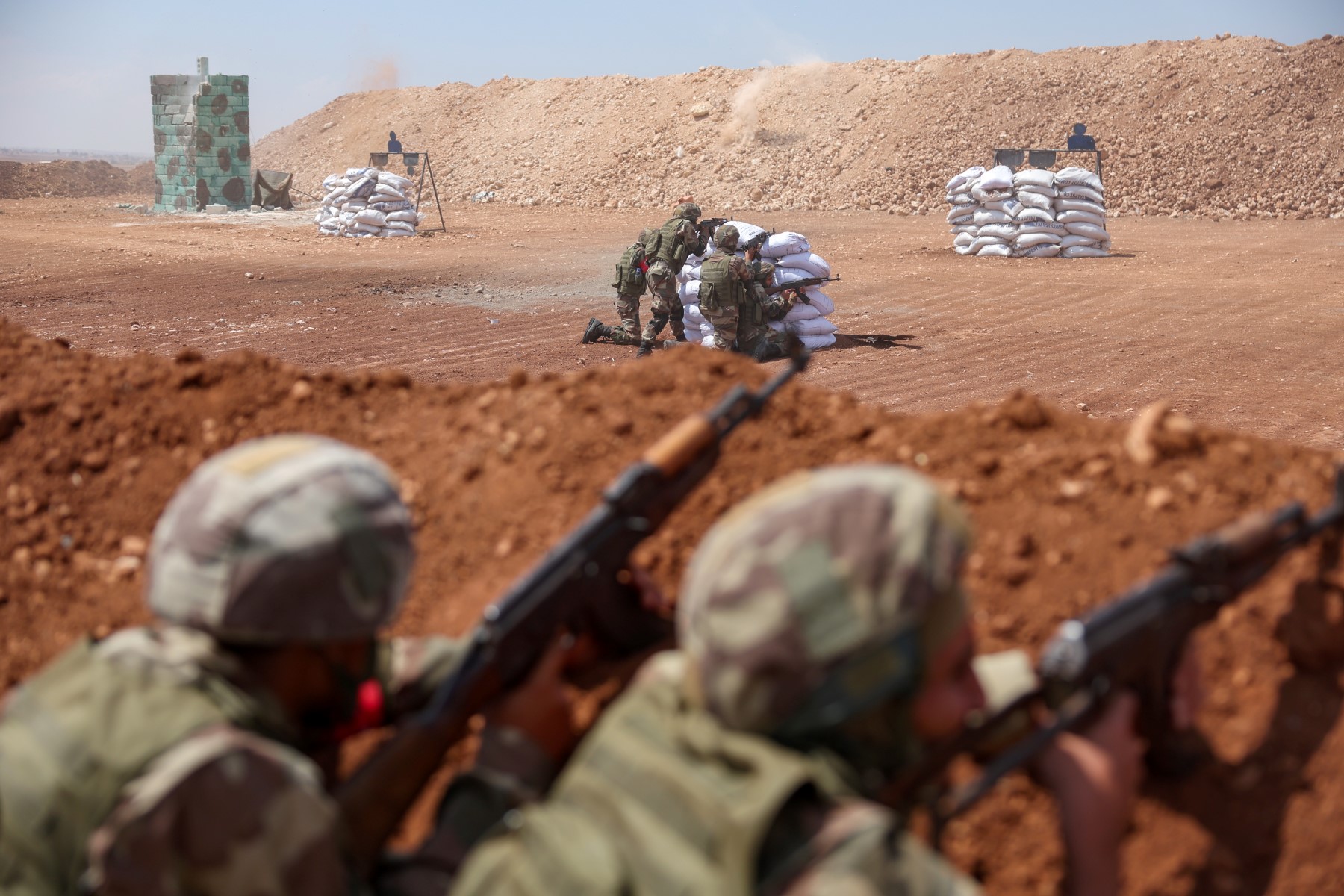
Fighting erupted in the Kurdish-controlled areas of Deir Ezzor province on Monday after the Kurdish-dominated Syrian Democratic Forces (SDF) detained Ahmad al-Khabil, the head of the Deir Ezzor Military Council.
The violence has so far killed 54 people, including six children, said the Syrian Observatory for Human Rights, a Britain-based war monitor.
“Calm has been relatively restored, as the intensity of fighting has decreased due to the 48-hour curfew” that took effect on Saturday, the Observatory’s Rami Abdel Rahman said, adding that clashes were continuing “intermittently in three villages”.
The largely Arab-majority province to the east of the Euphrates is controlled by the SDF, while forces loyal to Syrian President Bashar al-Assad and Iran-affiliated fighters are stationed on the west bank.
Kurdish authorities manage areas under their control through local civilian and military councils, to avoid upsetting local Arab tribes.
In a statement on Saturday, the SDF criticized “propaganda whose sole aim is to sow discord and break the unity of the SDF and the local Arab population”.
“Contrary to what is being said, there is no dispute between the SDF and the tribes in the region. We are in constant contact with them,” it said.
SDF spokesman Farhad Shami said the clashes were mostly “against elements of the regime and some beneficiaries” of Khabil.
The SDF says Khabil was arrested for communicating with Assad’s government, alleged drug trafficking and mismanagement leading to an uptick in activities by cells of the Islamic State jihadist group, among other things.
Tensions rose when pro-regime fighters, backed by Iran, took advantage of the clashes to move into two Kurdish-controlled villages, the Observatory said.
The US-backed SDF, which controls vast territories in northeastern Syria, spearheaded the offensive that defeated IS in Syria in 2019.