
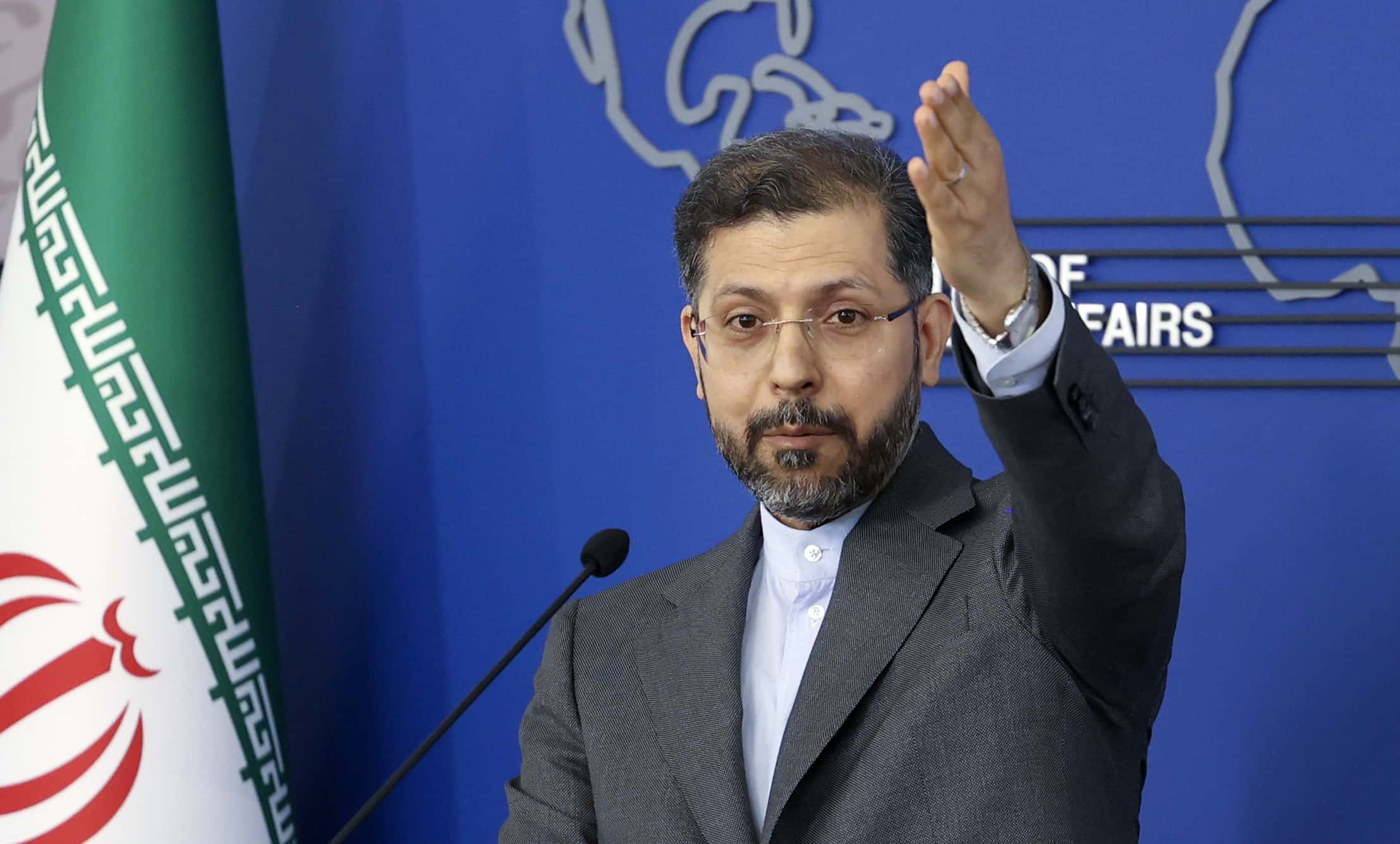


Iran on Monday said an agreement with world powers to revive the 2015 nuclear deal was still not in sight, blaming the United States for the delay.
“More than one issue is still pending between Iran and the United States,” Iranian foreign ministry spokesman Saeed Khatibzadeh said.
“Messages (from Washington) sent through (European Union coordinator Enrique) Mora these past weeks… are far from providing solutions that could lead to an accord,” he told reporters.
Iran has been engaged in efforts to revive the Joint Comprehensive Plan of Action (JCPOA) with Britain, China, France, Germany and Russia directly, and the United States indirectly since April 2021.
Mora, who coordinates the indirect US-Iran talks, visited Tehran last month for talks with Iranian officials, and later went to Washington.
At the time, Mora said he hoped to close the gaps remaining in the arduous negotiations.
The agreement fell apart in 2018, when then-president Donald Trump withdrew the United States and reimposed crippling economic sanctions.
Iran, in response, began rolling back on most of its commitments under the accord.
Khatibzadeh on Monday blamed Washington for delays to restore the nuclear deal.
“The United States are responsible for these delays, because they are taking their time to give replies” that would be suitable for Iran, he said.
Earlier this month, Khatibzadeh’s counterpart in the State Department Ned Price said it was Tehran that was not giving way to make a deal possible, but that Washington still believed there was “opportunity to overcome our remaining differences.”
Key among unresolved issues is a demand by Tehran that the Islamic Revolutionary Guard Corps, the ideological arm of Iran’s military, be removed from a US terror blacklist.
Washington has resisted the move.