


Iraqi lawmakers on Saturday are scheduled once again to elect the country’s president and try to overcome months of political paralysis, even as renewed boycott calls risk scuttling a vote.
Parliament has issued a final list of 40 candidates for the post, a largely ceremonial role reserved for the Kurds.
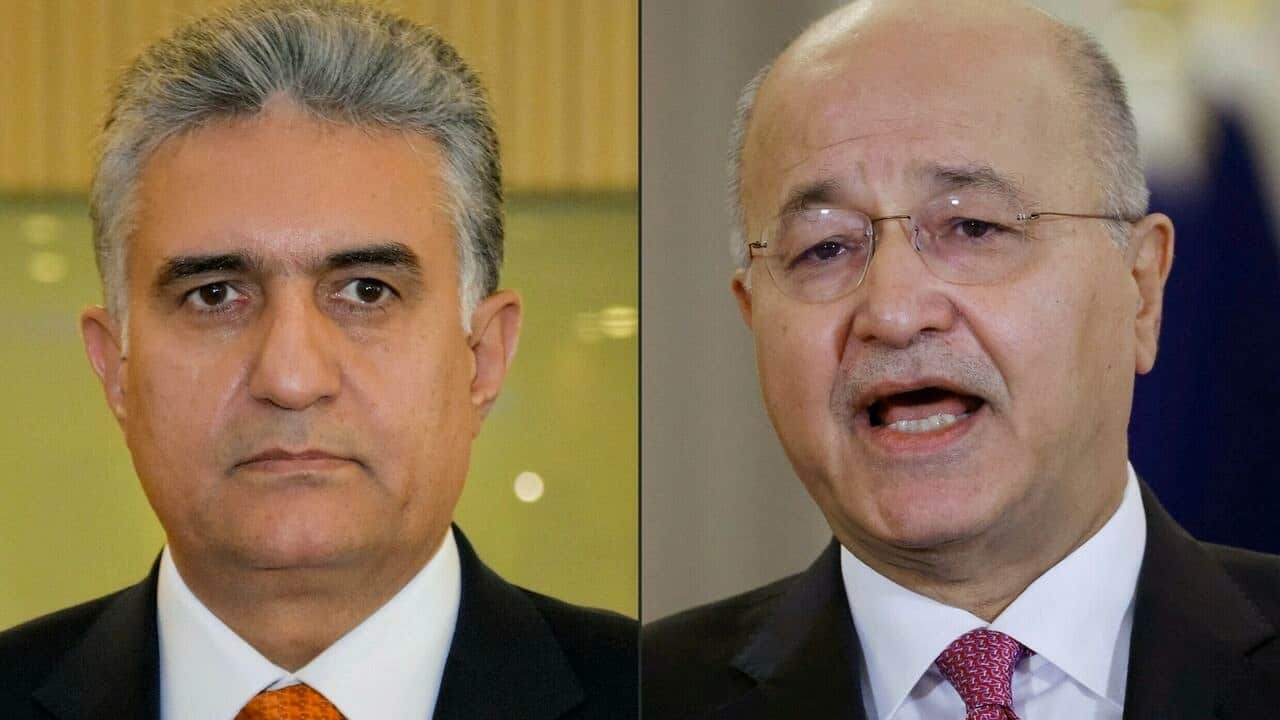
The contest pits Barham Saleh, the incumbent and member of the Patriotic Union of Kurdistan, against Rebar Ahmed of the Kurdistan Democratic Party (KDP), the PUK’s rival.
Lack of a quorum two-thirds of the house’s 329 members and legal issues have held up the vote, deepening war-scarred Iraq’s political uncertainty.
The president has to then name a prime minister, who must be backed by the largest bloc in parliament.
On February 13, Iraq’s supreme court ruled out a presidential bid by KDP-backed veteran politician Hoshyar Zebari, after a complaint filed against him over years-old, untried corruption charges.
Iraqi politics were thrown into turmoil following last October’s general elections, which were marred by record-low turnout, post-vote threats and violence, and a delay of several months until the final results were confirmed.
Intense negotiations among political groups have since failed to form a majority parliamentary coalition to agree on a new prime minister to succeed Mustafa al-Kadhemi.
The largest political bloc, led by firebrand Shiite cleric Moqtada Sadr, had backed Zebari for the presidency and has now thrown its weight behind Ahmed.
A first vote in parliament on February 7 failed to materialize as it was widely boycotted amid the Zebari legal wrangle.
Saturday’s session risks underscoring the sharp divide in Iraqi politics between Sadr, the general election’s big winner, and the powerful Coordination Framework, which has called for a boycott.
The Coordination Framework includes the pro-Iran Fatah Alliance the political arm of the Shiite-led former paramilitary group Hashed al-Shaabi.
With the support of Sunni and Kurdish parties, Sadr wants the post of prime minister to go to his cousin Jaafar Sadr, Iraq’s ambassador to Britain, once the question of the four-year presidency has been settled.
Even if the election goes ahead as scheduled from 11:00 am (0800 GMT), “it will not be decided from the first round”, in which the winner needs a two-thirds majority, according to political analyst Ihsan al-Shammari.
The candidate with most votes would run uncontested in a second-round ballot but would again need to secure a two-thirds majority.