
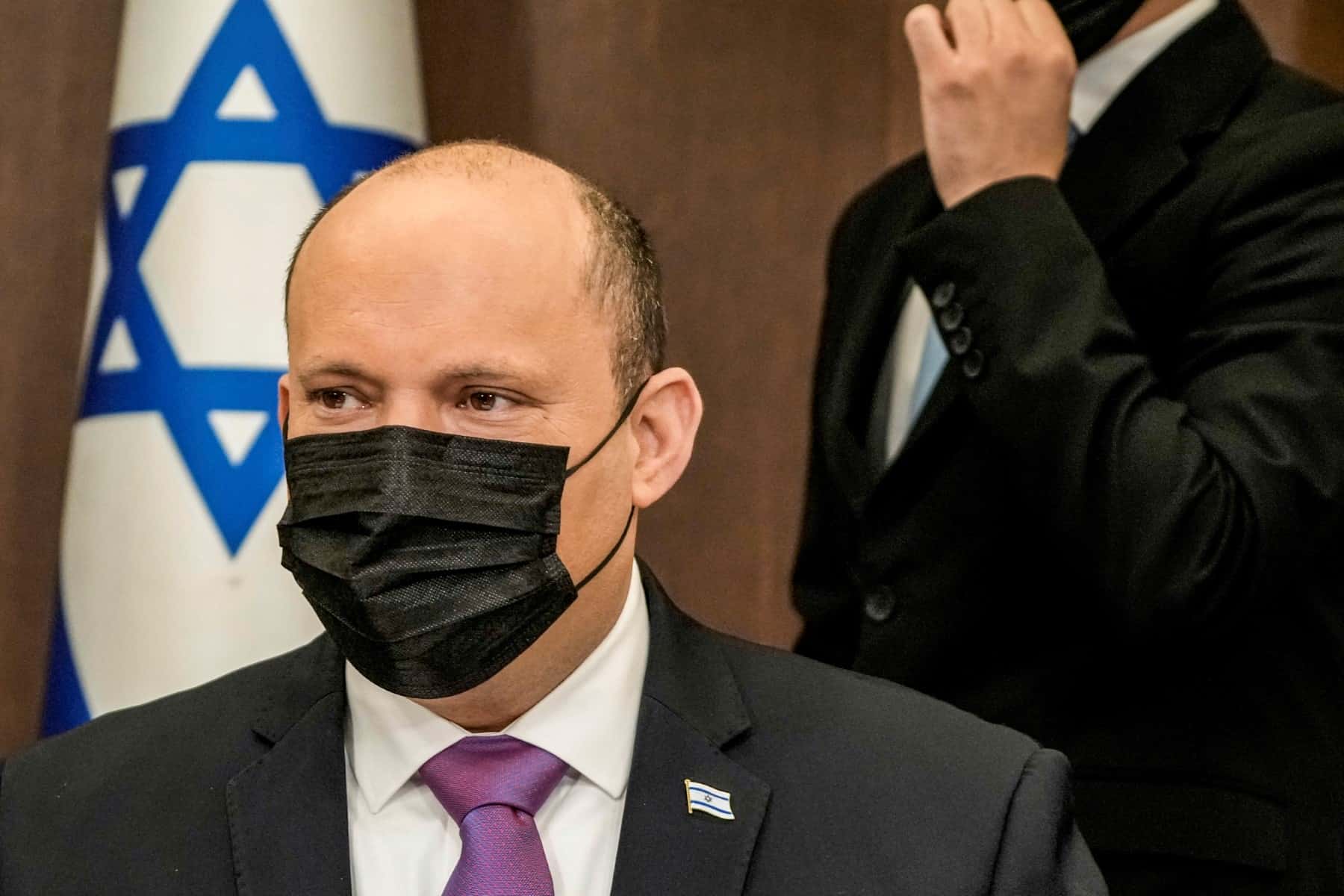


Israeli Prime Minister Naftali Bennett said Sunday that Iran may “shortly” agree a new nuclear deal with major powers but warned it will be weaker than the original 2015 agreement.
Bennett was speaking ahead of a weekly cabinet meeting following indications that the outline of a deal was taking shape at talks in Vienna.
“We may see an agreement shortly,” Bennett said. “The new agreement that appears will be made is shorter and weaker than the previous one.”
The 2015 Iran nuclear agreement offered Tehran sanctions relief in exchange for curbs on its nuclear program, but the United States unilaterally withdrew in 2018 under then-president Donald Trump and reimposed heavy economic sanctions.
Talks on reviving the initial pact, known as the Joint Comprehensive Plan of Action (JCPOA), have been held in the Austrian capital since late November, involving Britain, China, France, Germany and Russia directly and the United States indirectly.
Bennett has been a staunch opponent of the JCPOA and repeatedly warned any revenue Tehran sees from new sanctions relief will be used to purchase weapons that could harm Israelis.
“This money will eventually go to terrorism,” he reiterated Sunday.
Bennett has said Israel will not be bound by a restored agreement and will retain the freedom to act if Iran advances towards producing a nuclear weapon.
“We are organizing and preparing for the day after, in all dimensions, so that we can maintain the security of the citizens of Israel on our own,” he told his cabinet.
‘Moment of truth’
Bennett also claimed, without detailing his sources, that the new deal could expire in 2025, when the original JCPOA negotiated under former US president Barack Obama was due to lapse.
“If the world signs the agreement again -— without extending the expiration date -— then we are talking about an agreement that buys a total of two and a half years, after which Iran can and may develop and install advanced centrifuges, without restrictions,” the hawkish premier said.
Since the Vienna talks resumed, senior Israeli officials have said the Jewish state could support negotiations on a more robust pact with Iran, one that effectively makes it impossible for the Islamic republic to develop a nuclear weapon.
There is broad opposition across the Israeli and political establishment against the terms of the JCPOA.
Signs of a deal coming together emerged at the weekend, with German Chancellor Olaf Scholz saying there “was the chance to reach an agreement that will allow sanctions to be lifted”.
“But if we do not succeed very quickly, the negotiations risk failing,” Scholz told the Munich Security Conference, describing this phase of the talks as “the moment of truth”.
Iranian Foreign Minister Hossein Amir-Abdollahian, speaking at the same Munich gathering, said his country was “ready to achieve a good deal at the earliest possible time if the other side makes the needed political decision”.