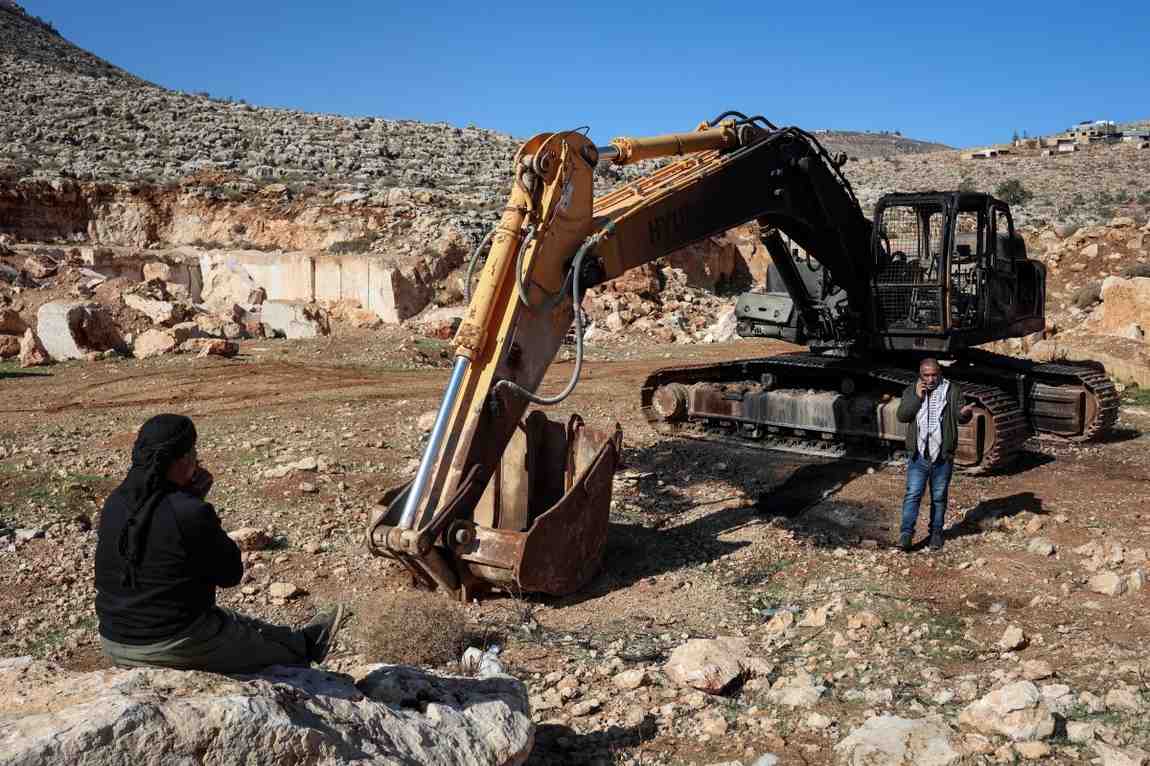

Tulkarem, Palestinian Territories – The Israeli army is to demolish 25 residential buildings in the north West Bank’s Nur Shams refugee camp later this week, local authorities told AFP on Monday.
Israel has occupied the West Bank since 1967.
In early 2025, Israel’s military launched a wide-ranging and still ongoing operation it says is aimed at rooting out Palestinian armed groups from refugee camps in the northern West Bank — including the Nur Shams, Tulkarem and Jenin camps.
The operation displaced all the residents and more than 30,000 have yet to return home.
During the operation, Israel has destroyed hundreds of houses in the dense network of alleys that make up the camps to create easy access for its troops stationed inside.
‘Displacement crisis’
Roland Friedrich, director of the UN agency for Palestinian refugees in the West Bank and east Jerusalem, UNRWA, told AFP that an estimated 1,600 houses were fully or partially destroyed during the operation.
He said that made it “the most severe displacement crisis that the West Bank has seen since 1967.”
“There is no military necessity whatsoever for conducting those demolitions,” Friedrich added, calling it “part of a broader strategy to change topography on the ground”.
Many residents believe Israel is seeking to destroy the idea of the camps themselves, turning them into regular neighbourhoods of the cities they flank, in order to eliminate the refugee issue.
On Monday, a dozen displaced Nur Shams residents held a demonstration in front of the armoured military vehicles blocking their way back to the camp, protesting the demolition orders and demanding the right to return to their homes.
Aisha Dama, a camp resident whose four-floor family home housing about 30 people is among those to be demolished, told AFP she felt alone against the military.
“On the day it happened, no one checked on us or asked about us. You see it with your own eyes — there is no one. The authorities are sitting in their chairs”, she said.
“All my brothers’ houses are to be destroyed, all of them, and my brothers are already on the streets,” said Siham Hamayed, another camp resident.
Nur Shams, along with other refugee camps in the West Bank, was established after the creation of Israel in 1948, when hundreds of thousands of Palestinians were displaced from their homes in what is now Israel.
With time, the camps they established inside the West Bank became dense neighbourhoods not under their adjacent cities’ authority. Residents pass on their refugee status from one generation to the next.