
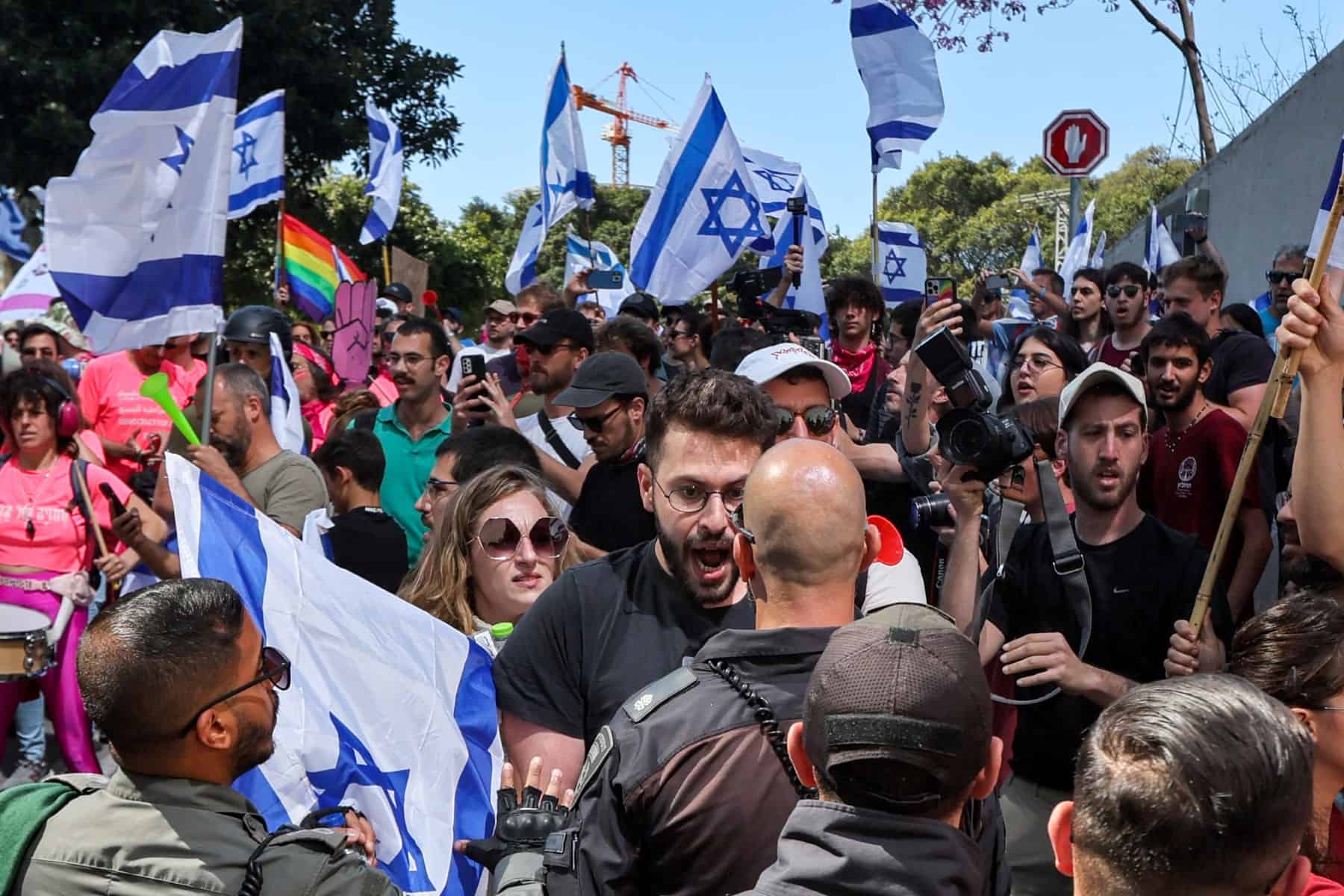


Tel Aviv, Israel – Israeli protesters returned to the streets Thursday to rally against proposed judicial reforms, after Prime Minister Benjamin Netanyahu rejected a compromise plan touted by the country’s president.
The reforms, several provisions of which have already been adopted by parliament, are “the end of democracy,” read a placard brandished by demonstrators in Tel Aviv.
According to Israeli media, tens of thousands of Israelis protested across the country.
“I am afraid that we will become a religious state, that the laws of Judaism will come first and the democratic freedom that we have will not be there anymore,” Liat Tzvi, a researcher at Tel Aviv University, who joined the demonstration there, told AFP.
Protesters blocked a key road in the coastal city, an AFP reporter said.
Demonstrators also gathered in Jerusalem and the northern city of Haifa to denounce the overhaul that would, among other things, allow lawmakers to scrap supreme court rulings with a simple majority vote.
Some opposition leaders joined a later rally in central Tel Aviv.
Since Netanyahu’s hard-right government announced the reforms in January, days after taking office, massive demonstrations have regularly taken place across Israel.
Opponents of the package have also accused Netanyahu, who is on trial for corruption which he denies, of trying to use the reforms to quash possible judgements against him.
President Isaac Herzog on Wednesday presented a proposed compromise on the reforms, but the government immediately rejected it.
“Anyone who thinks that a genuine civil war, with human lives, is a line that we could never reach, has no idea what he is talking about,” Herzog said.
Leaders of opposition parties said in a joint news conference on Thursday they supported Herzog’s outline.
“The offer is not perfect,” said former premier Yair Lapid. “It is not what we wanted, but it is a fair compromise that allows us to live together.”
The ruling coalition, which includes ultra-Orthodox Jewish and extreme-right parties, argues the proposed reforms are necessary to correct a power imbalance between elected representatives and Israel’s top court.
Immediately after Herzog’s announcement, Netanyahu called it a “unilateral compromise”, the “key points” of which “only perpetuate the existing situation and do not bring the required balance between the powers”.
During a state visit to Germany on Thursday, the prime minister told journalists he was “attentive to what’s happening in the country” and to the protests against the government’s agenda.
“But we need to bring something that matches the mandate we received” in last year’s elections, Netanyahu said, “and we’ll do so responsibly”.