
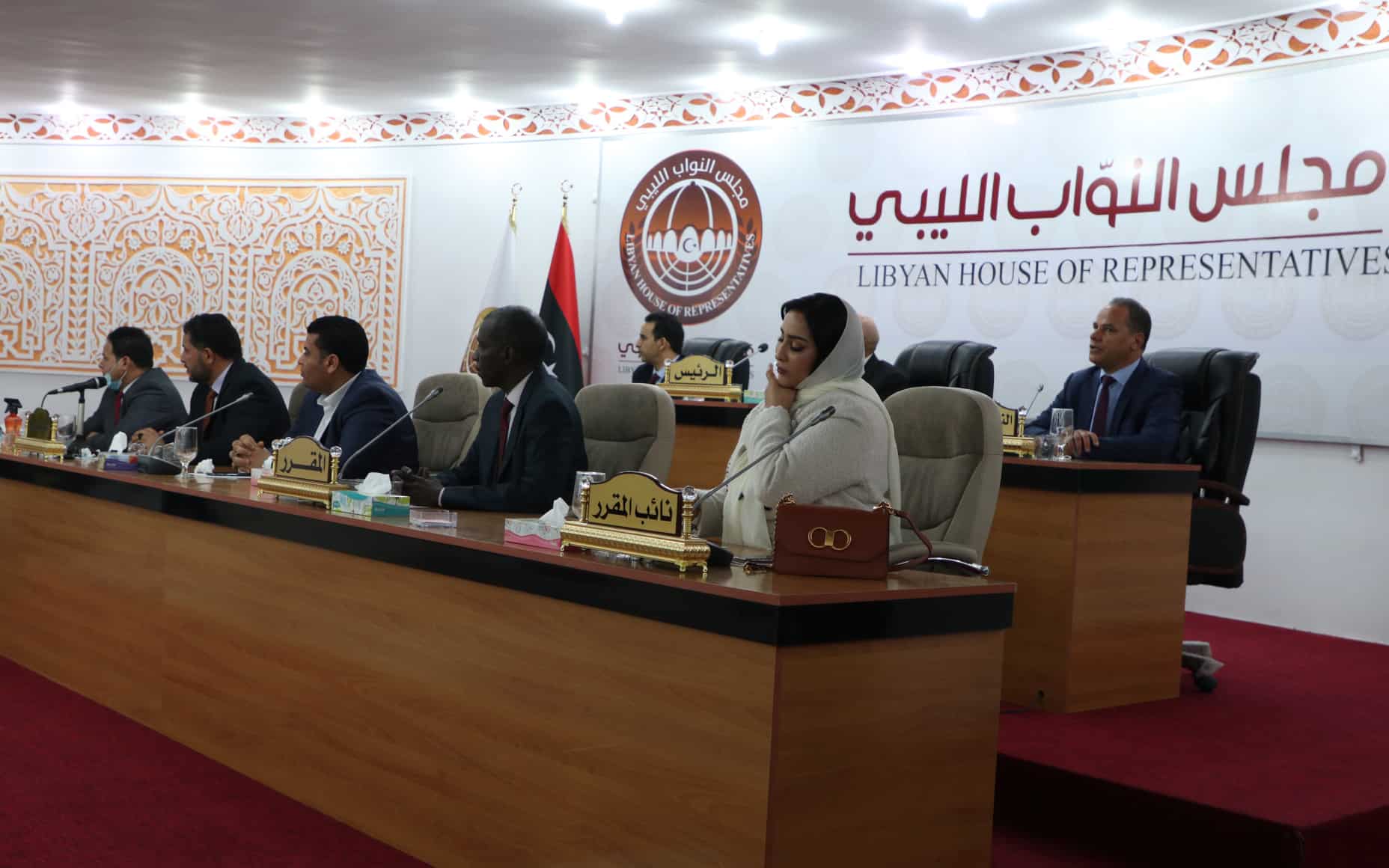


Libya’s parliament on Monday began hearings of hopefuls to replace interim prime minister Abdulhamid Dbeibah, a process that could spark new east-west power struggles in the troubled North African nation.
Dbeibah’s government took power a year ago with a mandate to lead Libya to December elections aimed at dragging the country out of a decade of conflict.
But since the polls were indefinitely postponed amid deep divisions over their legal basis and controversial presidential candidates, parliament speaker Aguila Saleh has led efforts to have Dbeibah replaced.
Both eastern-based Saleh and Dbeibah, in the western capital Tripoli, were presidential candidates.
Dbeibah has said he will only hand power to an elected administration.
Saleh’s House of Representatives, based in eastern Libya since a violent schism in 2014, said two out of seven candidates had made it through to the final round.
Powerful former interior minister Fathi Bashagha, 59, and outsider Khaled al-Bibass, 51, a former official in the interior ministry, will face a parliamentary vote on Thursday.
Bashagha told the assembly that he wanted to unify divided state institutions, improve security and revive the country’s dismal public services. He also vowed not to stand for future elections.
Bibass said he would work to overcome the country’s divisions and fight inflation.
Libya has seen a decade of conflict since the 2011 revolt that toppled dictator Moamer Kadhafi, leaving a patchwork of militias vying for control over an oil-rich country riven by deep tribal and regional divisions.
Thursday’s vote could see a repeat of a 2014 schism which saw two parallel governments emerge.
The parliament also adopted a “roadmap” towards elections, which looks set to delay the polls further.
It says they must take place within 14 months of an agreement on another divisive issue — a new constitutional declaration.
Kadhafi scrapped Libya’s last constitution when he seized power in 1969.
The assembly is not fully united, and some members have called for Dbeibah to stay in office until elections are held.
The United Nations has also called for a new date to be set for presidential polls rather than yet another transitional government.