
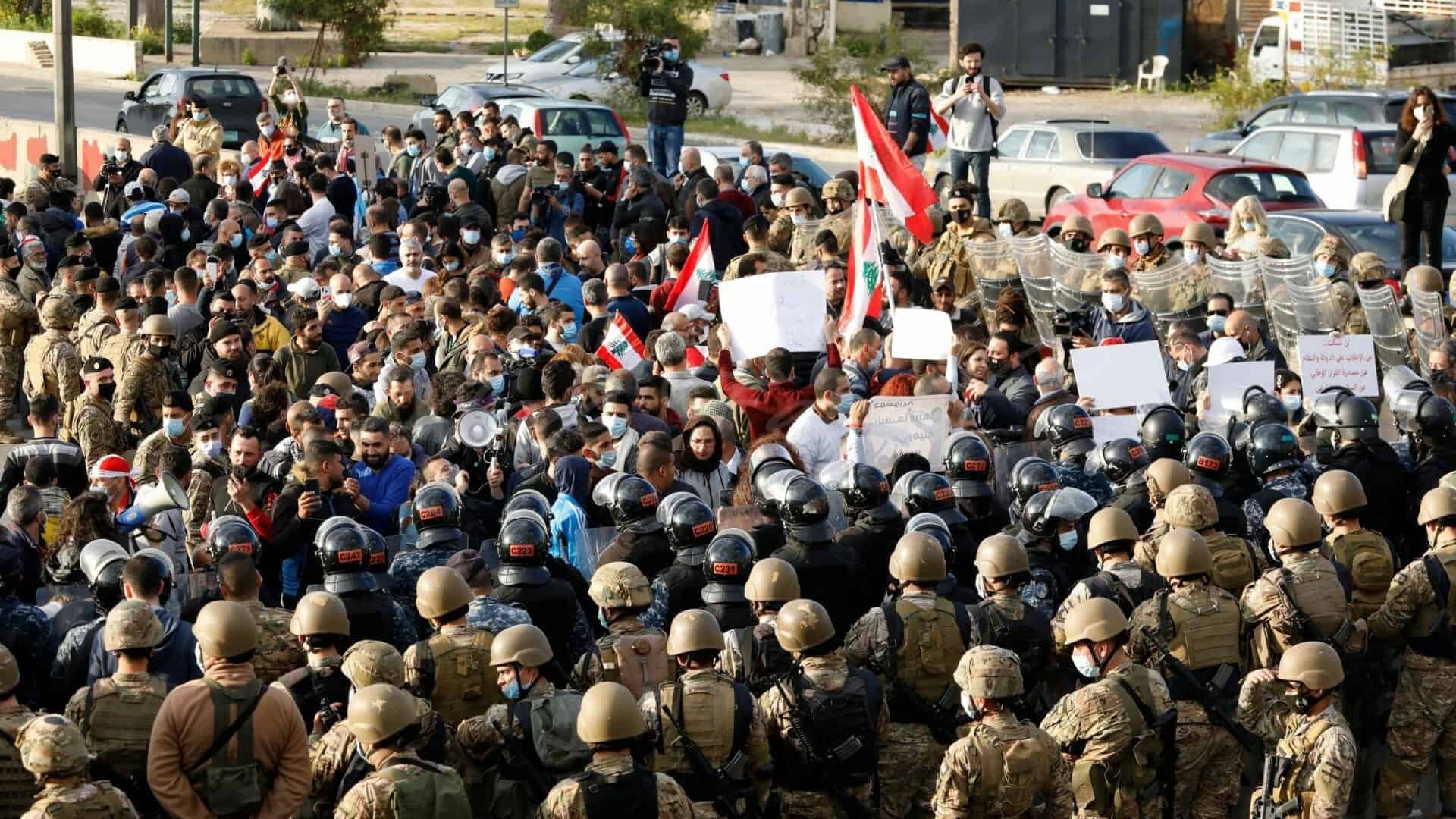


Lebanon marked the second anniversary of its defunct protest movement with a low-key demonstration in Beirut Sunday, while many stayed away amid grinding economic woes and deadly tensions over a port blast probe.
Dozens marched under rain clouds towards Martyrs’ Square in central Beirut, an AFP photographer said.
Mass protests bringing together Lebanese from all backgrounds erupted on October 17, 2019, denouncing deteriorating living conditions as well as alleged official graft and mismanagement, after the government announced a plan to tax phone calls made over messaging service WhatsApp.
Cross-sectarian demonstrations swept the country, demanding the overthrow of political barons in power since at least the end of the 1975-1990 civil war.
Two years on, Lebanon is mired in a ballooning financial crisis compounded by the coronavirus pandemic, and battered by a devastating explosion at Beirut’s port on August 4 last year.
Draconian banking restrictions have prevented many Lebanese from accessing their savings, while the local currency has lost more than 90 percent of its value to the dollar on the black market.
Almost 80 percent of the population live in poverty, struggling to put food on the table amid endless price hikes, fuel shortages and power cuts.
Protester Rabih Zein said it was not just previous police crackdowns that had kept demonstrators away on Sunday.
“If anyone is wondering why there are not many people, it’s because they’ve deprived us of petrol, electricity and the money we put in banks,” he said.
Each person marching represented many more who were forced to stay at home, Zein claimed.
“Today is a symbolic stand. God willing, we will move towards change at the parliamentary elections” next spring, said the 37-year-old television producer from the northern city of Tripoli.
The protest movement has given birth to a flurry of new political groups, which many hope will run in the upcoming polls.
The massive port blast killed more than 210 people and wrecked swathes of Beirut. But no one has yet been held accountable in a domestic investigation which top politicians have tried to hamper at every turn.
On Thursday, seven people were killed in central Beirut in violence following a rally by supporters of the country’s two main Shiite parties calling for the dismissal of the lead investigator in the case.
Fatima Mahyu, a protester from Beirut, said some people were likely too scared to come out on Sunday.
“There is fear and weariness,” said the mother of two, both of whom have emigrated.
“People are exhausted.”