
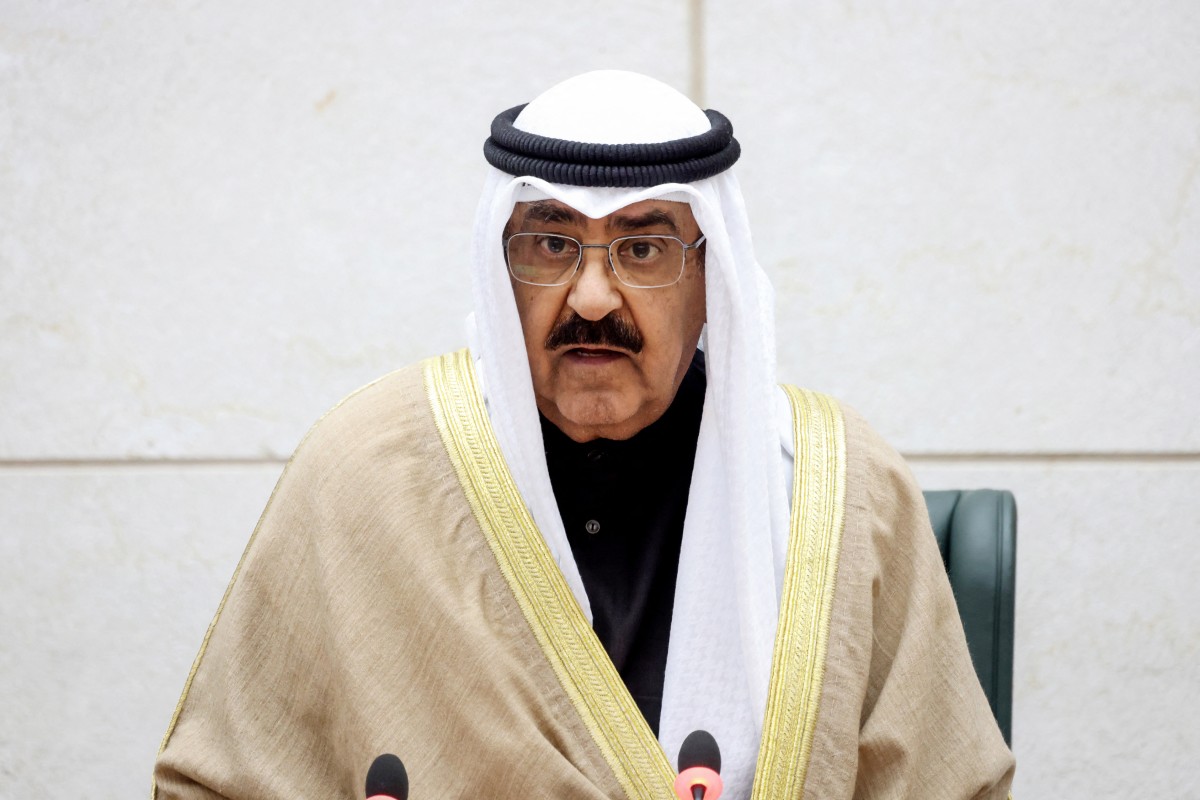


Kuwait City, Kuwait – Kuwait’s new ruler announced his prime minister on Thursday as he bids to end the chronic political stalemate afflicting the major oil-producing Gulf nation.
Sheikh Meshal al-Ahmed Al-Sabah, who was sworn in as emir last month, named Sheikh Mohammed Sabah al-Salem Al-Sabah, a popular ex-foreign minister, as the new premier.
He replaces Sheikh Ahmed Nawaf al-Ahmed al-Sabah, son of the late emir whose death has raised hopes of a political shift in the country bordering Iraq and Saudi Arabia.
While sovereign powers remain concentrated in the hands of the ruling Al-Sabah family, Kuwait has the resource-rich Gulf’s most active and powerful parliament.
But repeated standoffs between elected lawmakers and cabinet ministers installed by the ruling family have stymied development efforts and scared off investors.
The Harvard-educated Sheikh Mohammed, also son of a former emir, was Kuwait’s ambassador to the United States for 10 years and then served as foreign minister until stepping down in 2011.
His resignation in the middle of a political crisis was interpreted as an act of protest against the government, which had been accused of mismanagement and corruption.
“His anti-corruption stance at a delicate time in Kuwait’s history back in 2011 earned him the high respect of Kuwaitis,” Badr al-Saif, a Kuwait University political analyst, told AFP.
Kuwait has seven percent of the world’s crude reserves, little debt and one of the world’s strongest sovereign wealth funds in the world. It adopted a relatively robust parliamentary system in 1962.
But political deadlock between the elected parliamentarians and appointed ministers has blocked reforms to diversify the economy, while Kuwait has also suffered repeated budget deficits and low foreign investment.
At his swearing-in ceremony, the 83-year-old emir Sheikh Meshal strongly criticized parliament and the cabinet, saying they had “harmed the interests of the people and the country”.
According to Kuwaiti analyst Ayed Al-Mannaa, the new prime minister — who is expected to appoint his cabinet later this month — has “the diplomatic experience and academic qualifications necessary to implement the reforms envisaged” by the emir.
“We need… a government made up of competent people and statesmen who are not scared of being questioned by the parliament,” he told AFP.